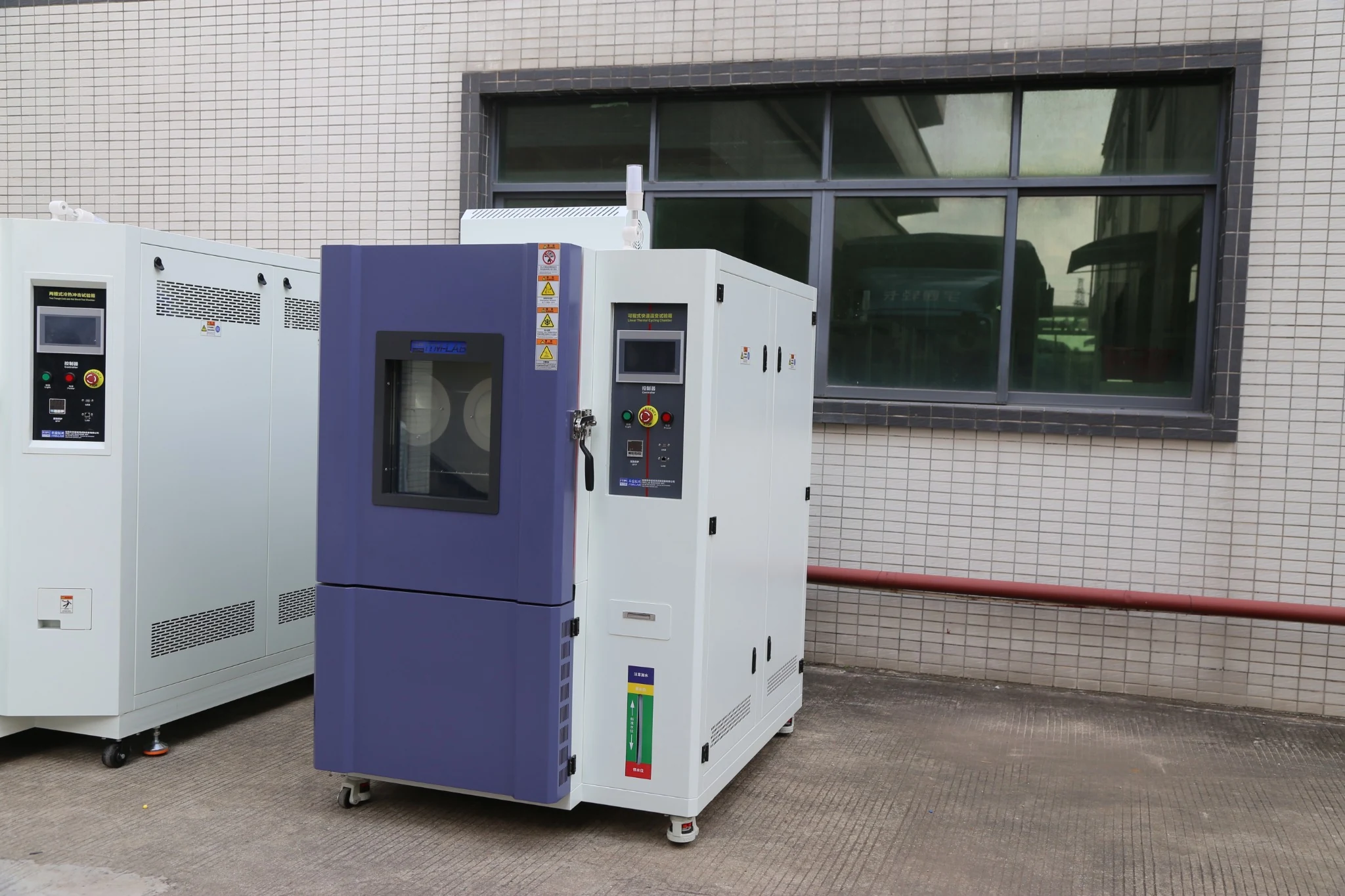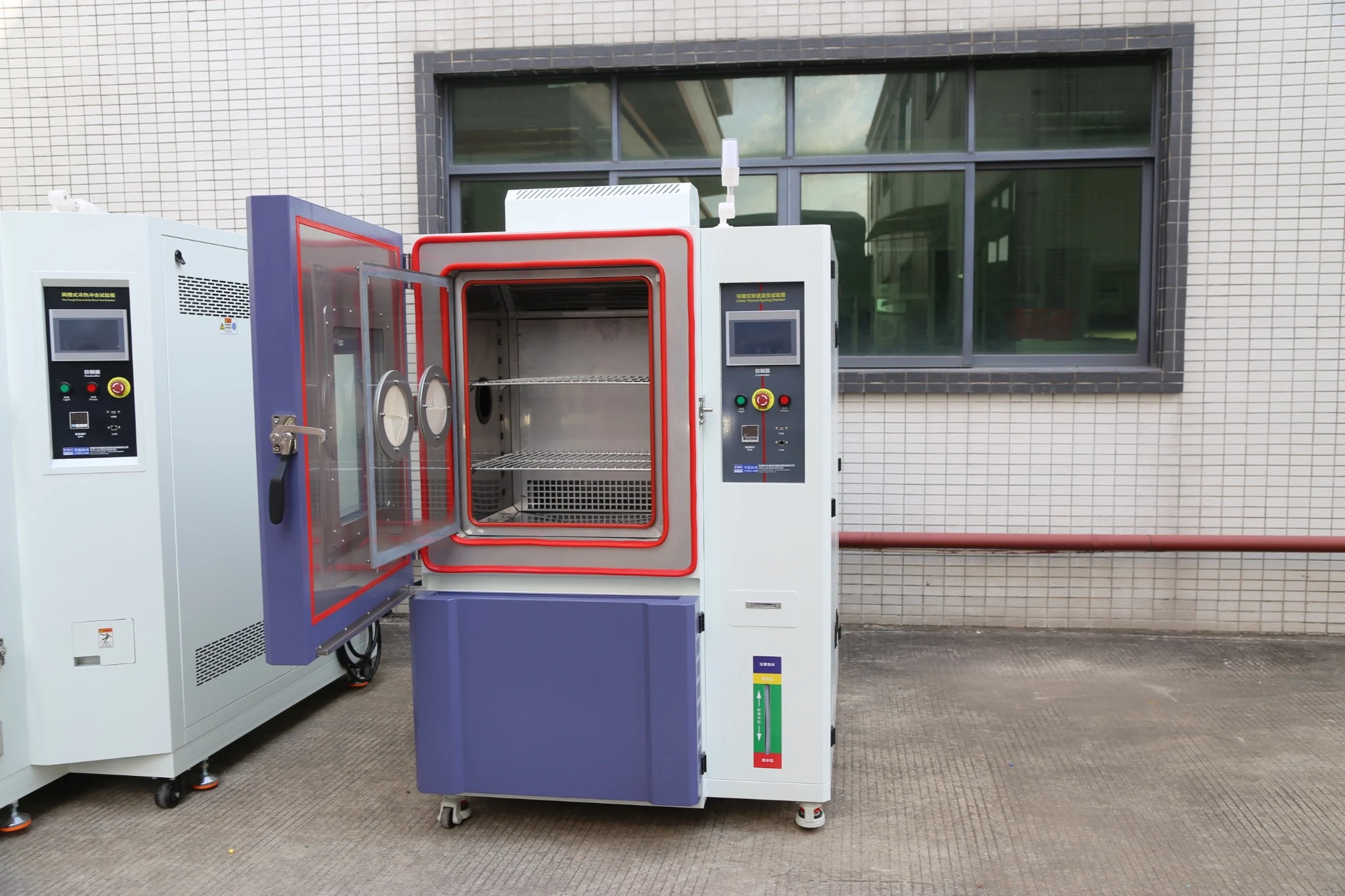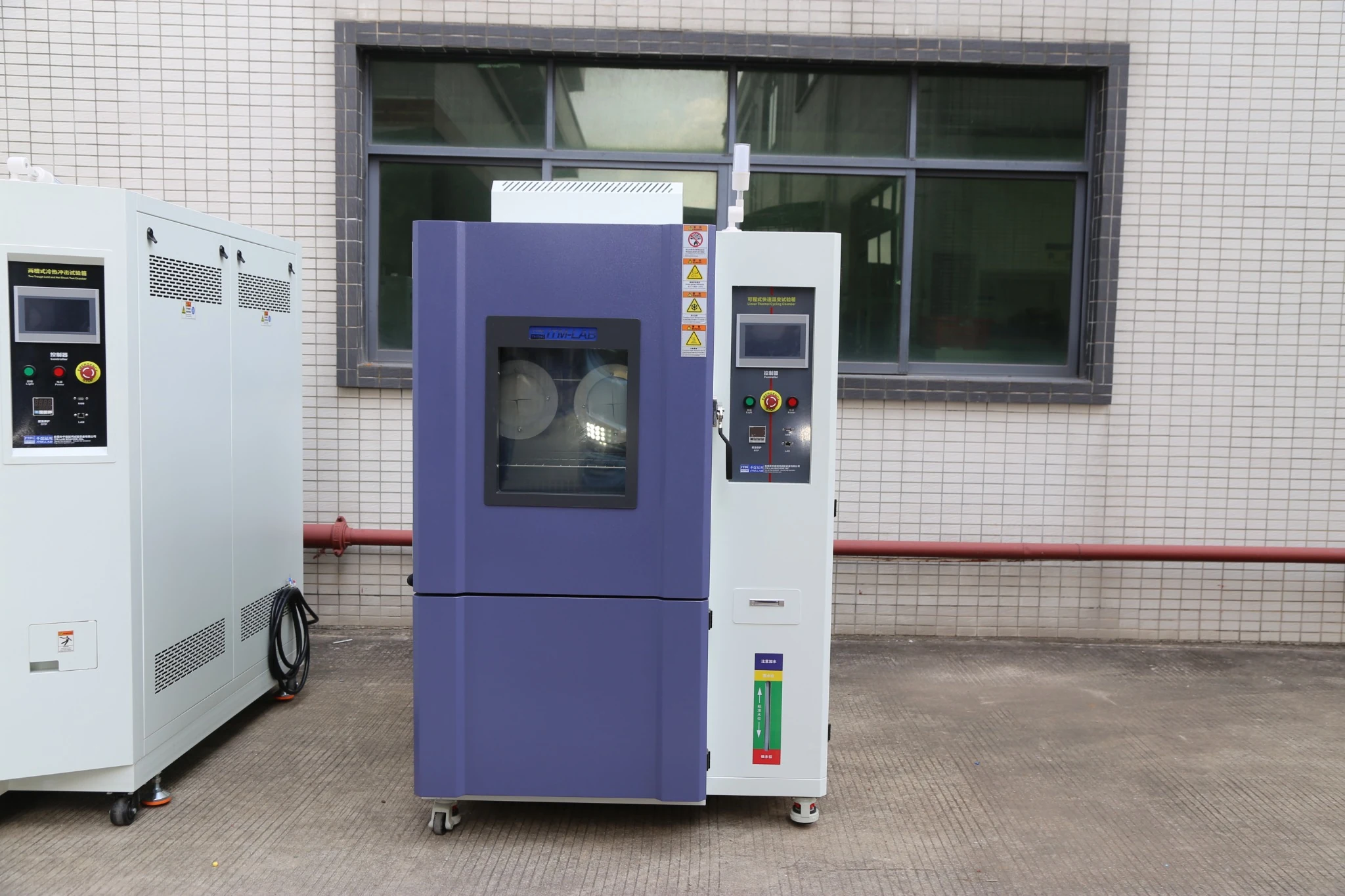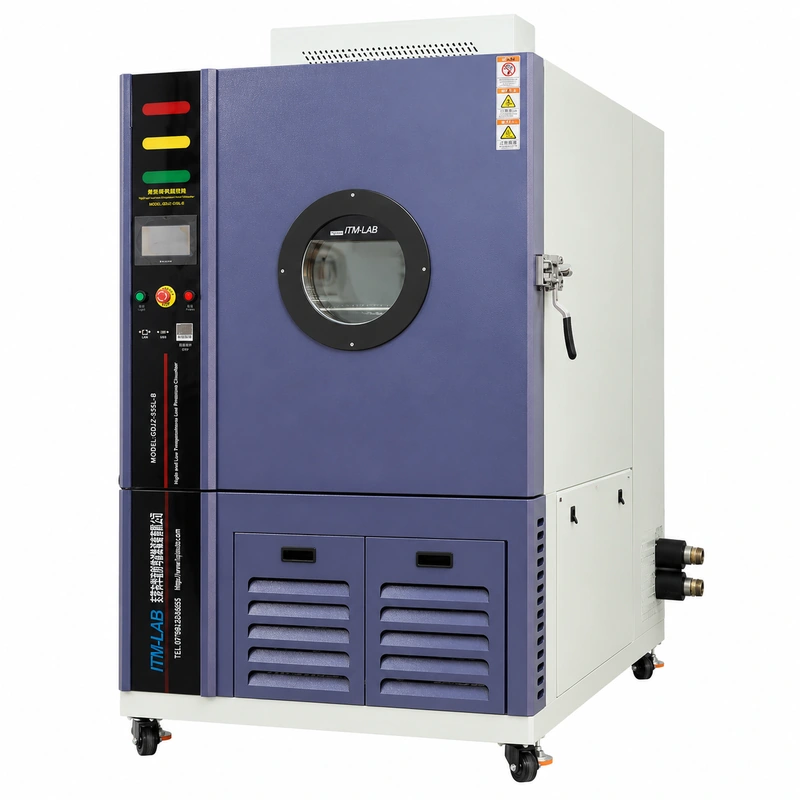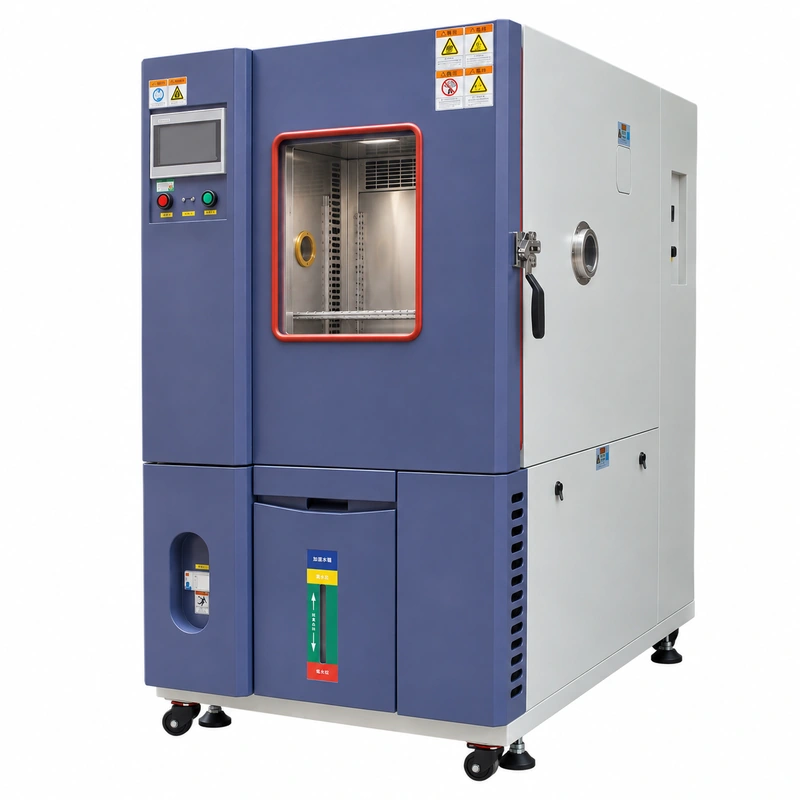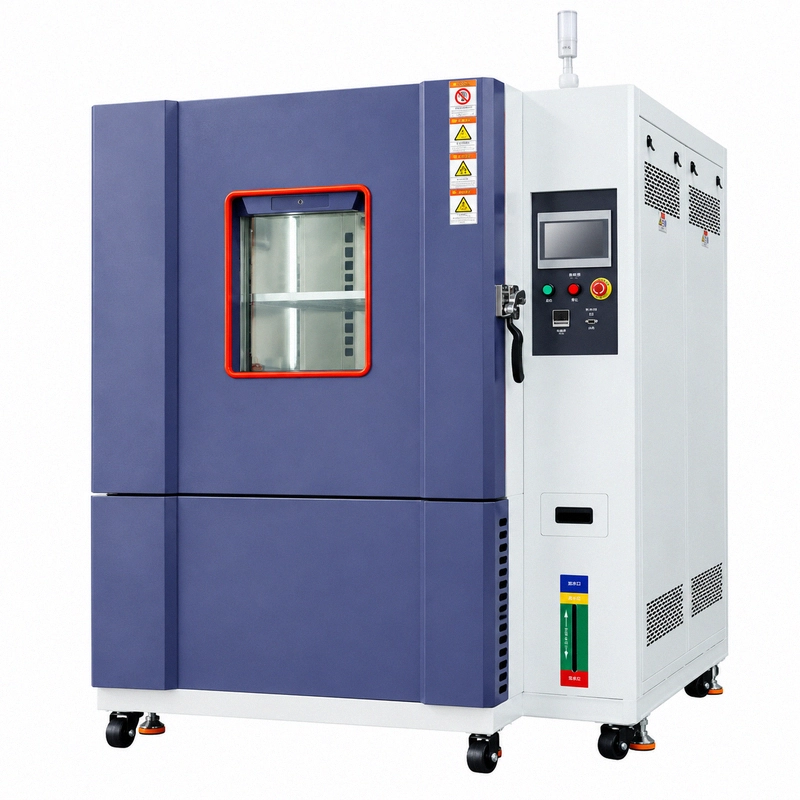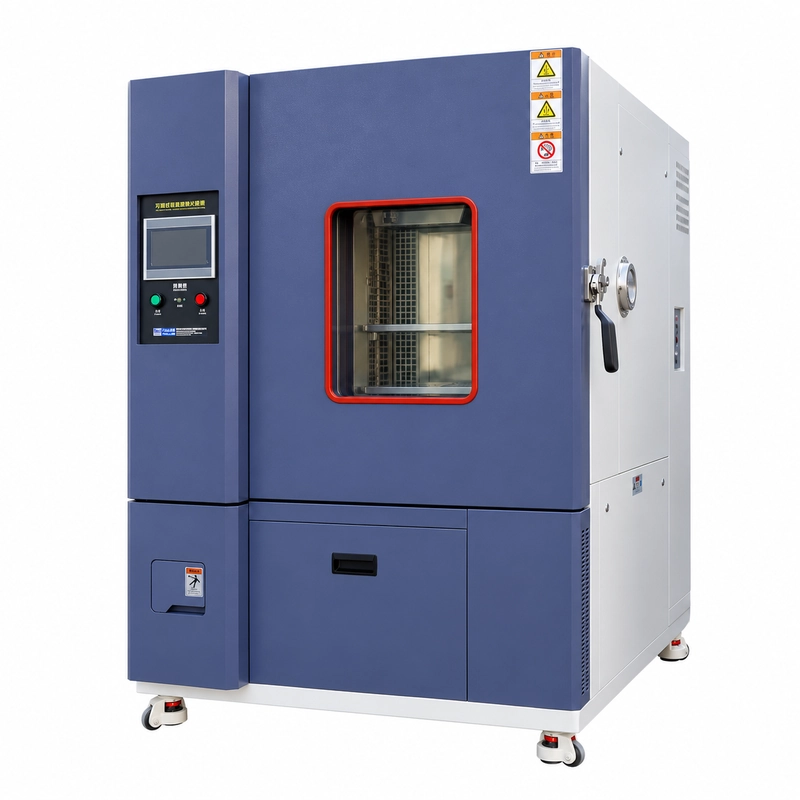
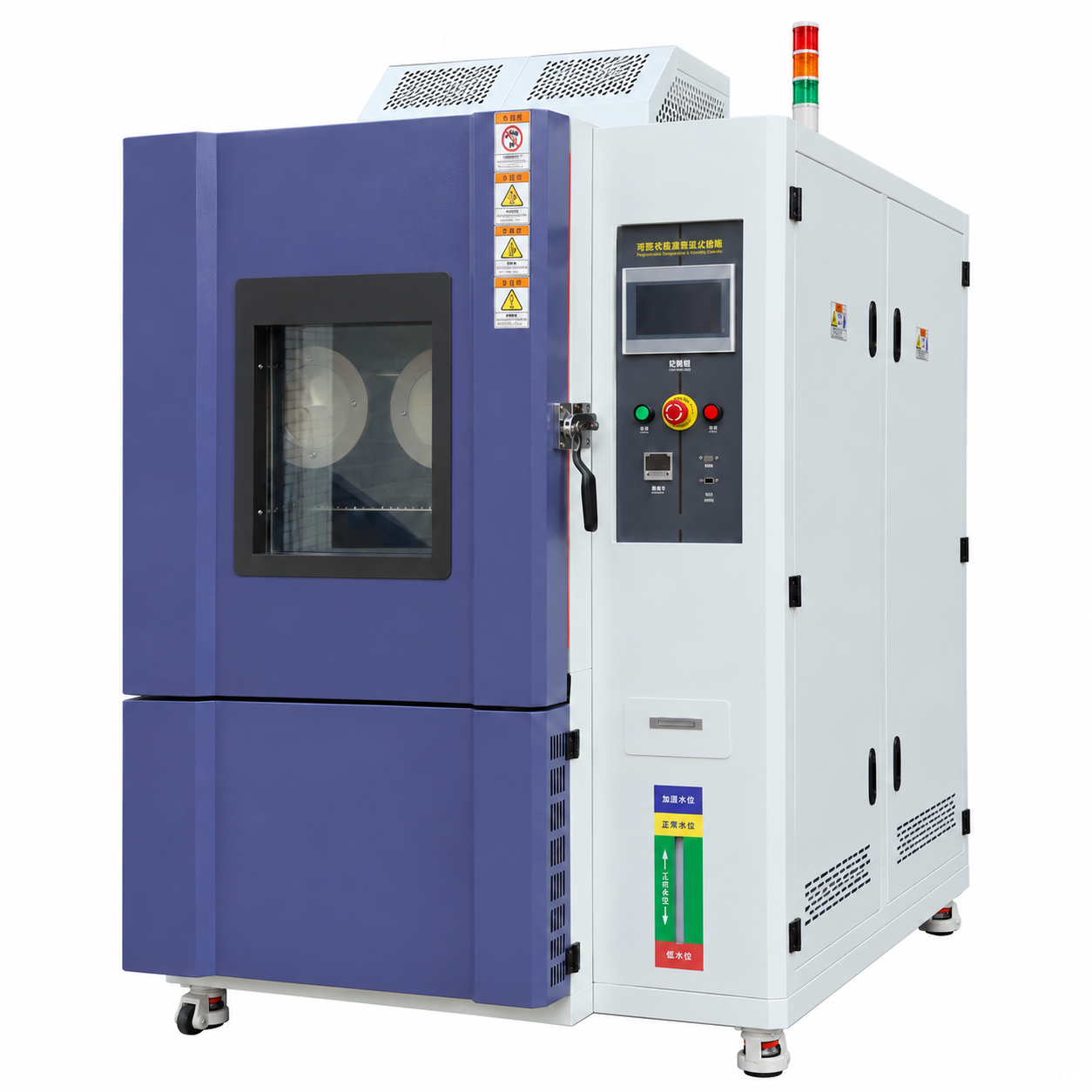
Rapid Temperature Cycling & Environmental Stress Screening
The ITM-LAB KTB Series is designed for accelerated temperature cycling, Environmental Stress Screening (ESS), and high- and low-temperature reliability testing of electronic components and industrial assemblies.
Available in 250L, 500L and 1000L capacities, the series offers temperature configurations down to −70°C and up to +150°C, with 5°C/min, 10°C/min and 15°C/min heating-rate options.
Standard and custom-engineered configurations are available to meet different temperature profiles, specimen loads and installation requirements.
KTB Series Technical Specifications
|
Specification |
KTB 250L |
KTB 500L |
KTB 1000L |
|---|---|---|---|
|
Nominal Capacity |
250L |
500L |
1000L |
|
Internal Dimensions (mm)* |
700 × 500 × 700 |
800 × 700 × 900 |
1000 × 1000 × 1000 |
|
Temperature Range |
−40°C to +150°C / −70°C to +150°C |
Same |
Same |
|
Heating Rate Options* |
5 / 10 / 15°C/min |
5 / 10 / 15°C/min |
5 / 10 / 15°C/min |
|
Temperature Fluctuation |
±0.5°C |
±0.5°C |
±0.5°C |
|
Temperature Deviation |
±1.5°C |
±1.5°C |
±1.5°C |
|
Temperature Uniformity |
≤2.0°C |
≤2.0°C |
≤2.0°C |
|
Humidity Control |
Optional |
Optional |
Optional |
|
Approx. Weight |
350 kg |
480 kg |
700 kg |
|
Power Supply |
AC 380V |
AC 380V |
AC 380V |
Dimensions and heating-rate availability are subject to final model confirmation. Cooling performance is specified according to the selected configuration and required temperature interval.
Optional humidity configurations are available with a stated range of 20–98% RH within the applicable operating envelope.
Rapid Temperature Cycling Performance
A rapid temperature change chamber controls the transition between programmed high- and low-temperature conditions. It is used to evaluate how repeated thermal expansion and contraction affect components, assemblies and electrical connections.
Typical failure mechanisms include solder joint fatigue, material cracking, connector instability, seal degradation and intermittent electrical faults.
Understanding Temperature Change Rate
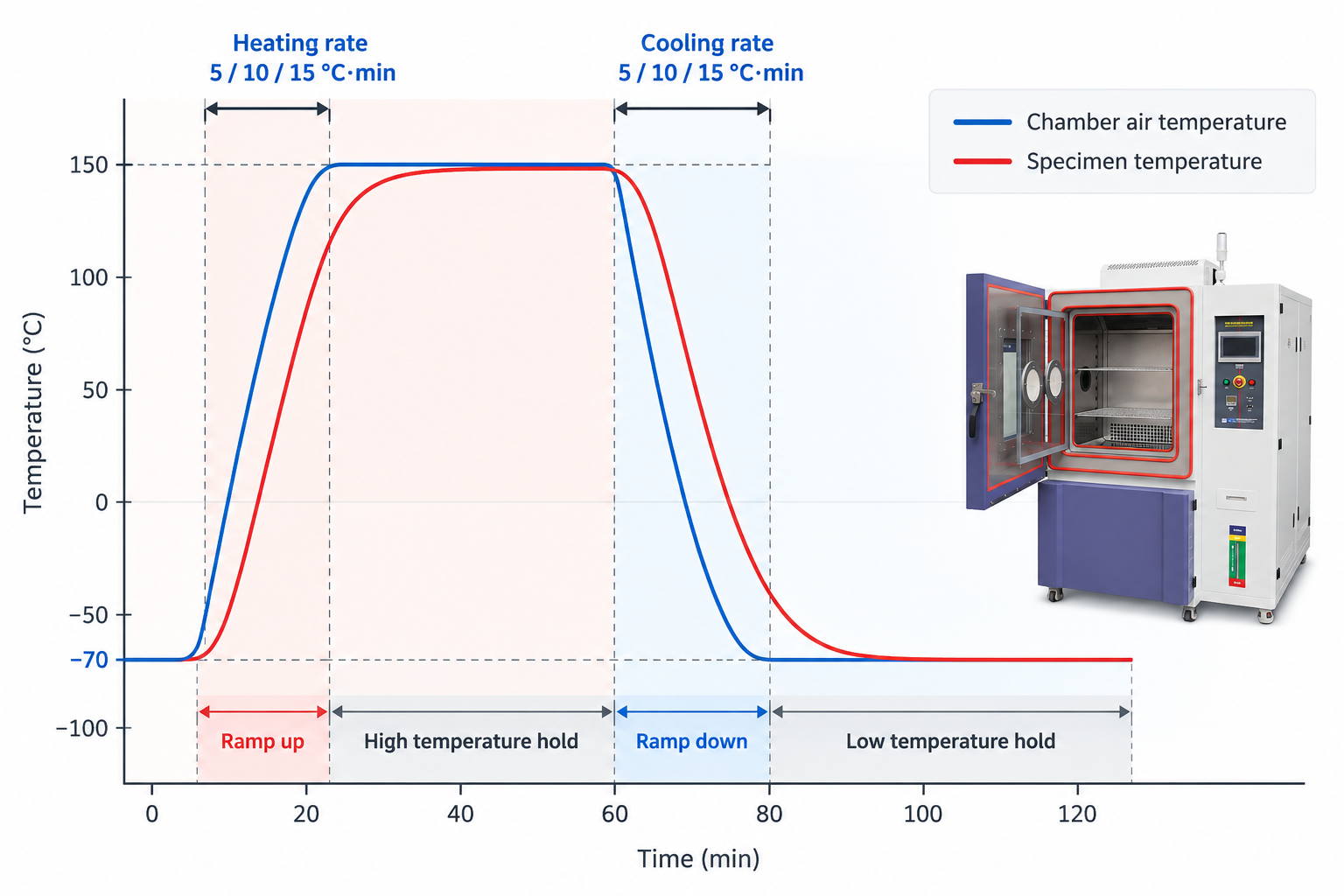
The specified chamber temperature change rate and actual specimen temperature response are not necessarily the same.
For example, a chamber configured for 10°C/min air-temperature change may produce a slower temperature response in a heavy or densely assembled specimen.
Performance should therefore be evaluated against the required temperature interval, measurement conditions and test load.
|
Factor |
Selection Consideration |
|---|---|
|
Temperature Interval |
Starting and target temperatures |
|
Heating / Cooling |
Required transition rates in both directions |
|
Test Load |
Combined specimen and fixture mass |
|
Heat Dissipation |
Additional heat generated by powered specimens |
|
Measurement |
Chamber air or specimen temperature |
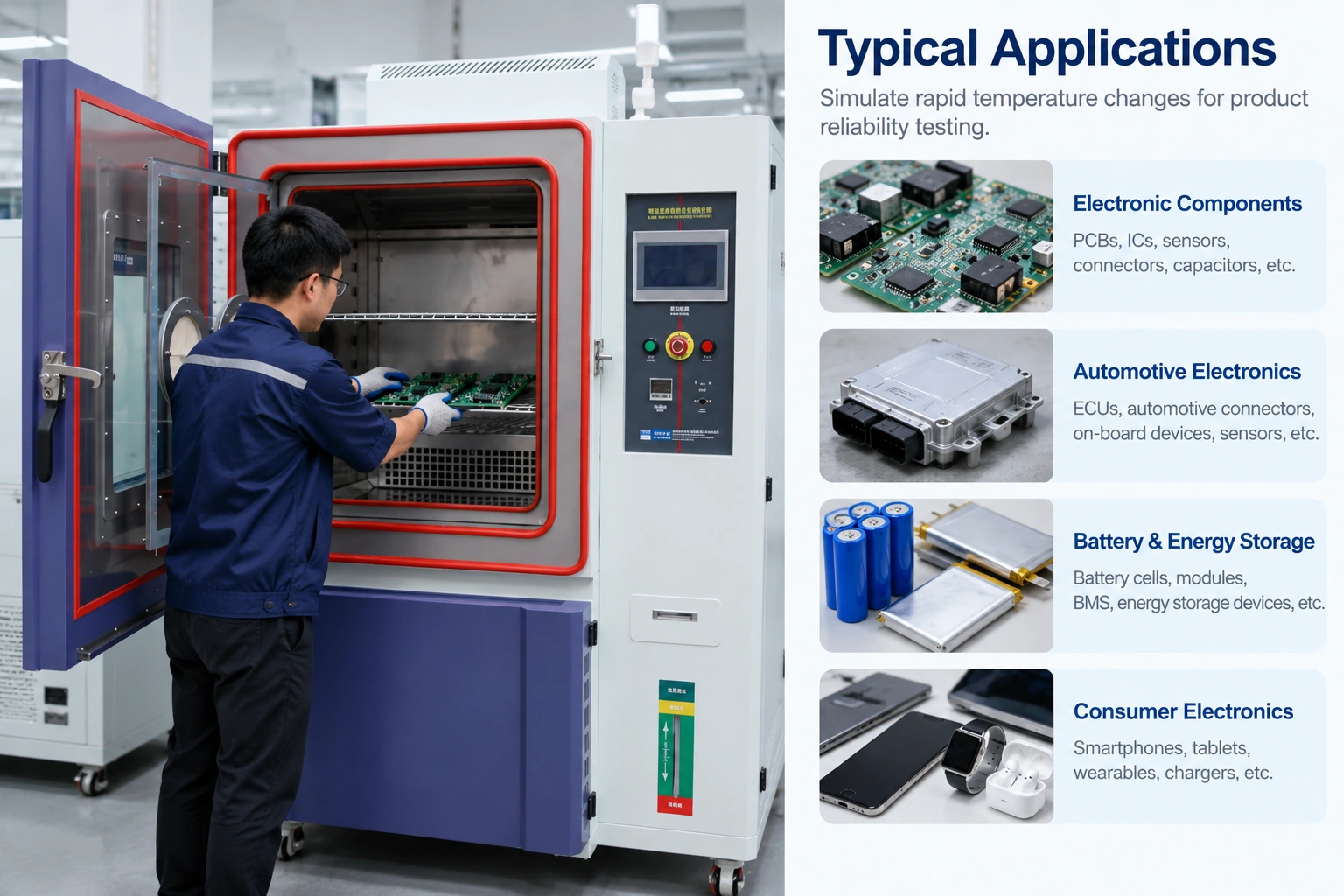
Applications
The KTB Series supports temperature cycling and reliability evaluation across electronics-intensive industries.
|
Industry |
Typical Test Objects |
|---|---|
|
Automotive Electronics |
ECUs, sensors, displays, connectors and power electronics |
|
Consumer Electronics |
PCBs, control boards, displays and electronic assemblies |
|
Semiconductor & Components |
IC packages, semiconductor modules and electronic components |
|
Aerospace & Communication |
Avionics modules, communication electronics and sensors |
|
ESS & Reliability Laboratories |
Electronic assemblies and production screening samples |
Refrigeration & Control System
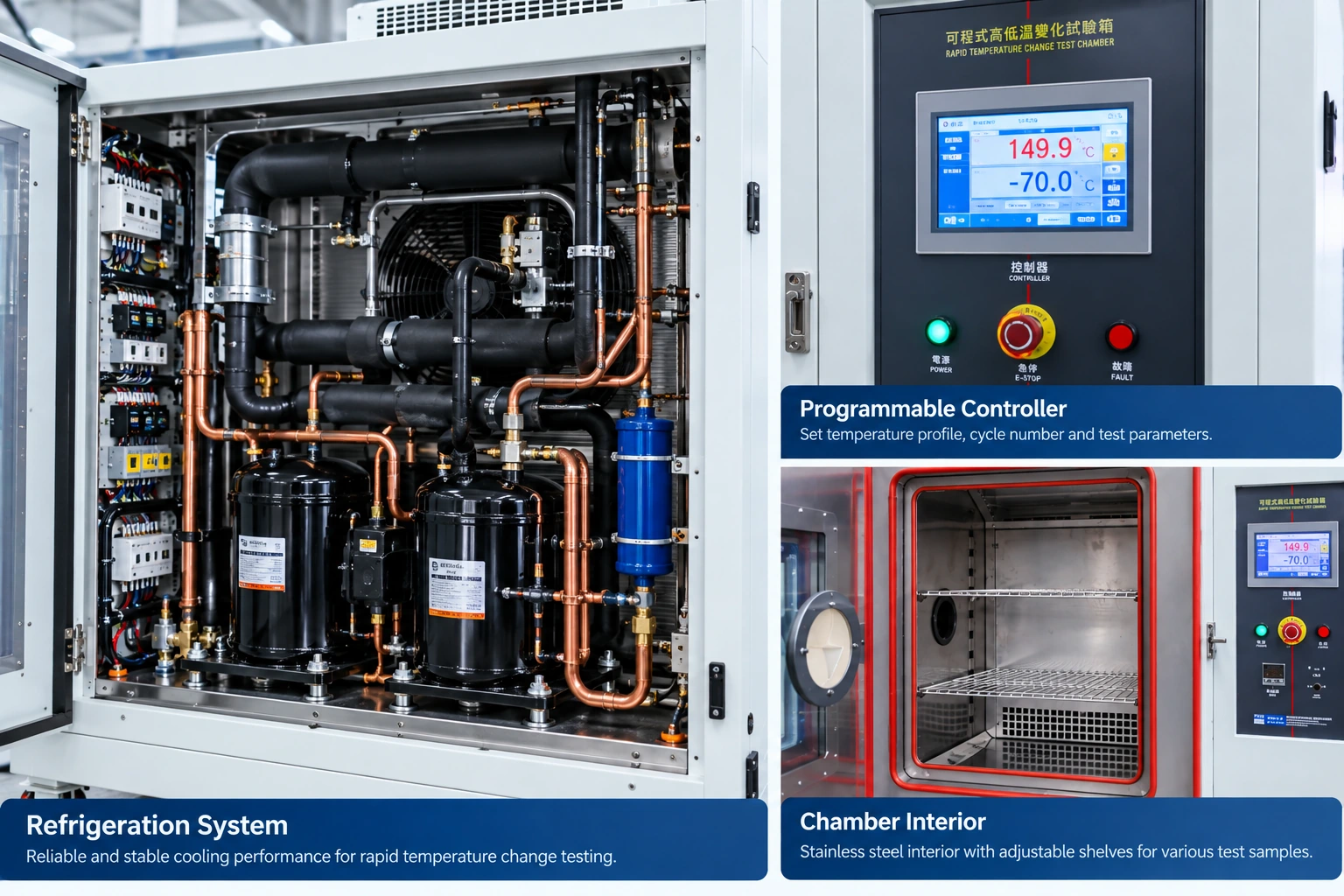
The KTB Series integrates refrigeration, heating, forced-air circulation and programmable control for repeated temperature transitions.
System configuration is selected according to the required temperature range, transition performance and specimen load.
- Refrigeration System
Selected configurations use multi-stage refrigeration with semi-hermetic compressors. Water-cooled options are available for specific performance and facility requirements.
- BTHC Control
Balanced Temperature and Humidity Control coordinates heating and refrigeration output to maintain programmed environmental conditions.
- Air Circulation
Forced-air circulation distributes conditioned air throughout the workspace. The documented KTB-225L configuration uses an upper-air-supply and lower-air-return arrangement.
- Programmable Controller
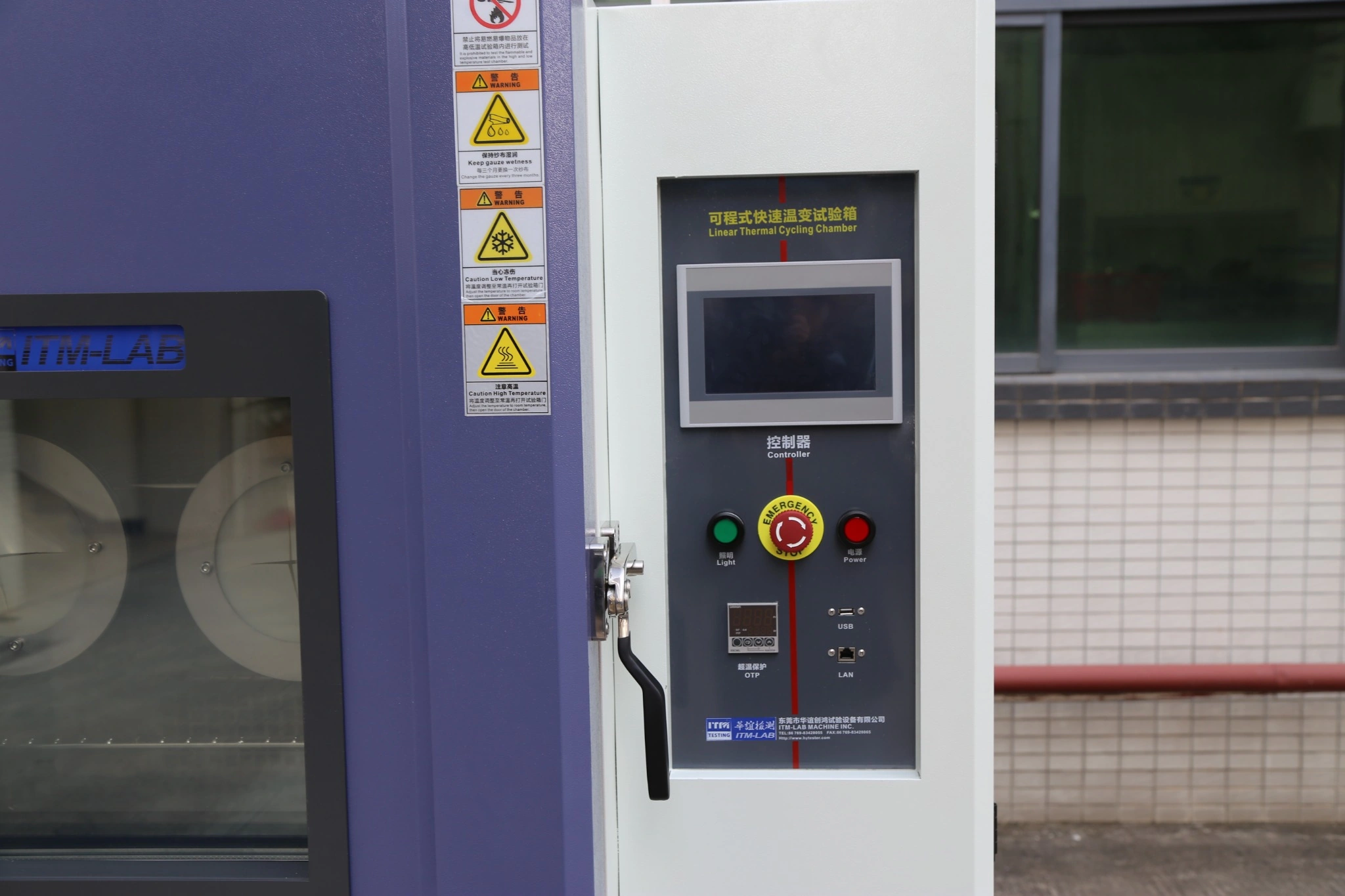
Available functions include multi-segment temperature programming, automatic cycling, temperature curve recording, alarm indication and data export.
Chamber Capacity & Configuration Selection
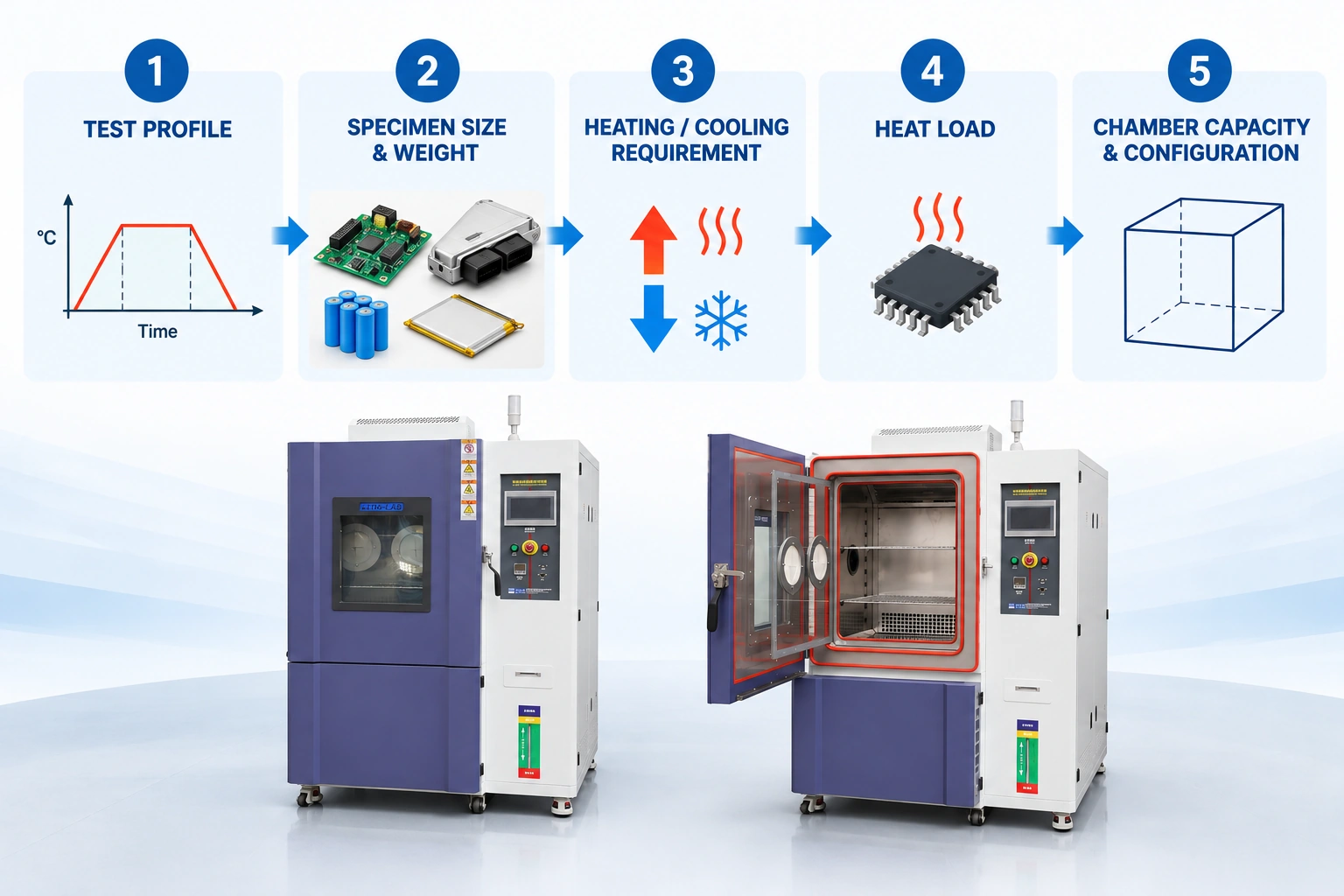
Chamber volume should accommodate the specimen, fixtures, sensors and sufficient clearance for air circulation.
|
Capacity |
Typical Application |
|---|---|
|
250L |
Compact components, sensors, PCBs and ECUs |
|
500L |
Medium-sized assemblies and multiple electronic modules |
|
1000L |
Larger assemblies and multi-sample testing |
For configuration evaluation, provide the required temperature profile, specimen dimensions, total test load, internal heat dissipation and applicable standard.
Supported Test Standards
The KTB Series can be configured for environmental testing based on the following IEC procedures.
|
Standard |
Test Method |
Application |
|---|---|---|
|
IEC 60068-2-14 |
Change of Temperature |
Temperature change and cycling |
|
IEC 60068-2-1 |
Cold |
Low-temperature testing |
|
IEC 60068-2-2 |
Dry Heat |
High-temperature testing |
|
IEC 60068-2-30 |
Damp Heat, Cyclic |
Humidity-equipped configurations |
The applicable procedure and standard edition should be confirmed against the selected chamber configuration.
Custom Configuration Example: KTB-225L
For projects requiring non-standard dimensions, temperature ranges or transition performance, ITM-LAB provides application-specific configurations.
The following KTB-225L is an example of a custom linear rapid temperature test chamber.
|
Specification |
KTB-225L |
|---|---|
|
Effective Volume |
225L |
|
Internal Dimensions (W × H × D) |
500 × 750 × 600 mm |
|
Temperature Range |
−55°C to +125°C |
|
Linear Temperature Change Rate |
Up to 12°C/min, no load |
|
Temperature Fluctuation |
±0.5°C |
|
Temperature Deviation |
≤±1.5°C |
|
Temperature Uniformity |
≤2.0°C |
|
Cooling Method |
Water-Cooled |
|
Interior Material |
SUS304 Stainless Steel |
|
Access Port |
Ø100 mm |
|
Power Supply |
Three-Phase AC 380V |
This configuration demonstrates how workspace dimensions, refrigeration and temperature performance can be adapted to a specific test requirement.
View KTB-225L Technical Datasheet (PDF)
Specifications shown are specific to this custom configuration.
Request Your KTB Chamber Configuration
Send us your temperature profile, required heating and cooling rates, specimen dimensions, total test load and applicable test standard.
ITM-LAB will review the requirements and recommend a suitable standard or custom configuration.
Request a Configuration & Quotation
What is the difference between rapid temperature cycling and thermal shock?
Rapid temperature cycling changes the environmental temperature around a specimen while it remains inside the chamber. Thermal shock testing commonly involves more abrupt exposure changes, often using separate hot and cold zones. Equipment selection depends on the required test procedure.
Is a 10°C/min chamber guaranteed to change specimen temperature at 10°C/min?
Not necessarily. The specified rate may refer to chamber air under defined conditions. Actual specimen response depends on mass, material, geometry and surrounding airflow.
Can the KTB Series perform humidity testing?
Humidity-equipped configurations are available. The applicable humidity range depends on the selected system and operating temperature.
Is water cooling required?
Cooling requirements depend on the selected refrigeration system, target performance and facility conditions. Water-cooled configurations are available.
Can ITM-LAB configure the chamber for powered electronic testing?
Yes. Suitable feedthroughs, specimen connections, monitoring interfaces and safety interlocks can be included. Internal heat dissipation should be provided during configuration evaluation.