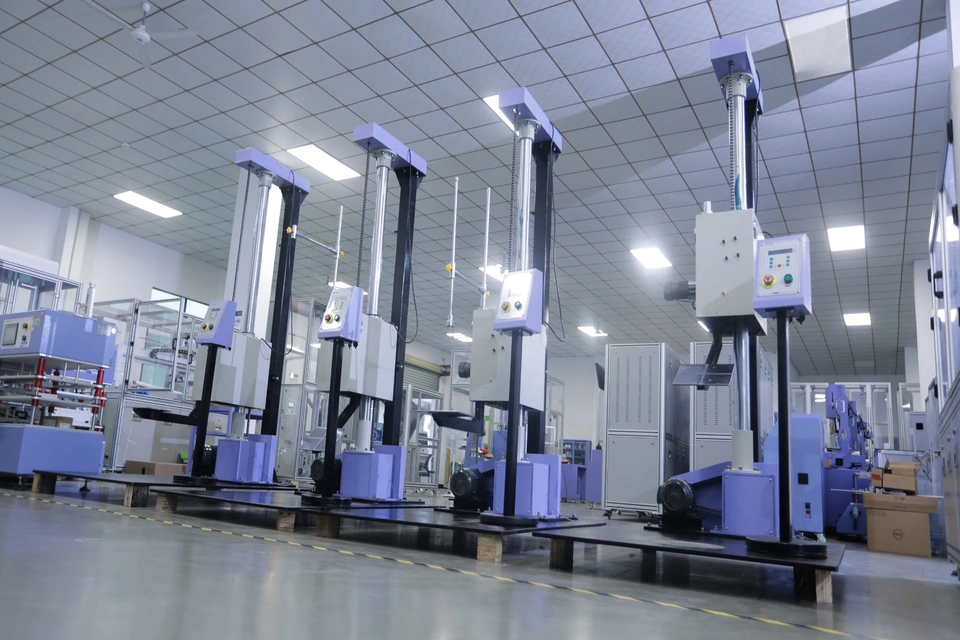
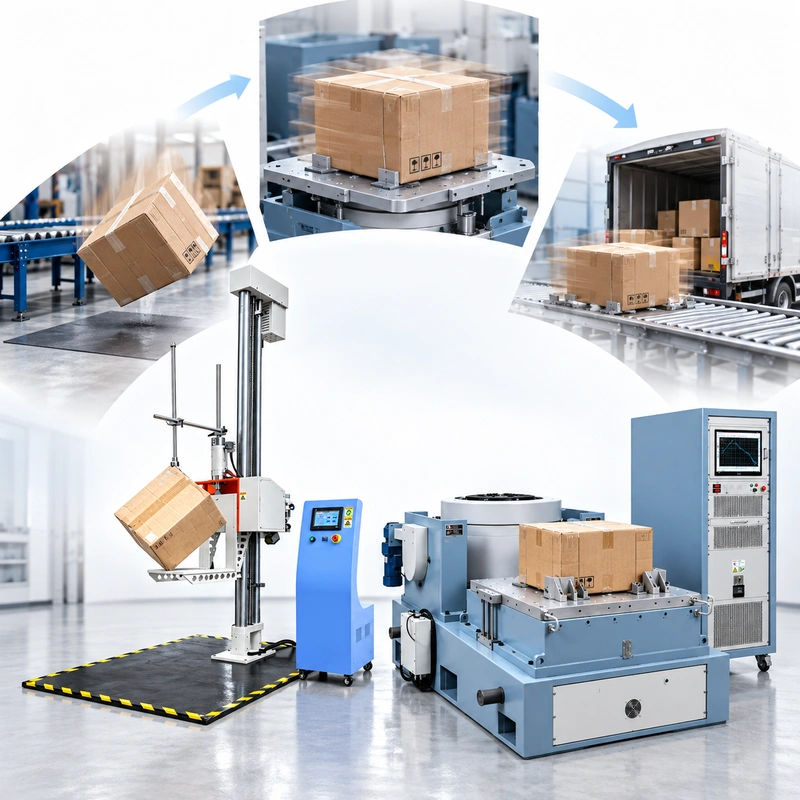
Drop Testing, Transportation Vibration and Packaging Reliability Equipment
A package can survive a single drop and still arrive damaged. During parcel distribution, repeated handling, vehicle vibration and other mechanical hazards may progressively weaken cushioning materials, shift the product inside the carton or damage sensitive components.
ASTM D7386-25 provides a structured practice for evaluating complete shipping units intended for single parcel delivery systems. Rather than treating each mechanical hazard as an isolated event, it uses a defined sequence of laboratory tests to evaluate packaging performance.
ITM-LAB manufactures packaging and transportation testing equipment, including package drop testers, electrodynamic vibration systems, carton compression testers and incline impact testing machines.
We help packaging engineers, manufacturers and testing laboratories select suitable equipment based on the shipping unit, applicable test methods and laboratory requirements.
Request a Packaging Test Equipment Configuration | Contact ITM-LAB
Why Single Parcel Packaging Requires Distribution Testing
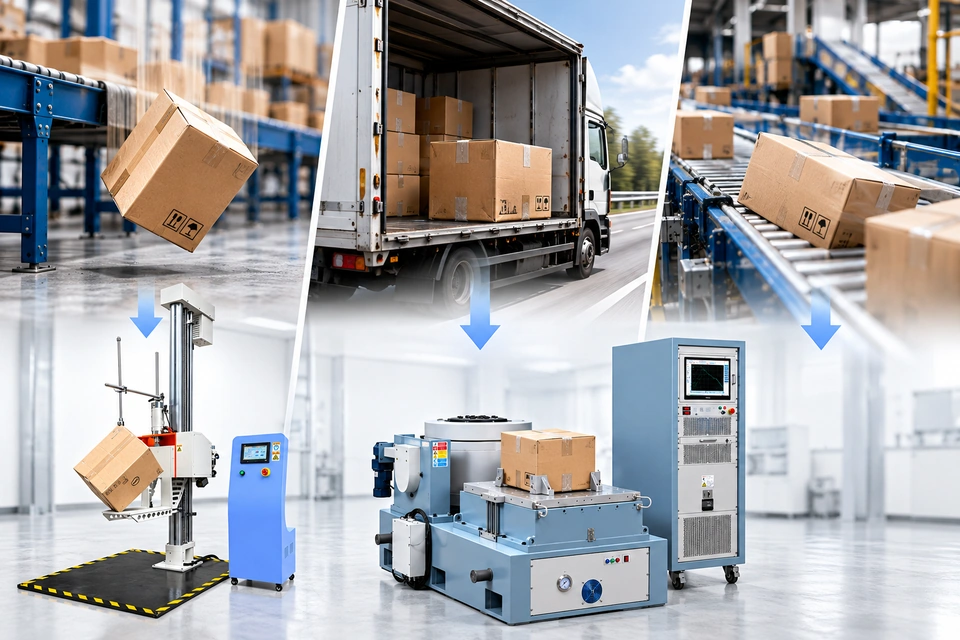
A packaged product encounters different mechanical conditions as it moves through a parcel delivery network.
During sorting, a shipping carton may be dropped or struck against another surface. Vehicle transportation introduces repeated vibration, while loading, unloading and subsequent handling can expose an already weakened package to further impacts.
These events may affect the outer carton, cushioning system and product differently.
A corrugated carton may show only minor deformation while the instrument inside has moved out of position. Conversely, a carton corner may become visibly damaged without compromising the product's function.
Common failure modes include compressed cushioning, cracked product housings, loose internal components, abrasion, displaced protective inserts and functional damage discovered after delivery.
For this reason, packaging qualification should evaluate the complete shipping unit rather than relying exclusively on the strength of individual packaging materials.
A distribution performance test helps determine whether the packaging design provides adequate protection under a defined set of simulated shipping conditions.
What Is ASTM D7386-25?
ASTM D7386-25 is the Standard Practice for Performance Testing of Packages for Single Parcel Delivery Systems.
It provides a uniform laboratory approach for evaluating shipping units weighing up to, but not exceeding, 150 lb (68 kg) that are intended for single parcel delivery.
The practice uses a test plan consisting of a sequence of anticipated distribution hazards. It is intended to evaluate shipping-unit performance and does not replace material specifications or other applicable pre-shipment testing requirements.
The complete shipping unit includes the product and its packaging components, such as the outer container, protective cushioning, inserts and closure materials.
Why the Test Sequence Is Important
Distribution hazards can produce cumulative damage.
For example, an initial handling event may deform a cushioning component. Subsequent vibration may allow greater movement inside the package, increasing the risk of damage during later handling.
ASTM D7386 addresses this interaction by requiring the specified tests to be conducted sequentially on the same shipping unit.
For performance evaluation, the shipping unit remains unopened until the sequence is completed. During packaging development, intermediate inspection may be useful for diagnosing damage, but it must be distinguished from a formal performance evaluation.
The selected test plan, severity conditions and acceptance criteria should be established before testing begins.
Which Edition Should a Laboratory Use?
ASTM D7386-25 is the 2025 edition of the practice.
When preparing a new testing program, laboratories should confirm the edition specified by the customer, purchase specification or applicable qualification procedure.
Test schedules, referenced methods, specimen preparation and reporting requirements should be checked against that edition rather than copied from an older laboratory procedure.
Technical Note: ASTM D7386 is a performance testing practice, not the specification for one particular testing machine. A complete test program may require several types of apparatus depending on the selected plan.
From ASTM D7386 Test Requirements to Equipment Selection
An effective packaging test laboratory must reproduce the required physical conditions, not simply own machines with familiar names such as drop tester or vibration tester.
The required apparatus depends on the selected ASTM D7386 test plan and the referenced methods.
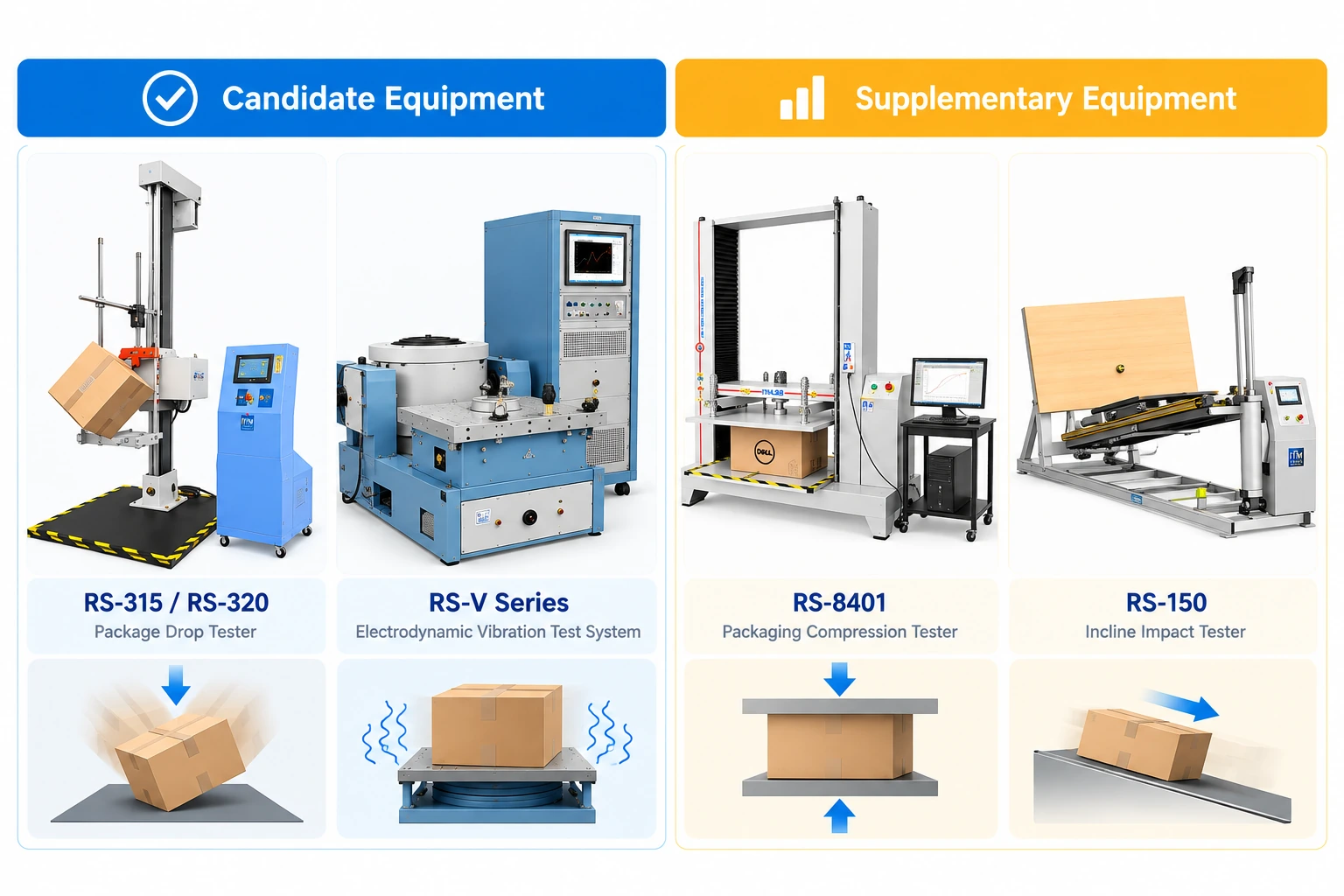
ITM-LAB recommends separating equipment selection into three categories: equipment potentially applicable to selected test procedures, supplementary packaging evaluation equipment, and specialized apparatus requiring further engineering review.
| Testing Requirement | Engineering Considerations | ITM-LAB Equipment | Configuration Status |
|---|---|---|---|
| Free-fall package testing | Package mass, dimensions, drop height, orientation, release mechanism and impact surface | RS-315 / RS-320 | Candidate equipment; method verification required |
| Controlled transportation vibration | Required vibration profile, payload, controller, table dimensions and motion limits | RS-V Series | Candidate equipment; profile and fixture verification required |
| Vibration with additional loading | Required loading arrangement, vibration performance and specimen conditions | RS-V with application-specific arrangement | Additional engineering verification required |
| Carton compression strength | Compression force, platen dimensions, test speed and carton geometry | RS-8401 | Supplementary packaging evaluation |
| Incline impact testing | Impact velocity, specimen arrangement and referenced method | RS-150 Series | Supplementary or method-specific evaluation |
| Other specialized distribution hazards | Apparatus geometry, physical input, specimen handling and required severity | To be reviewed | No confirmed model assignment |
This table is an equipment-selection guide, not a declaration that ITM-LAB can perform every ASTM D7386-25 procedure.
Where a selected test plan requires specialized impact, rolling, rotational drop or reduced-pressure apparatus, those requirements must be reviewed separately.
A quotation for a complete ASTM D7386 laboratory should identify supported procedures, required accessories and any remaining capability gaps.
ITM-LAB Equipment for Parcel Packaging Tests
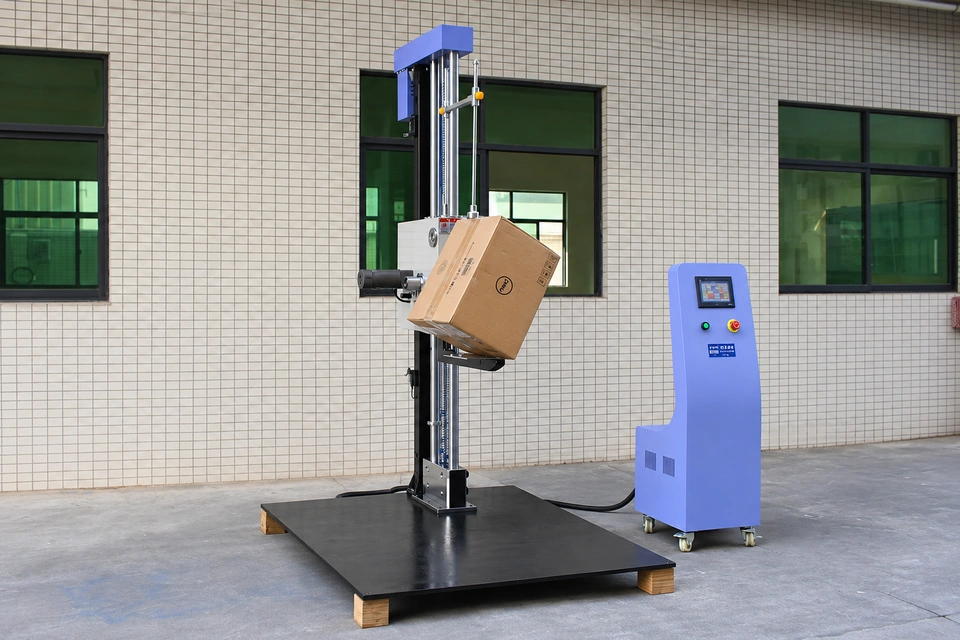
RS-315 / RS-320 Package Drop Testers
Controlled Free-Fall Testing for Packaged Products
The ITM-LAB RS-315 / RS-320 series is designed for package drop testing in packaging development, quality control and transportation reliability applications.
The series uses a controlled lifting and release arrangement to evaluate how packaged products respond to impact after falling from a selected height.
The actual test configuration must be chosen according to the package's mass, external dimensions and required impact orientations.
For packaging qualification, engineers should confirm that the selected model can provide the prescribed drop conditions without interfering with the specimen's motion.
Published configuration reference
| Parameter | RS-315PW / RS-320PW Published Configuration |
|---|---|
| Drop height | 300–2000 mm |
| Maximum test load | Up to 80 kg |
| Drop orientations | Face, edge and corner |
| Height error | ≤±1 mm |
These specifications refer to the RS-315PW / RS-320PW configuration published by ITM-LAB. Other RS-315 / RS-320 configurations should be checked against their individual datasheets.
Although the published 80 kg load rating exceeds the 68 kg scope limit of ASTM D7386, capacity alone does not establish method compatibility.
The drop height, release mechanism, impact surface and specimen orientation must also satisfy the applicable test requirements.
Best suited for: Packaging development, controlled handling drop evaluation and applicable free-fall procedures after method verification.
Product: RS-315 / RS-320 Package Drop Tester
Detailed configuration: RS-315PW / RS-320PW Precision Packaging Drop Tester
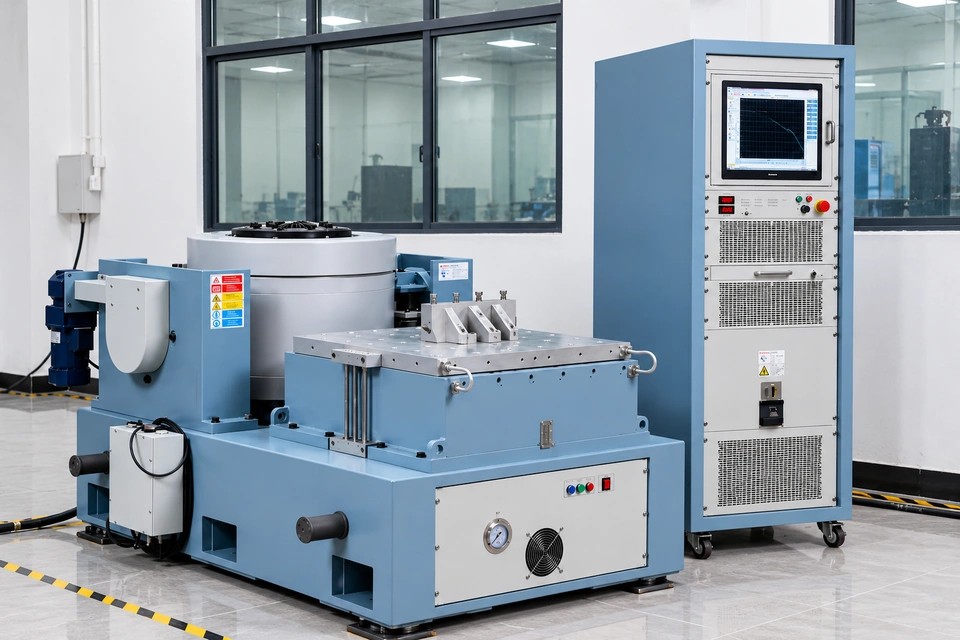
RS-V Electrodynamic Vibration Test System
Controlled Vibration Testing for Transportation and Product Reliability
Transportation vibration can cause repeated relative movement between a product and its packaging.
Over time, these movements may lead to cushioning deformation, abrasion, loosening of components or changes in product position.
The ITM-LAB RS-V Series is a configurable electrodynamic vibration system supporting sinusoidal and random vibration testing.
Available configurations include different force capacities and optional vibration controllers, fixtures and horizontal slip tables.
For packaging applications, the required vibration profile must be compared with the complete system's performance under the intended load.
The machine's rated force is only one part of this evaluation.
Key selection factors
| Engineering Requirement | Why It Matters |
|---|---|
| Vibration profile | Determines controller and system performance requirements |
| Total moving mass | Includes the shipping unit, platform and fixtures |
| Frequency range | Must cover the required test input |
| Displacement and velocity | May limit achievable motion at particular frequencies |
| Acceleration and force | Must be available under the actual moving load |
| Platform dimensions | Must accommodate the required specimen arrangement |
| Specimen restraint | Must follow the applicable test method |
| Additional loading | Requires separate verification where specified |
ITM-LAB's published RS-V portfolio includes configurable systems with force ratings from 980 N to 9,800 N. The appropriate model should be selected from the approved technical datasheet rather than force rating alone.
Where the applicable test plan requires vibration under superimposed loading, the required loading apparatus and its interaction with the vibration system must be evaluated before confirming suitability.
Best suited for: Controlled vibration testing and selected transport simulation applications where the system configuration meets the required procedure.
Product: RS-V Series — Packaging Testing Equipment
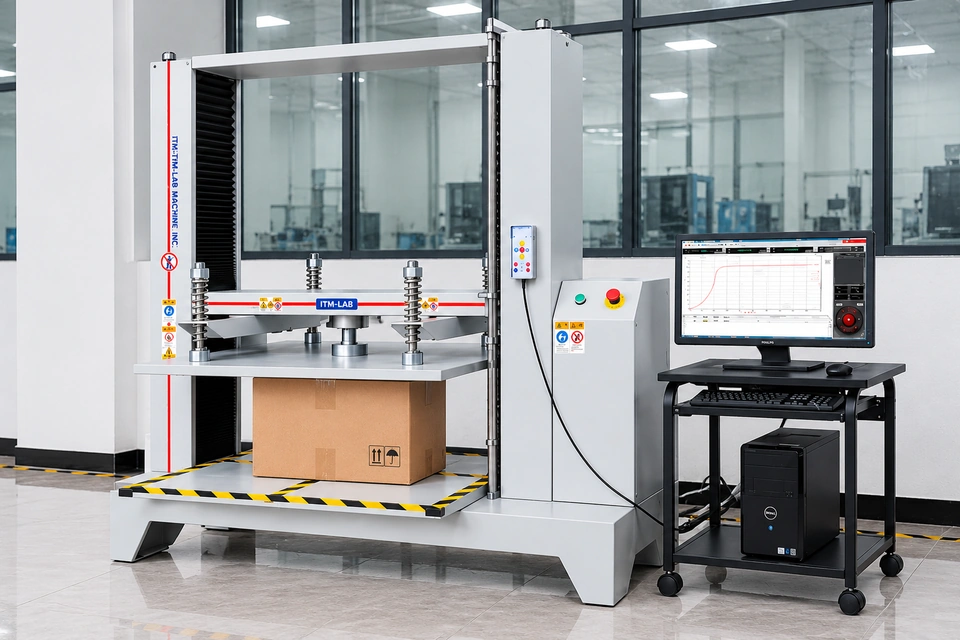
RS-8401 Packaging Compression Tester
Supplementary Carton Compression and Stacking Strength Evaluation
Corrugated cartons must provide adequate structural support during storage, handling and transportation.
Compression testing helps packaging engineers measure load-bearing behavior, compare carton designs and identify weaknesses in packaging construction.
The ITM-LAB RS-8401 is a servo-controlled packaging compression tester for corrugated cartons and other packaging structures.
Published equipment specifications
| Parameter | RS-8401 |
|---|---|
| Available force capacities | 10 / 20 / 50 kN |
| Test speed | 0.001–200 mm/min |
| Maximum test space | Up to 1500 × 1500 × 1500 mm |
| Applications | Compression, deformation and stacking strength evaluation |
RS-8401 can support packaging development and quality control alongside distribution performance testing.
However, independent static carton compression testing should not be represented as a mandatory step in every ASTM D7386 test plan.
Best suited for: Carton compression strength evaluation, packaging design comparison and supplementary laboratory quality control.
Product: RS-8401 Packaging Compression Tester
Additional Packaging Test Equipment
Depending on the packaging program, laboratories may also require incline impact testing, clamping evaluation or other specialized procedures.
ITM-LAB offers the RS-150 incline impact test systems and RS-8418A package clamping tester for relevant transport and handling applications.
These machines should be selected according to their individual test methods and should not be assumed to replace specialized ASTM D7386 apparatus.
Explore: ITM-LAB Packaging Testing Equipment
How to Specify an ASTM D7386 Packaging Test Equipment System
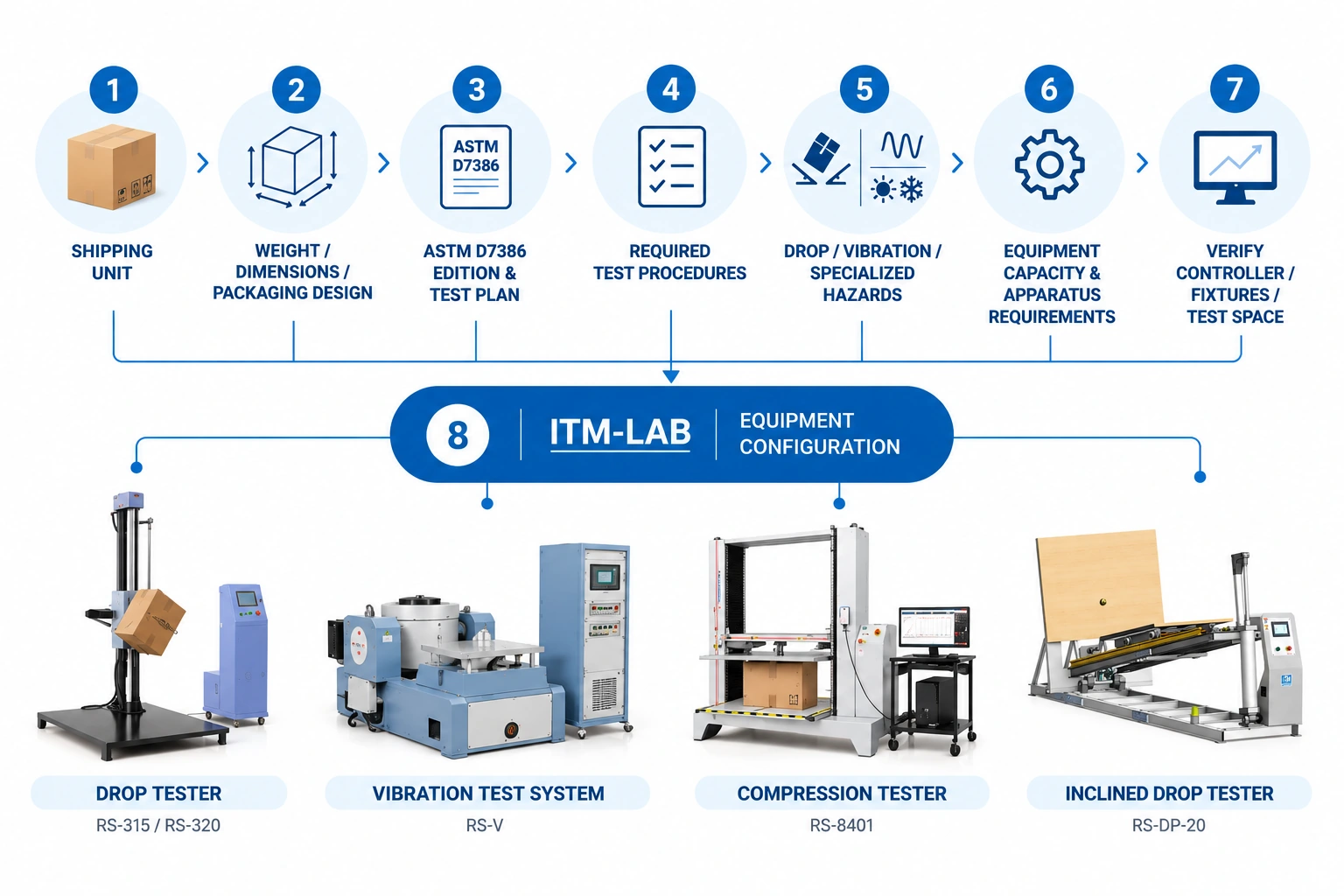
Equipment selection should begin with the shipping unit and the intended test plan, not a predetermined machine list.
Define the Complete Shipping Unit
Record the product type, total packaged mass, external dimensions and packaging construction.
The laboratory should also identify sensitive components, cushioning materials, closures and any special handling considerations.
This information determines the physical size and payload requirements of the equipment.
Confirm the Applicable Test Plan
Identify the ASTM D7386 edition and the required test schedules.
The applicable procedures should then be reviewed for apparatus requirements, specimen orientation, test severity and sequence.
A test plan that includes specialized hazards may require additional apparatus beyond conventional drop and vibration systems.
Verify Equipment Performance
For drop testing, check the required height, release conditions, impact surface and specimen orientations.
For vibration testing, check the specified profile, controller capabilities, platform dimensions, moving mass and motion limits.
For specialized testing, verify the required physical input and apparatus configuration against the referenced method.
Plan for Reporting and Laboratory Workflow
Consider sample throughput, test setup time, operator access, calibration requirements and reporting.
A laboratory working with multiple package sizes may require configurable platforms and accessories.
The final equipment specification should clearly distinguish standard machine capabilities from optional accessories and custom engineering requirements.
Application Example: Packaging an Electronic Measurement Instrument
Consider a manufacturer preparing an electronic measurement instrument for shipment through a single parcel delivery network.
The instrument is protected by molded cushioning and packed inside a corrugated shipping carton.
The manufacturer wants to evaluate the packaging system before approving it for routine distribution.
Illustrative shipping unit
| Item | Example |
|---|---|
| Product | Electronic measurement instrument |
| Total shipping weight | 18 kg |
| External package dimensions | 600 × 400 × 350 mm |
| Packaging | Corrugated carton with protective inserts |
| Distribution channel | Single parcel delivery |
| Reference practice | ASTM D7386-25 |
| Primary concerns | Handling damage, vibration and internal movement |
This is a hypothetical equipment-selection example, not a completed ITM-LAB customer test or a prescribed ASTM D7386 test plan.
The packaging engineer first establishes the applicable test plan and acceptance criteria.
For any required free-fall testing, the engineer compares the package mass and dimensions with the selected RS-315/320 configuration, then verifies the prescribed drop height, impact orientations and release method.
For vibration testing, the engineer reviews the required test profile and evaluates whether an RS-V configuration can accommodate the package, platform and any necessary fixtures while maintaining the specified motion.
If the test plan requires additional loading or specialized mechanical hazards, the laboratory must identify and verify the appropriate apparatus before finalizing the equipment specification.
After testing, the product is inspected according to the predefined acceptance criteria. These may include housing integrity, component security, electrical operation and measurement performance.
This process produces a practical equipment requirement rather than a generic list of testing machines.
Test Results, Acceptance Criteria and Reporting
A completed test sequence is not automatically a successful packaging qualification.
The test program should define what constitutes acceptable performance before testing begins.
For a packaged electronic instrument, acceptance criteria may include continued functionality, absence of structural damage, acceptable calibration performance and adequate retention of internal components.
Packaging condition may be evaluated separately. Visible carton damage does not necessarily indicate product failure unless it exceeds the agreed acceptance limits.
A useful laboratory report should document the shipping unit identification, standard edition, applicable procedures, test conditions, equipment configuration and observed results.
For vibration testing, the relevant control settings and recorded test data may also be necessary.
Where damage occurs, the report should support investigation of the packaging design, cushioning performance or product vulnerability.
Industries and Packaging Applications
Consumer Electronics
Portable electronics and accessories may be exposed to repeated handling and transportation vibration. Packaging testing helps evaluate cushioning effectiveness and the risk of damage to sensitive assemblies.
Industrial Instruments
Measurement devices, controllers and industrial electronic assemblies often require packaging designed around their mass, geometry and shock sensitivity.
Medical and Laboratory Devices
Portable medical and laboratory instruments may require transport packaging evaluation as part of their distribution reliability programs. Product-specific regulatory and qualification requirements should be reviewed separately.
Packaging Manufacturers and Testing Laboratories
Corrugated packaging suppliers, contract testing laboratories and product manufacturers can use drop, vibration and compression equipment for packaging development, verification and quality control.
Frequently Asked Questions
- What does ASTM D7386-25 cover?
ASTM D7386-25 provides a laboratory performance testing practice for shipping units intended for single parcel delivery systems. It uses a defined sequence of anticipated distribution hazards to evaluate the complete packaged product.
- What is the maximum package weight under ASTM D7386?
The practice covers shipping units weighing up to 150 lb (68 kg), including the product and packaging.
- Is ASTM D7386 only a drop test?
No. ASTM D7386 is a distribution performance testing practice. Depending on the selected test plan, multiple mechanical hazards and corresponding test methods may be involved.
- What is the difference between ASTM D7386 and ASTM D4169?
ASTM D7386 focuses on single parcel delivery systems, while ASTM D4169 provides a broader framework for evaluating shipping units under distribution conditions. The appropriate practice depends on the intended shipping environment and applicable customer requirements.
- Can one testing machine perform the complete ASTM D7386 test?
Not necessarily. Different test procedures may require different types of apparatus. Drop testers and vibration systems can be candidates for selected procedures, while specialized hazards may require additional equipment.
- Can an RS-V vibration system be used for ASTM D7386 testing?
An RS-V system may be suitable for selected vibration procedures if its controller, test platform, available motion and specimen arrangement meet the applicable method requirements. Suitability must be confirmed for the intended test configuration.
- Does passing ASTM D7386 guarantee that a product will arrive undamaged?
No. Laboratory testing evaluates performance under defined simulated distribution conditions. Actual transportation environments can vary, and test results should be interpreted within the scope of the selected plan and acceptance criteria.
- Can ITM-LAB supply equipment for an ASTM D7386 packaging laboratory?
ITM-LAB manufactures package drop testers, electrodynamic vibration systems and supplementary packaging testing equipment. Our team can review the required test procedures and identify suitable equipment, accessories and any remaining capability gaps.
Request a Packaging Testing Solution from ITM-LAB
Equipment Selection Based on Your Shipping Unit and Test Requirements
A reliable packaging test laboratory starts with the actual shipping unit, the applicable test plan and the performance requirements of each testing machine.
ITM-LAB provides packaging testing equipment manufacturing, custom engineering and technical support for manufacturers, packaging development teams and laboratories.
To prepare a suitable equipment proposal, please share the following information:
-
Product type and total shipping unit weight.
-
Package dimensions and protective packaging construction.
-
Applicable ASTM D7386 edition and required test procedures.
-
Drop, vibration and other specified test conditions.
-
Laboratory throughput, control and reporting requirements.
Our engineering and sales team can review the information and recommend equipment configurations for the procedures that can be supported, while identifying any additional apparatus or technical verification required.
Send Your Test Requirements | Request Equipment Datasheets | Contact ITM-LAB
ITM-LAB — Testing Equipment Manufacturing, Custom Engineering and Technical Support