
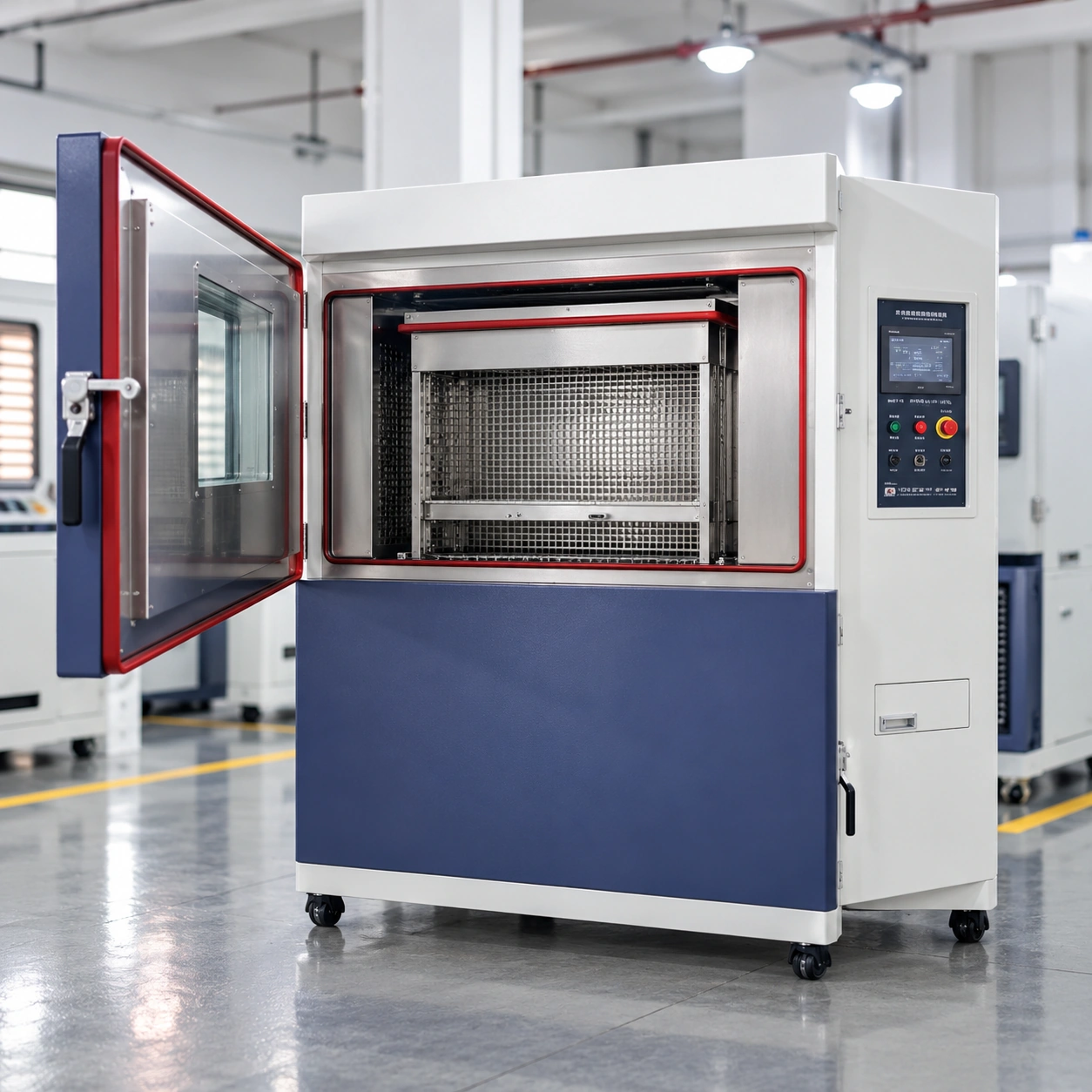
A humidity environmental test chamber allows manufacturers and laboratories to evaluate how products respond to controlled temperature and relative humidity conditions. It is commonly used in electronics, automotive components, electrical assemblies, polymers, packaging materials, and other applications where moisture exposure may affect product reliability.
For buyers, however, choosing a chamber involves more than comparing the temperature range, maximum humidity value, and internal volume listed in a catalogue.
The chamber must be suitable for the actual test profile, specimen dimensions, heat load, installation environment, and verification requirements. Two chambers with similar advertised specifications may perform differently when subjected to the same operating conditions.
This guide explains what to evaluate before purchasing a humidity environmental test chamber, which technical questions to ask the manufacturer, and what information to include when requesting a quotation.
What Is a Humidity Environmental Test Chamber?
A humidity environmental test chamber, also known as a temperature and humidity test chamber or climatic chamber, provides a controlled environment for exposing specimens to specified temperature and relative humidity conditions.
Depending on the test method, the chamber may be used for constant-temperature and humidity exposure, programmed climatic cycling, moisture-resistance evaluation, or environmental conditioning before subsequent inspections.
Typical applications include:
-
Evaluating electronic assemblies under high-humidity conditions.
-
Studying material changes following controlled moisture exposure.
-
Assessing automotive components under specified climatic profiles.
-
Conditioning specimens before electrical, mechanical, or visual examination.
-
Supporting product development, qualification, and routine quality-control procedures.
The chamber creates the specified environment. Whether the specimen passes or fails depends on the applicable test standard, acceptance criteria, and subsequent evaluation method.
Temperature-Only vs. Temperature and Humidity Chambers
These two equipment types should not be treated as interchangeable.
| Equipment | Primary function | Typical purchasing requirement |
|---|---|---|
| Temperature test chamber | Controlled high- and low-temperature exposure | Thermal conditioning or temperature cycling without active humidity control |
| Temperature and humidity chamber | Controlled temperature and relative humidity | Climatic exposure requiring defined humidity conditions |
| Rapid temperature change chamber | Controlled temperature transitions at a specified rate | Applications with defined heating or cooling-rate requirements |
| Thermal shock chamber | Rapid transfer between different temperature environments | Thermal shock procedures requiring a dedicated chamber configuration |
If the test procedure specifies both temperature and relative humidity, a temperature-only chamber is not a suitable substitute.
Start With the Test Profile, Not the Catalogue
The most important purchasing question is not simply, "What is the maximum humidity this chamber can achieve?"
It is:
Can the proposed chamber maintain the required temperature and humidity conditions throughout my actual test procedure?
A useful purchasing specification should describe the complete test profile, including operating points, duration, transitions, specimen load, and acceptance requirements.
For example, a buyer may need prolonged exposure at elevated temperature and high relative humidity, followed by a different conditioning stage. Another application may require multiple programmed temperature and humidity steps.
These requirements should be shared with the manufacturer before selecting the chamber configuration.
Understand the Humidity Operating Envelope
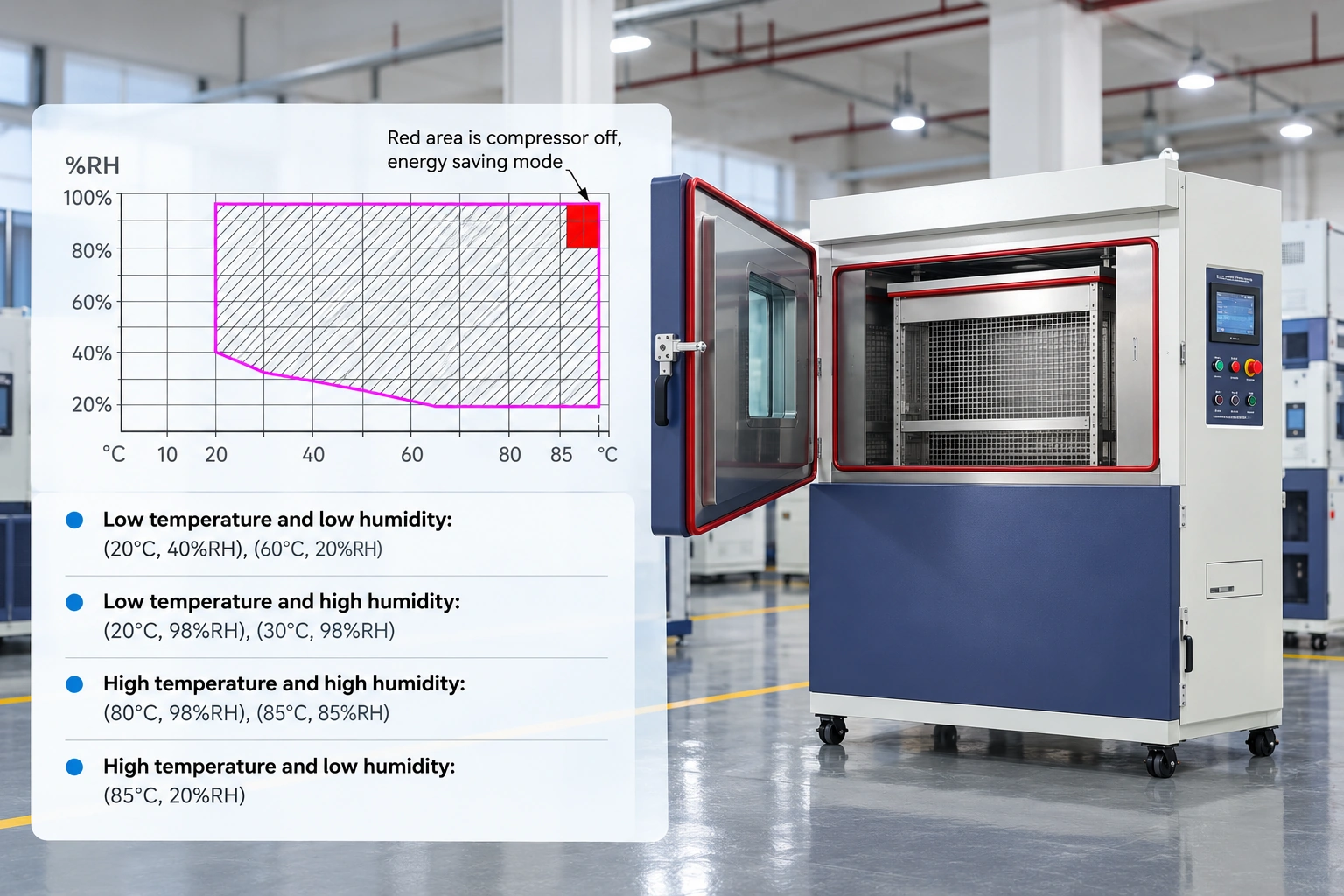
Humidity control capability depends on temperature. A chamber's advertised humidity range should not be interpreted as a guarantee that every humidity value is achievable at every temperature.
For ITM-LAB GDJS temperature and humidity chambers, available configurations include a nominal humidity range of 20–98% RH. The achievable combinations must be confirmed against the specific model's temperature–humidity operating envelope.
When reviewing a supplier's datasheet, ask for:
-
The temperature and humidity operating envelope.
-
Any restrictions at low-temperature or high-temperature conditions.
-
The specified measurement conditions.
-
Humidity fluctuation and deviation data.
-
Whether performance figures apply to an empty chamber or a defined specimen load.
A clear operating envelope is more useful than a single maximum humidity figure.
How to Specify the Right Chamber Capacity
Chamber volume is an important purchasing factor, but nominal capacity alone does not determine whether the equipment is suitable.
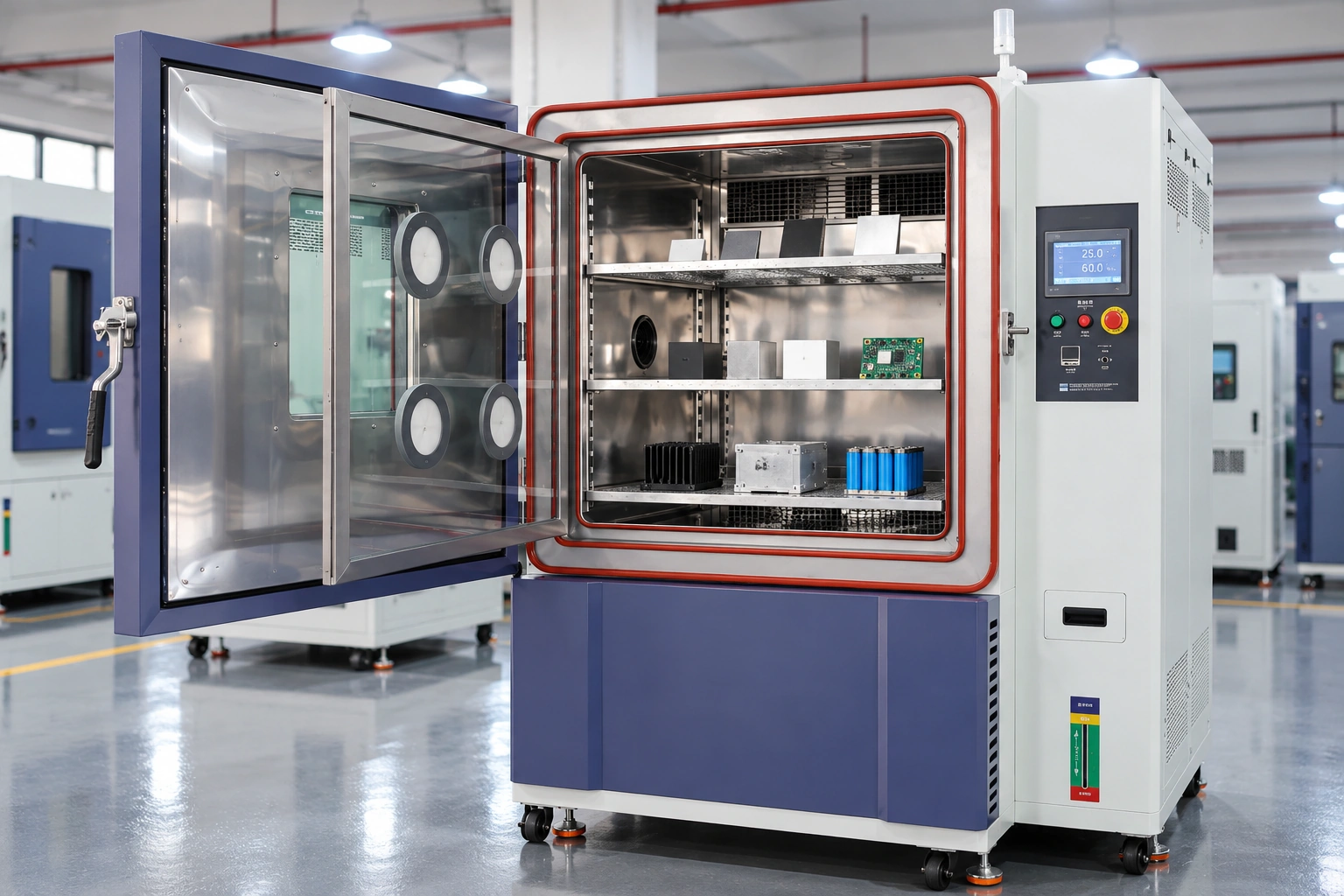
The specimen must fit inside the usable test space without obstructing airflow, sensors, drainage, or other essential components.
Before selecting a 100 L, 250 L, 500 L, or 1000 L configuration, provide the manufacturer with the specimen's actual dimensions and loading arrangement.
Check Usable Space and Air Circulation
Consider the following:
Specimen dimensions. Confirm the largest length, width, and height of the item being tested, including fixtures, cables, and connectors.
Quantity and arrangement. Multiple specimens may require additional shelves or a different chamber layout.
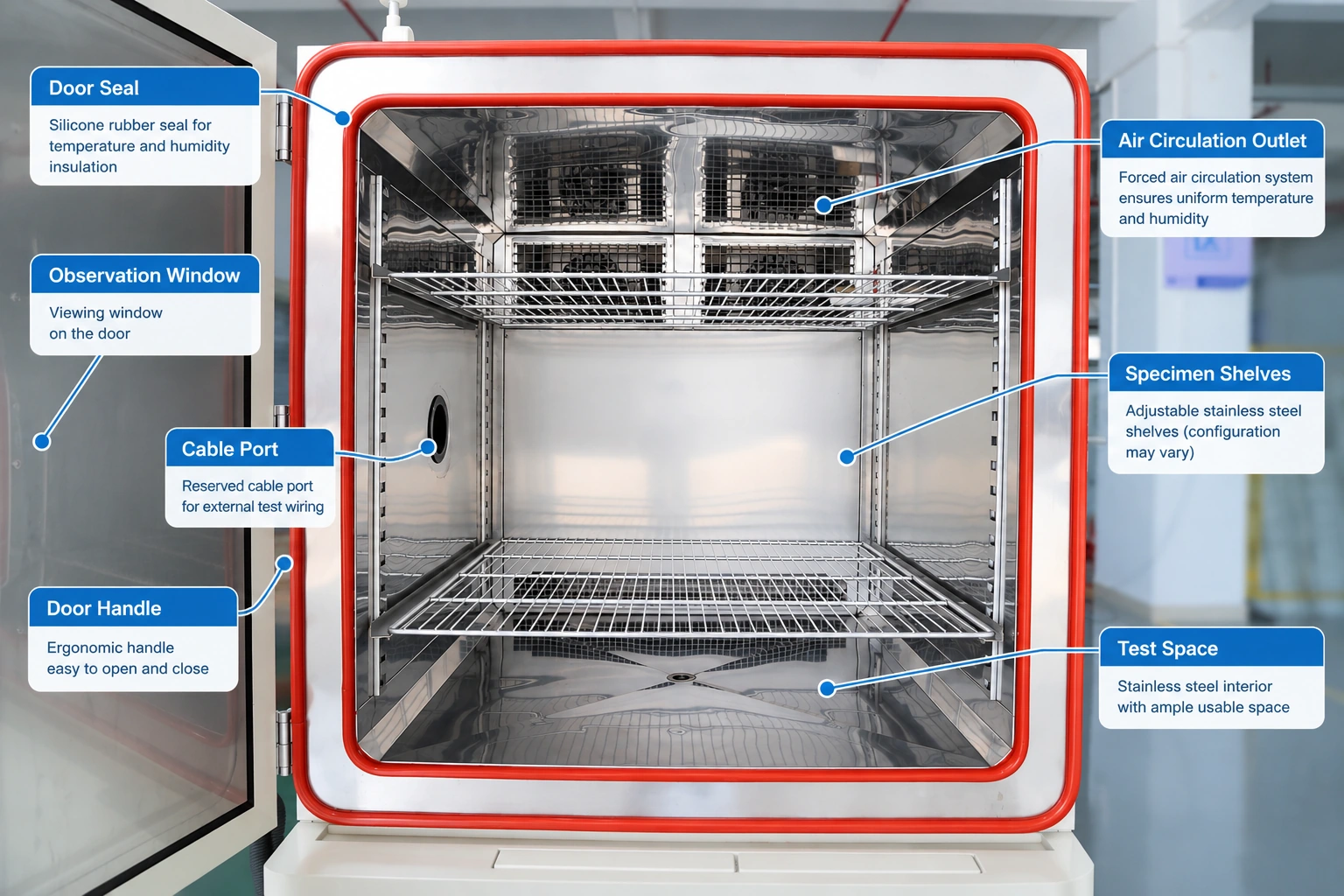
Airflow clearance. Specimens should not block the chamber's intended air circulation. Required clearances must be confirmed for the proposed model.
Specimen heat load. Powered electronic products may generate heat during testing. This can affect chamber performance and must be disclosed during configuration.
Access requirements. Cable ports, observation windows, shelving, and other accessories should be considered before the chamber is manufactured.
A chamber that physically accommodates the specimen is not necessarily capable of maintaining the required environmental conditions with that specimen installed.
Technical Specifications Buyers Should Compare
When comparing humidity environmental test chambers from different manufacturers, request performance information under equivalent conditions.
The following criteria are particularly important.
| Specification | What buyers should verify |
|---|---|
| Temperature range | Required minimum and maximum operating temperatures |
| Humidity range | Achievable relative humidity at the required temperatures |
| Temperature fluctuation | Stability under stated measurement conditions |
| Temperature deviation | Difference between measured and specified temperature |
| Temperature uniformity | Variation across the defined working space |
| Humidity performance | Fluctuation and deviation at relevant operating points |
| Heating and cooling performance | Defined conditions, loading, and measurement method |
| Chamber capacity | Nominal volume and usable specimen dimensions |
| Controller | Program steps, data recording, and required interfaces |
| Utilities | Power supply, water requirements, drainage, and ventilation |
Why Performance Conditions Matter
A supplier may publish temperature fluctuation, uniformity, or deviation figures measured with an empty chamber under specified ambient conditions.
These figures should not automatically be treated as guaranteed performance with a large, powered, or heat-generating specimen installed.
Ask the manufacturer to distinguish between:
-
Catalogue performance under defined reference conditions.
-
Performance expected with your proposed specimen load.
-
Test-method requirements.
-
Acceptance criteria agreed upon before delivery.
This distinction is particularly important for electronics, battery-related components, and other products that may produce heat during operation.
Chamber Construction and Control System: What to Inspect
A reliable purchasing assessment should include the physical equipment, not only its specification sheet.
Inspect the chamber interior, door assembly, sealing arrangement, controller, electrical cabinet, and service-access layout where relevant.
Interior and Door Construction
The internal chamber should be suitable for the intended environmental exposure and specimen arrangement. Review the shelves, internal surfaces, door sealing system, observation window, and any required cable-access ports.
A practical inspection should establish whether the specimen can be loaded, connected, monitored, and removed safely.
Controller and Test Programming
For programmable testing, confirm that the control system supports the required sequence of temperature and humidity stages.
Depending on your application, useful functions may include programmed test profiles, alarm settings, data recording, and report export.
Rather than requesting a particular controller brand without a technical reason, specify the functions your laboratory actually needs.
Electrical Configuration and Installation
Power requirements can vary according to chamber size and configuration.
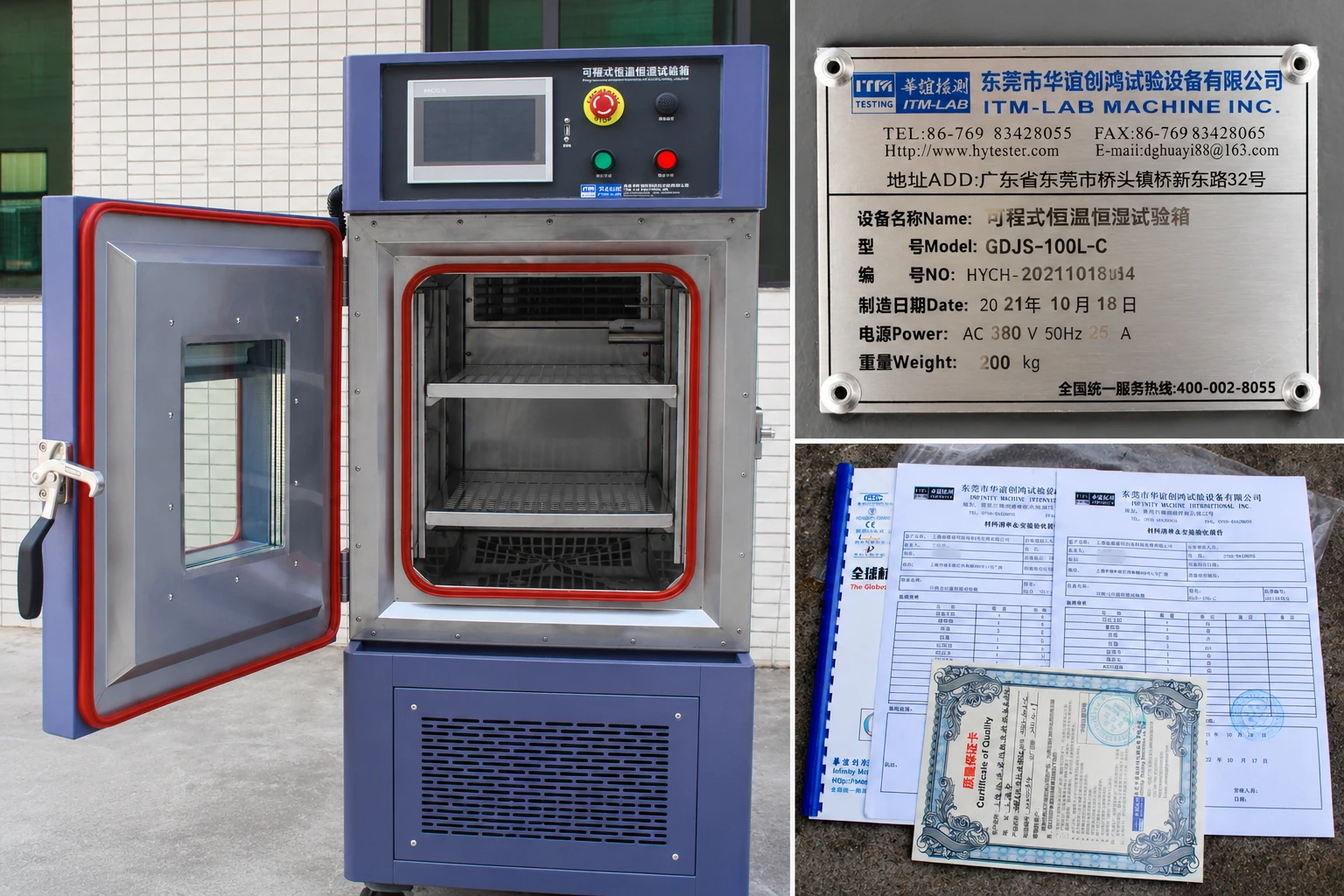
For reference, the nameplate of an actual ITM-LAB GDJS-100L-C unit manufactured in October 2021 identifies an AC 380 V, 50 Hz, 25 A electrical configuration.
This is an example of a delivered unit, not a universal power specification for all GDJS models. The manufacturer should confirm the electrical and installation requirements for the equipment being quoted.
How to Evaluate a Humidity Environmental Test Chamber Manufacturer
Selecting the manufacturer is another important part of the purchasing process.
A quotation may look competitive, but buyers should also evaluate whether the supplier can provide technical clarification, suitable configuration options, inspection arrangements, documentation, and support after delivery.
Look for Evidence Beyond Product Renderings
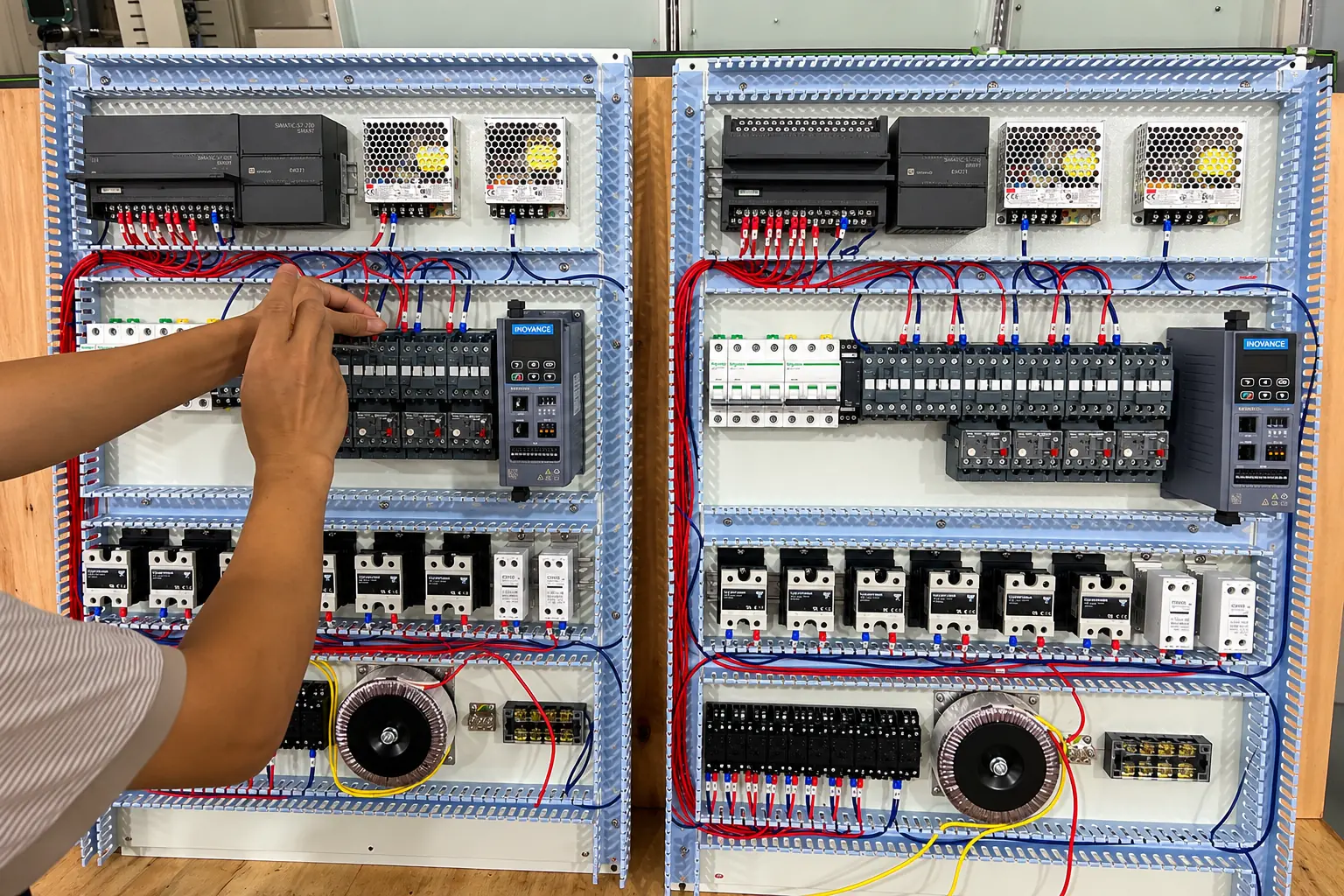
Useful manufacturing evidence includes actual production photographs, equipment construction details, finished-machine inspection, and model-specific documentation.
For example, ITM-LAB's environmental chamber production photographs show multiple manufactured units, while actual GDJS equipment images provide a closer view of the chamber structure and control layout.
These photographs establish what the equipment looks like in practice. They should be supported by a current, model-specific quotation and approved technical specification.
Ask About Factory Inspection and Acceptance
Before placing an order, discuss the inspection and acceptance requirements with the manufacturer.
Depending on the project, the agreed scope may cover:
-
Verification of the ordered configuration.
-
Visual inspection and safety-related checks.
-
Controller and programmed-operation checks.
-
Temperature and humidity performance verification at agreed points.
-
Review of accessories and supplied documentation.
-
Confirmation of shipping and installation arrangements.
Where a formal factory acceptance test is required, its procedure, conditions, acceptance limits, and reporting format should be agreed upon before production or shipment.
Confirm Documentation and After-Sales Support
Buyers should establish which documents are included with the equipment and what support is available after delivery.
These may include an operation manual, packing list, applicable inspection records, warranty information, and installation guidance.
ITM-LAB can discuss customized chamber configurations, technical consultation, and on-site training according to project requirements. The exact delivery scope should be confirmed in the quotation.
Common Purchasing Mistakes to Avoid
Several specification errors can result in an unsuitable chamber or unnecessary project costs.
Choosing only by the advertised humidity range. Confirm the required temperature and humidity combination against the model's operating envelope.
Selecting capacity based only on external specimen dimensions. Include fixtures, cables, airflow clearance, and specimen heat load.
Comparing performance figures without checking test conditions. Empty-chamber specifications and loaded operating performance are not automatically equivalent.
Ignoring installation requirements. Confirm electrical supply, access routes, ventilation, water requirements where applicable, and drainage before ordering.
Leaving acceptance criteria until after delivery. Agree on the relevant verification points and documentation during the purchasing stage.
A more detailed RFQ at the beginning generally leads to a more accurate equipment proposal and fewer configuration changes later.
What to Include in Your Humidity Test Chamber RFQ
A useful request for quotation does not need to be lengthy. It should provide enough technical information for the manufacturer to identify a suitable configuration.
| RFQ item | Information to provide |
|---|---|
| Application | Product or material being tested |
| Test standard | Standard number, revision, or internal procedure, if applicable |
| Temperature requirements | Minimum, maximum, and important operating points |
| Humidity requirements | Required RH values and corresponding temperatures |
| Test duration | Exposure time and programmed test sequence |
| Specimen | Dimensions, quantity, weight, and arrangement |
| Heat load | Whether specimens operate or generate heat during testing |
| Capacity | Preferred volume, if already defined |
| Accessories | Cable ports, shelves, observation window, data export, etc. |
| Installation | Destination country, power supply, and site constraints |
| Verification | Required inspection, acceptance, and documentation |
| Purchasing schedule | Expected delivery or project timeline |
If you do not yet know the required chamber volume, provide your specimen dimensions and test profile instead of guessing a capacity.
The manufacturer can then review the requirements and propose an appropriate configuration.
ITM-LAB GDJS Temperature and Humidity Chamber Solutions
ITM-LAB manufactures environmental testing equipment for product development, quality control, and reliability evaluation.
The GDJS series provides programmable temperature and humidity testing configurations, with chamber size and selected features determined by the intended application.
Available configurations include temperature ranges such as −40°C to +150°C, with lower-temperature options subject to model selection. Humidity capability and performance should be checked against the approved technical data and operating envelope for the proposed unit.
ITM-LAB also provides engineering consultation for customized requirements, including chamber dimensions, specimen arrangement, and selected accessories.
The most effective way to select a configuration is to share your actual test requirements rather than choosing a model based on catalogue capacity alone.
FAQ
- What is the difference between a humidity chamber and an environmental test chamber?
An environmental test chamber is a broad equipment category. A humidity chamber is designed to provide controlled relative humidity, generally together with temperature control. Not every environmental chamber includes active humidity control.
- Can a humidity test chamber operate at 98% RH at any temperature?
No. The achievable humidity range depends on temperature and the chamber's operating envelope. Buyers should confirm the required temperature–humidity combinations with the manufacturer.
- How do I choose between a 100 L and a 1000 L chamber?
Start with specimen dimensions, quantity, arrangement, airflow clearance, and heat load. Nominal chamber volume alone is not enough to establish suitability.
- Can I test powered electronic products inside the chamber?
This depends on the specimen, heat dissipation, safety considerations, and chamber configuration. Inform the manufacturer of the operating power and expected heat load before ordering.
- What should I request before purchasing a temperature and humidity chamber?
Request a model-specific technical specification, operating envelope, dimensional information, utility requirements, quotation scope, and agreed inspection or acceptance arrangements.
- Can ITM-LAB provide a customized humidity environmental test chamber?
ITM-LAB can review application-specific requirements and discuss suitable chamber configurations. Provide your test profile, specimen information, installation requirements, and any necessary accessories for technical evaluation.
Request a Suitable Humidity Test Chamber Configuration
Planning to purchase a humidity environmental test chamber for your laboratory or production facility?
Send ITM-LAB your required temperature and humidity conditions, specimen dimensions, test procedure, and preferred chamber capacity. Our team can review your application and recommend a suitable configuration for quotation.
Send Your Test Requirements | Request a Datasheet | Contact ITM-LAB
