
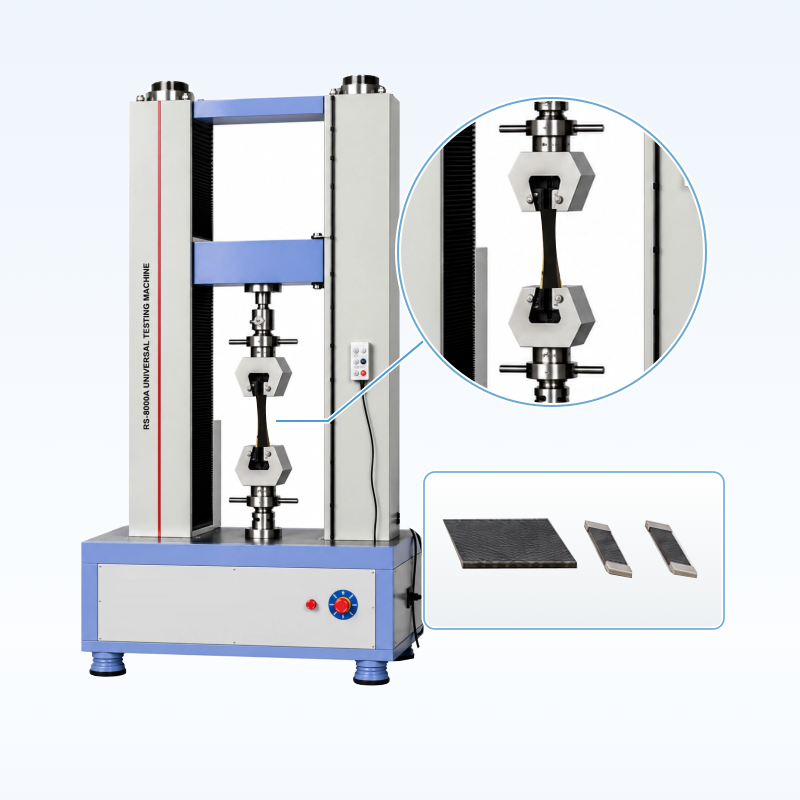
ITM-LAB configures RS-8000 and RS-8000A universal testing machines for ASTM D3410 in-plane compression testing of high-modulus fiber-reinforced polymer matrix composites. Each setup combines an electromechanical load frame, force measurement, and a shear-loading fixture, with strain instrumentation and reporting specified for your test program.
Request an ASTM D3410 Test System Quote
ASTM D3410 System Configuration
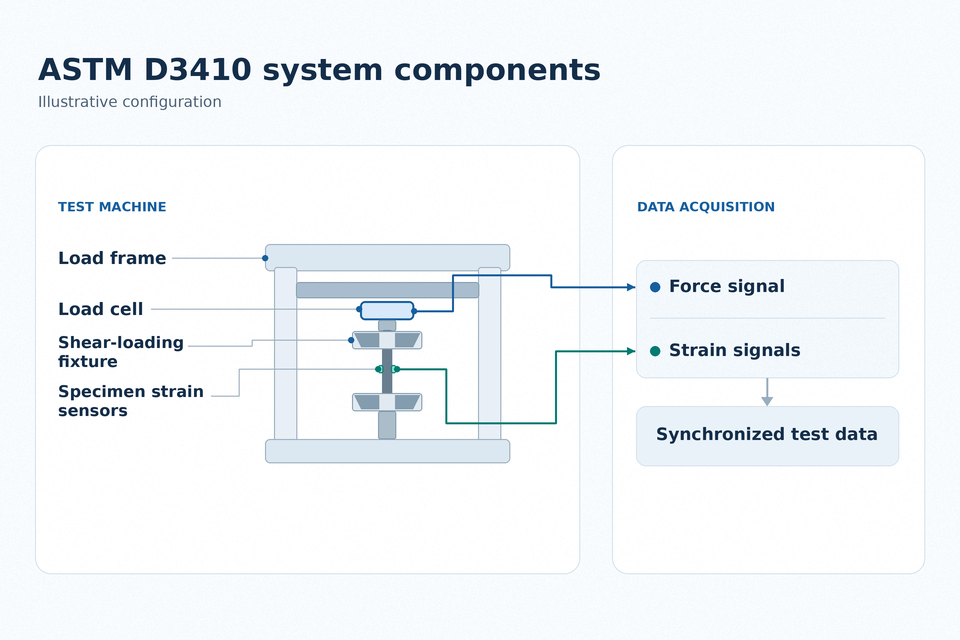
The system quotation identifies the components selected for your specimen and test method. Send a coupon drawing and tell us which properties your lab needs to report.
| System component | What the quotation specifies |
|---|---|
| Load frame and load cell | RS-8000 or RS-8000A model, rated frame capacity, selected load cell, and usable compression force range for the configured system. |
| Shear-loading fixture and mounting hardware | The selected fixture, mounting hardware, and compatibility with the specimen width, thickness over the tabs, and unsupported gauge length. |
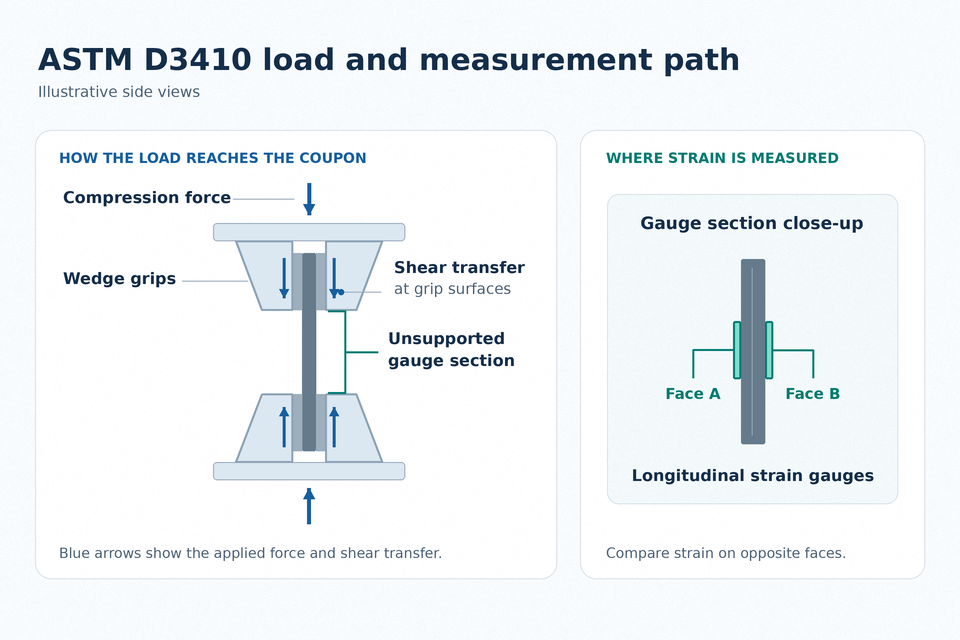
| Specimen strain measurement | The proposed sensors and channels for gauge-section strain, including opposite-face longitudinal readings for bending assessment as required by the specified method. If compressive Poisson’s ratio is required, specify transverse strain measurement. |
| Data acquisition and reporting | Which force and strain channels will be recorded together, which raw data can be exported, and which results the report will include. |
| Trial and acceptance, if included | Representative specimen, acceptance criteria, and the data and documentation supplied with the trial. |
We check available fixture options against the coupon drawing. ITM-LAB can customize tooling when the specimen geometry or mounting requirements call for it.
RS-8000 and RS-8000A Frame Options
| Series | Rated frame capacity options | Selection considerations |
|---|---|---|
| RS-8000 | 10–50 kN, depending on the model | Check the expected compression loads against the selected load cell’s verified range and confirm the installed fixture fits the frame. |
| RS-8000A | 100, 200, or 300 kN | Consider this series for higher expected loads. Verify the ratings of the selected load cell, fixture, and mounting hardware for the planned test. |
Ask for the usable compression force range of the assembled system and the working space with the fixture installed. If your lab tests several coupon types, include the lowest and highest expected forces and the specimen size range. RS-8000 product page · RS-8000A product page
How the System Runs the ASTM D3410 Test
The frame applies a compressive force. The fixture’s wedge grips transfer that force through shear at the gripping surfaces, leaving the central gauge section unsupported. The load cell measures force, and the specimen sensors measure strain over the gauge section as required by the test plan.
ASTM D3410/D3410M-16(2024) covers certain continuous- and discontinuous-fiber composites. Check the material and layup against the method’s requirements for the intended test direction. With the specified instrumentation, results can include compressive strength, failure strain, compressive modulus, and compressive Poisson’s ratio. ASTM D3410/D3410M
ASTM D6641 introduces force through both the specimen ends and the clamped surfaces. Labs that run both methods should specify each loading arrangement when requesting a system. ITM-LAB ASTM D6641 setup guide
What to Verify During System Acceptance
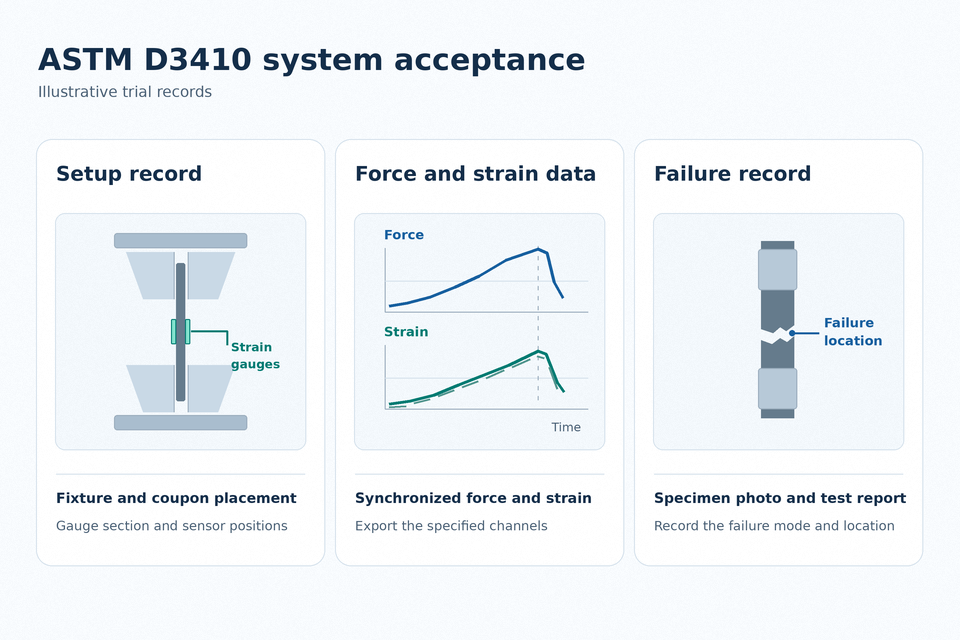
Before the trial, agree on the applicable ASTM edition, a representative coupon, the required measurements, and the acceptance criteria. The following records help your lab review the configuration and the test result.
| Acceptance record | What to check |
|---|---|
| Configuration and setup record | Frame and load cell details, usable compression force range, fixture configuration, and a photo of the installed coupon showing the unsupported gauge section and sensor placement. |
| Force and strain data | An export with synchronized force and the specified strain channels. Where the procedure calls for a bending assessment, compare longitudinal strain readings from opposite faces using the specified criteria. |
| Test report and specimen record | The agreed reported properties, the failure mode and location, and photos of the tested specimen. If modulus is reported, retain the force and specimen strain data used in the calculation. |
ASTM D3410/D3410M · MTS ASTM D3410 test method note
Request a Quote for Your ASTM D3410 Test System
- Specimen. Send a drawing or dimensioned photos with material, layup, test direction, and tab details where available.
- Test requirements. Include the specified ASTM edition, expected compression force if known, and the properties and data you need to report.
- Purchase scope. Tell us whether you need a complete system or want to use an existing frame. If you have a frame, include its model, load cell details, mounting interface, and available compression space.
Request an ASTM D3410 Test System Quote
Frequently Asked Questions
-
Can I use my existing UTM for ASTM D3410 testing?
It depends on the machine’s verified compression force range, working space, mounting interface, and strain acquisition. We review those details to determine which components can be used and what the setup requires.
-
Can one UTM be configured for both ASTM D3410 and ASTM D6641?
A single frame can serve both methods if it meets their force, space, and instrumentation requirements. Each method uses a fixture and loading arrangement appropriate to its test procedure.
-
What does the system need to measure compressive modulus?
It needs force and strain measured over the specimen gauge section. Specify the strain measurement method and how the readings will be recorded together. Crosshead travel also includes movement and deformation in the load train and fixture.
