Eyeglass Hinge and Temple Folding Tester RS-6550-6
Eyeglass Hinge and Temple Folding Tester RS-6550-6
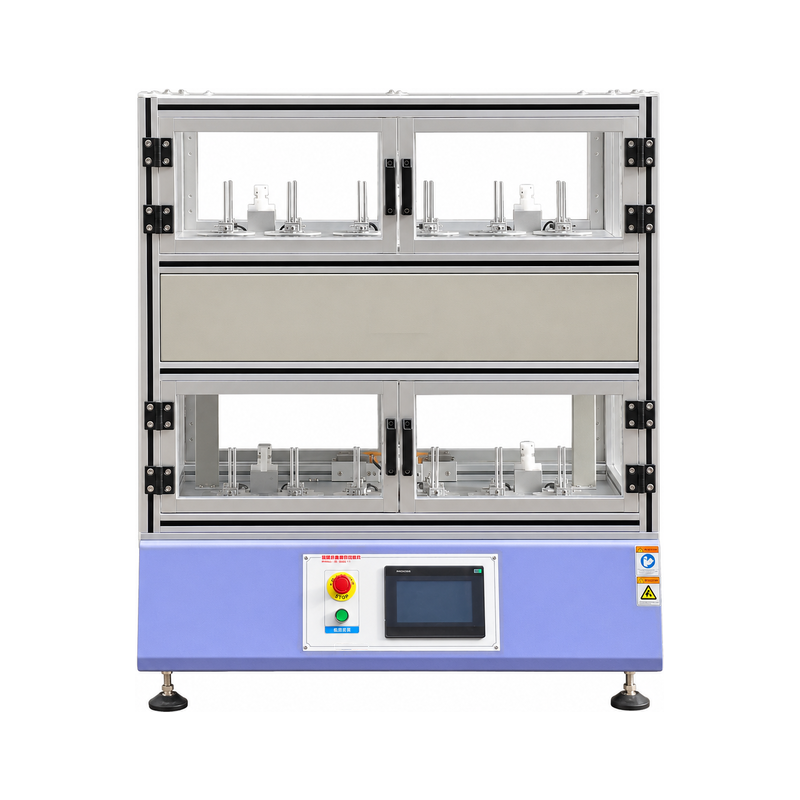
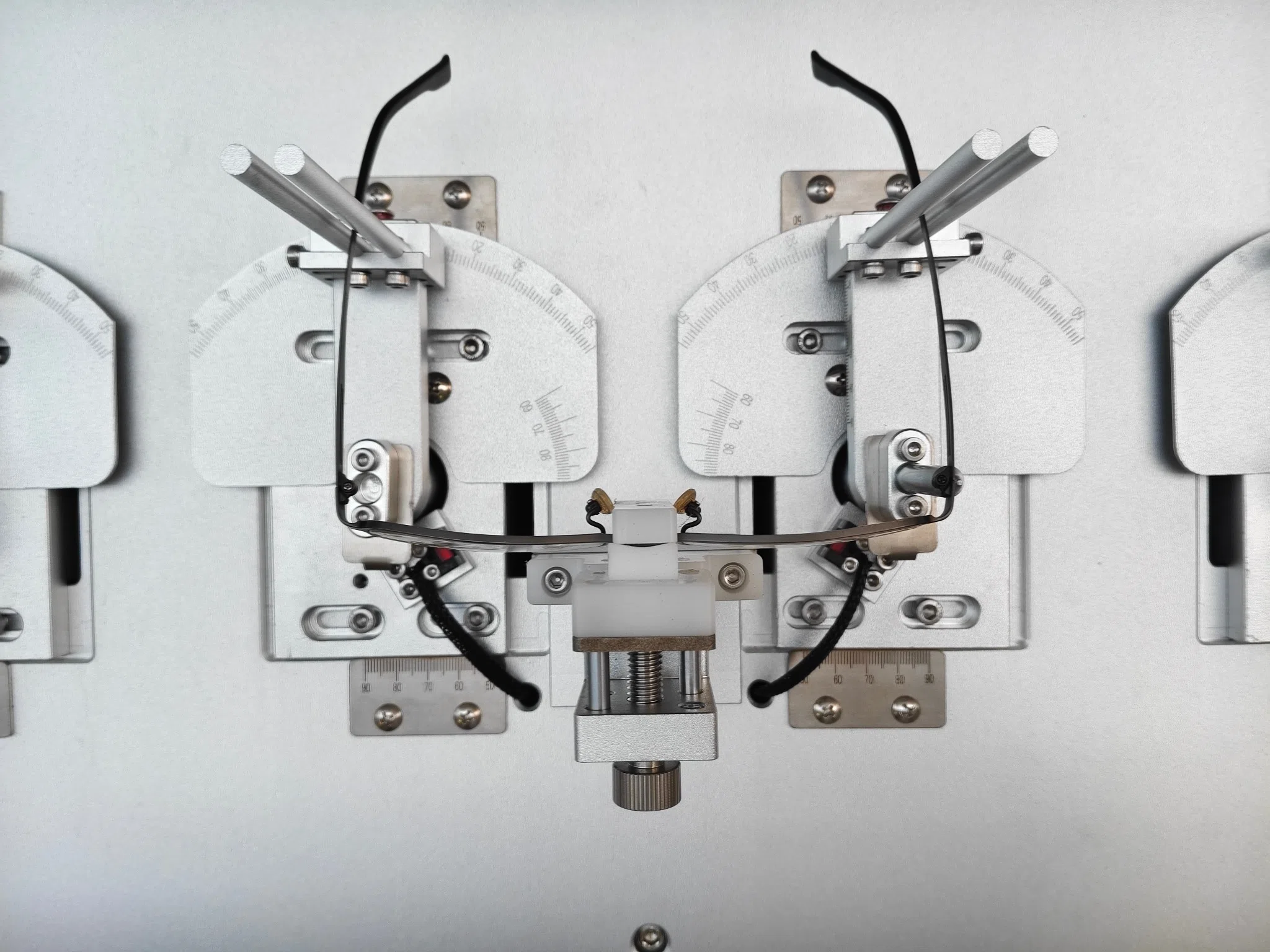
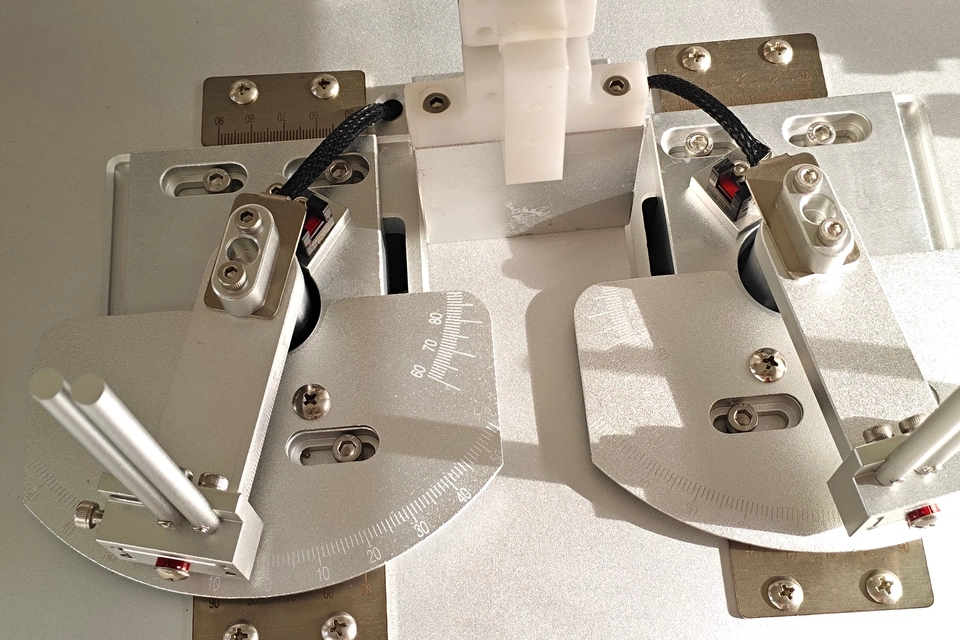
The ITM-LAB RS-6550-6 tests eyeglass hinge durability by repeatedly opening and folding the temples. A central fixture holds the frame front while separate mechanisms move the left and right temples. Set the test angle from 0° to 200°, the speed from 5 to 60 repetitions per minute, and the target count from 1 to 999,999.
Share:
The ITM-LAB RS-6550-6 is an eyeglass hinge tester that repeatedly opens and folds the arms of a spectacle frame. A central fixture holds the frame front while mechanisms on either side move the temples. Operators can set the test angle, speed and target count for hinge durability testing. Request a Quote
Test angle setting · 0–200°
Test speed setting · 5–60 repetitions/min
Target count setting · 1–999,999 repetitions
See How the Eyeglass Frame Is Mounted
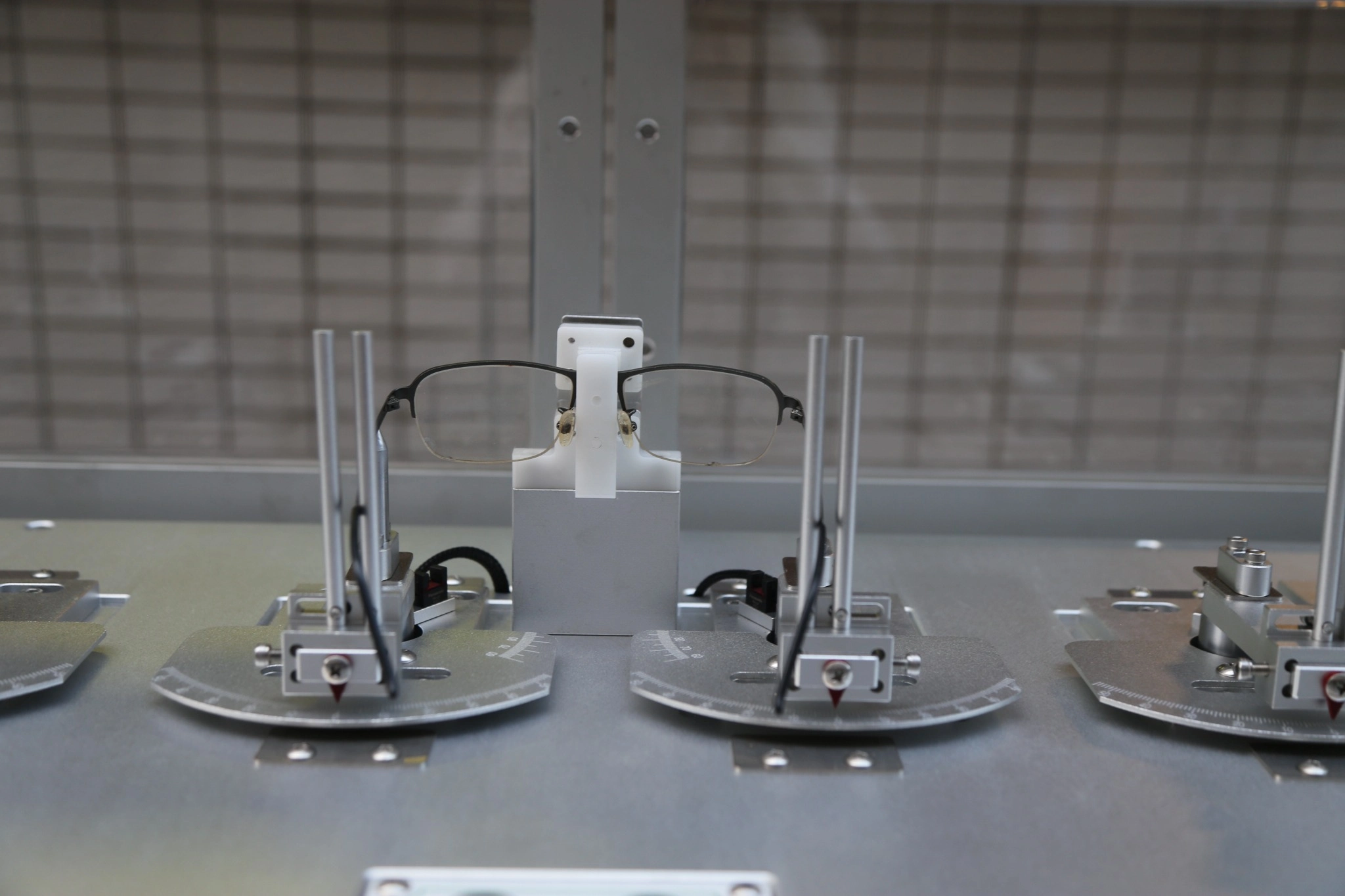
Watch the demonstration to see how the frame front is secured and how the mechanisms on either side move the temples during the test.
RS-6550-6 Technical Specifications
Parameter
Specification
Model
RS-6550-6
Test angle setting
0–200°, adjustable
Test speed setting
5–60 repetitions/min
Test count setting
1–999,999 repetitions
Operator interface
INOVANCE color touchscreen
Controller
Mitsubishi PLC
Drive
Panasonic servo motor with SHIMPO planetary reducer
Machine dimensions
1,000 × 580 × 1,173 mm (W × D × H)
Machine weight
138 kg
Power supply
AC 220 V, 10 A
When estimating test duration, confirm how the controller counts a complete opening and folding sequence. Select an angle within the safe travel of your sample and the limits of your test method.
How Does a Temple Folding Test Work?
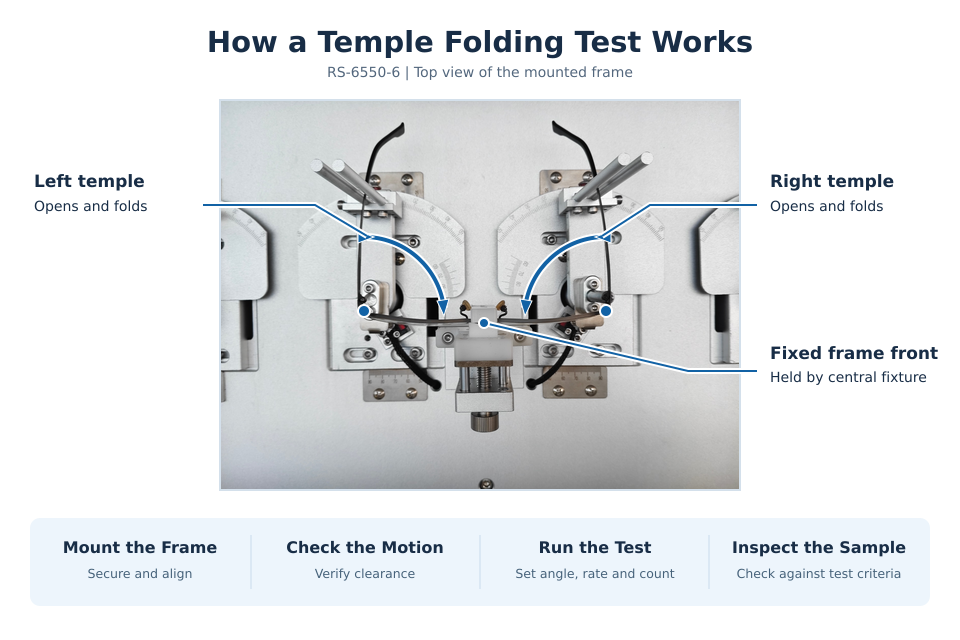
A temple folding test repeatedly opens and closes the arms of an eyeglass frame at a specified angle and rate. The frame front stays fixed while the temple mechanisms move the arms about their hinges. After the target count, the operator checks the sample against the test plan.
Mount the frame. Secure the frame front in the central fixture and align the two mechanisms with the temple positions.
Check the motion. Verify that the temples can travel through the required angle without contacting the fixture or surrounding parts.
Run the test. Set the angle, speed and target count, then run the opening and folding sequence specified in your procedure.
Inspect the sample. Compare the condition and operation of the frame and hinges with the acceptance criteria below.
Will Your Eyewear Fit the Fixture?
Fixture fit depends on the shape of the frame front, the position of the hinge pivots and the space the temples need as they move. When checking a sample, review these points.
What to check
What to send ITM-LAB
Frame front and clamping area
Front photo or dimensioned drawing showing the frame width and potential clamping area
Hinge position and temple dimensions
Side and top views showing the pivots, temple length and thickness near each hinge
Opening and folding clearance
Required start and end positions, especially if the temples overlap when folded or have protruding housings
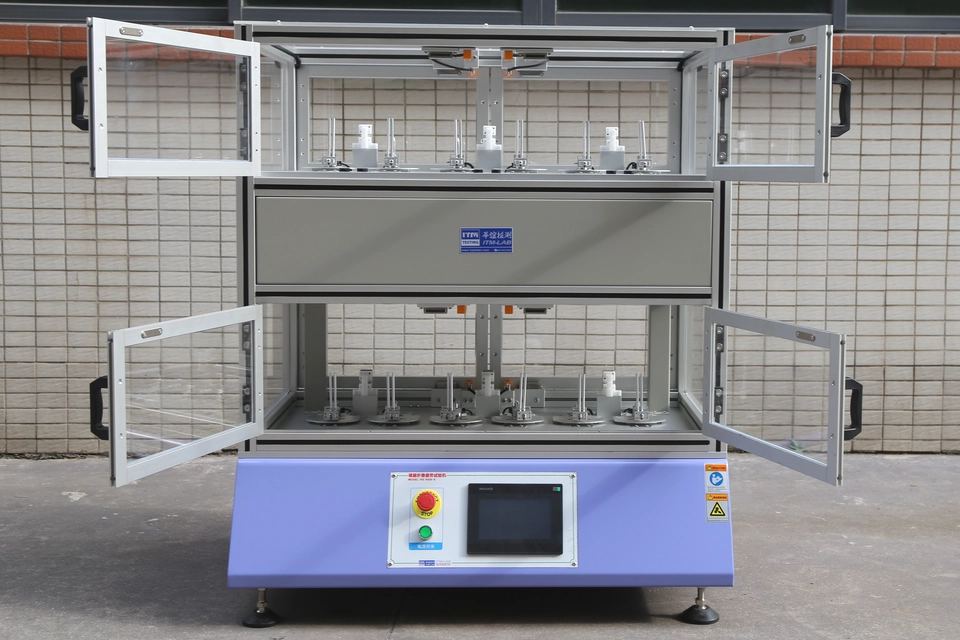
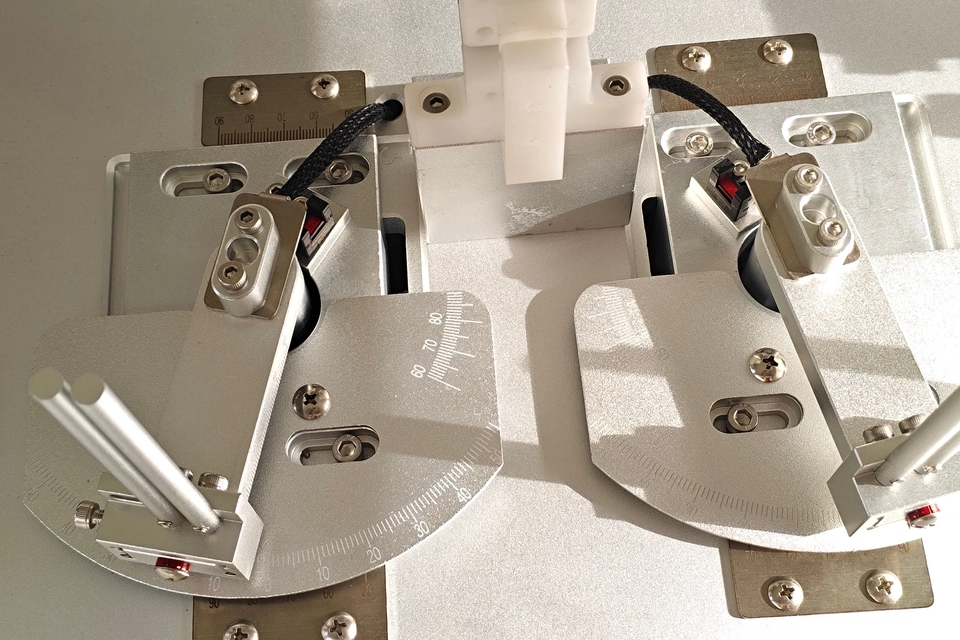
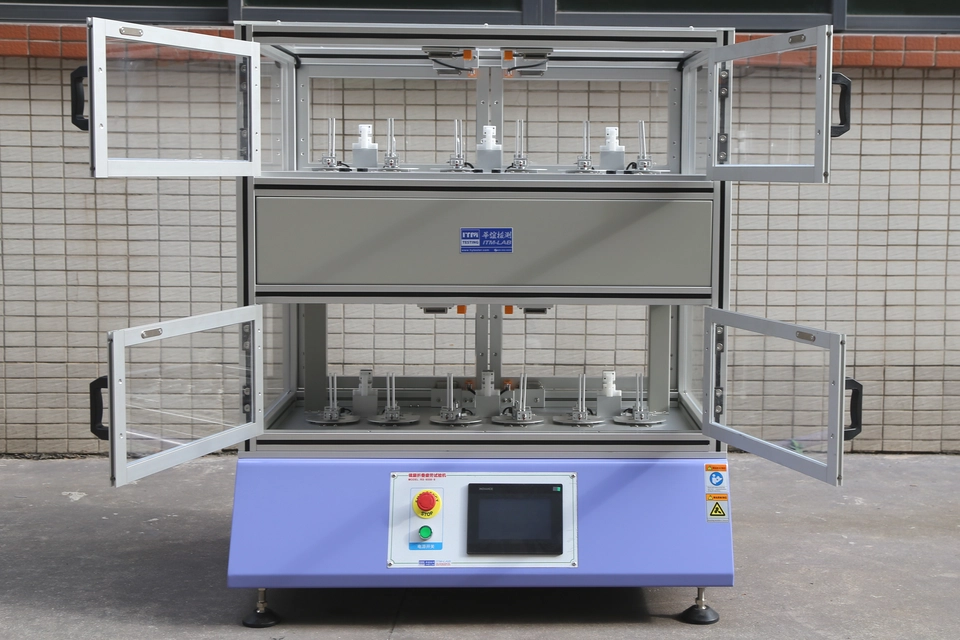
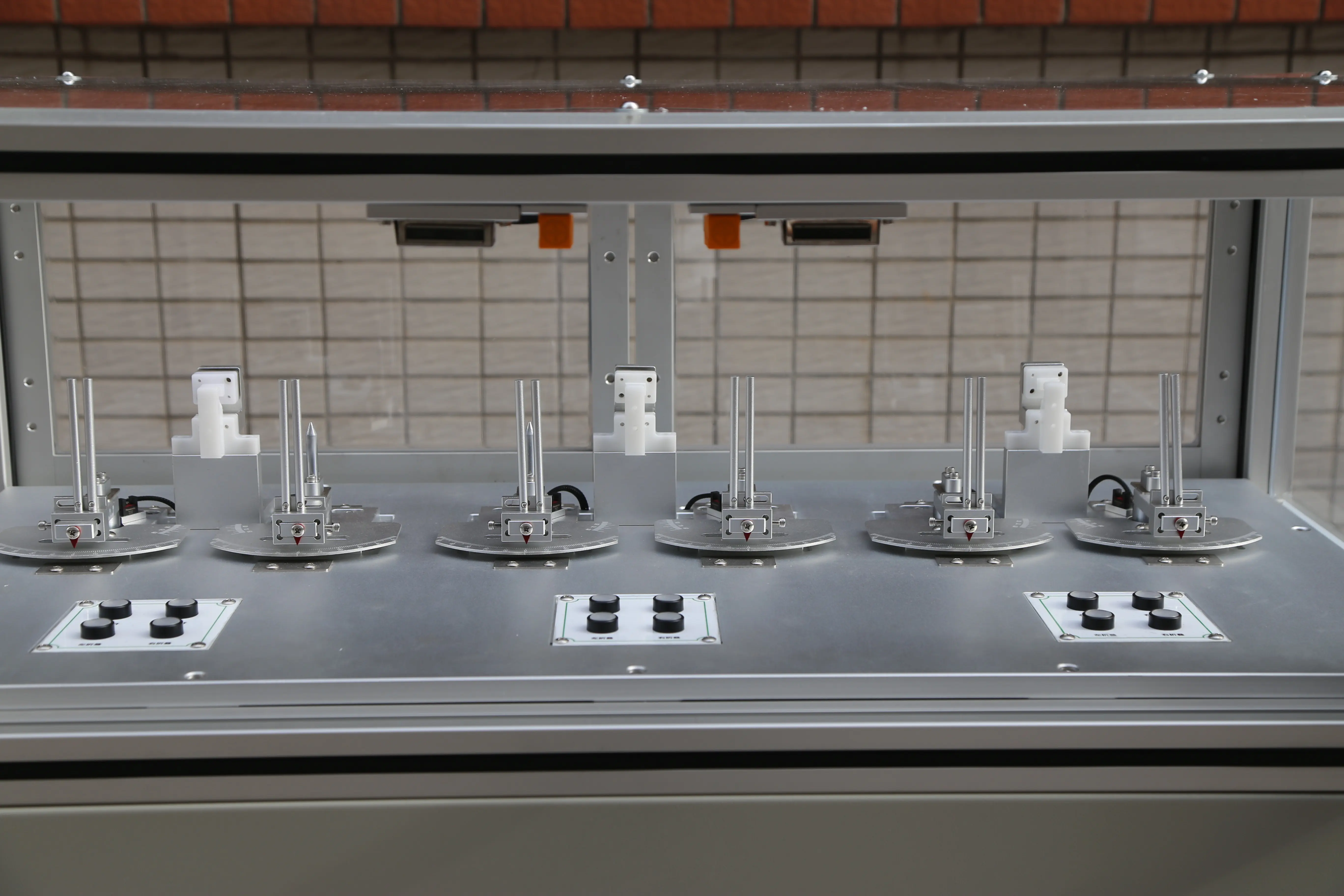
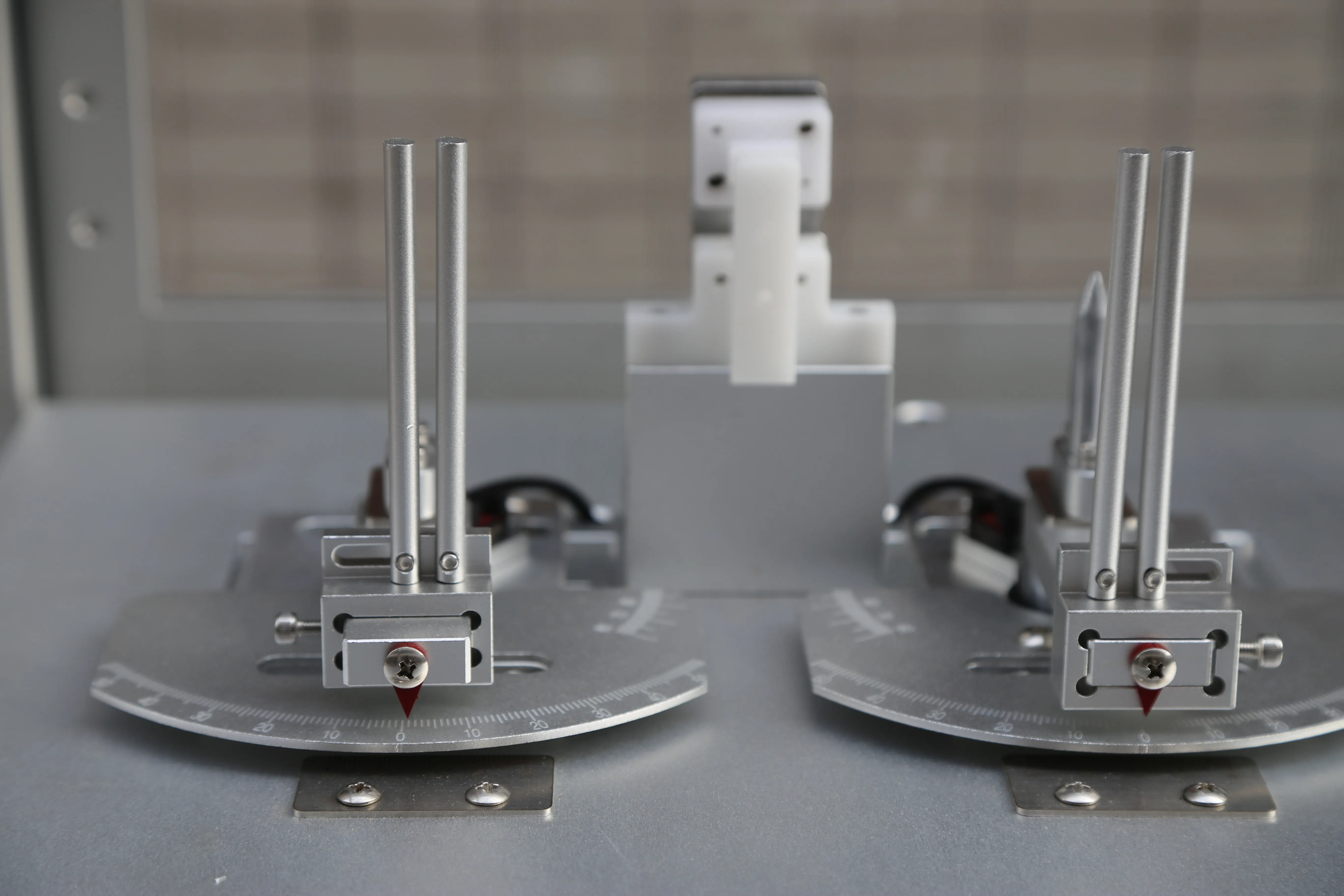
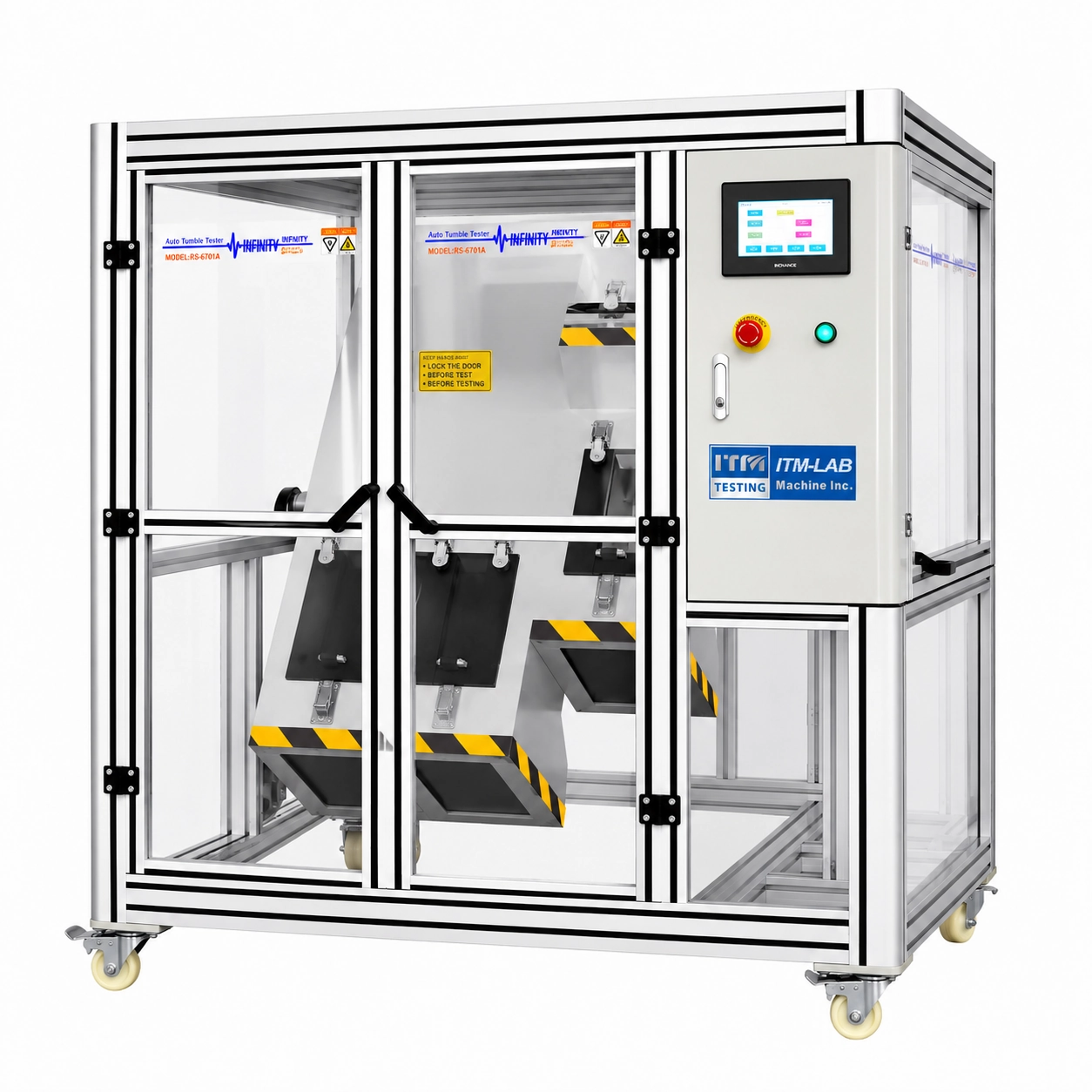
The machine shown has two test levels with three frame mounting positions visible on each level. The transparent front doors open for sample installation and fixture adjustment. Slots, locking screws and scales are visible on the positioning mechanisms.
Check Sample Fit
Hinge Durability Testing for Spectacle Frames and Smart Glasses
Spectacle frames. Eyewear manufacturers and quality labs can use the RS-6550-6 for repeated opening and folding during design evaluation and production quality checks. With the same setup and test conditions, teams can compare how different frames or hinge designs behave after testing.
Smart glasses and AR eyewear. For smart glasses hinge durability testing, review the mechanical fit around thicker temples and electronics housings before selecting a fixture. If the test plan also requires electrical continuity, display or optical checks, include the separate measurement requirements when requesting a quote.
Test Methods and Acceptance Criteria
Before testing, agree on the sample setup, start and end positions, speed, target count and inspection criteria. Use the same documented settings when comparing samples. Depending on the test plan, inspect for loose screws, cracks near the hinge or temple, damage to the frame connection, or changes in how the arms open and close.
If your project follows a customer test method or a spectacle frame standard, send the applicable edition and clause with your inquiry. ITM-LAB can review the requested fixture arrangement and motion against the proposed machine configuration.
Request a Quote for the RS-6550-6
Send a sample photo or drawing and your required angle, speed and target count. If you have a written test procedure, attach it so ITM-LAB can review the fixture and test settings with your quotation.
Torque measurement is not listed in the RS-6550-6 specification. If your test calls for breakaway torque, running torque or a torque-versus-angle record, include that measurement requirement in your inquiry.
How many folding repetitions should I specify?
Use the count required by your product specification, development plan or applicable test method. The maximum setting of 999,999 repetitions describes the controller's range. Your acceptance criteria determine whether the sample passes.
Can I use the tester for smart glasses with thick temples?
Suitability depends on the space around the hinge and temple throughout the requested movement. Send the temple cross-section or thickness, a hinge close-up and the open and folded positions so ITM-LAB can review fixture clearance.
Can the left and right temples or sample positions run different test programs?
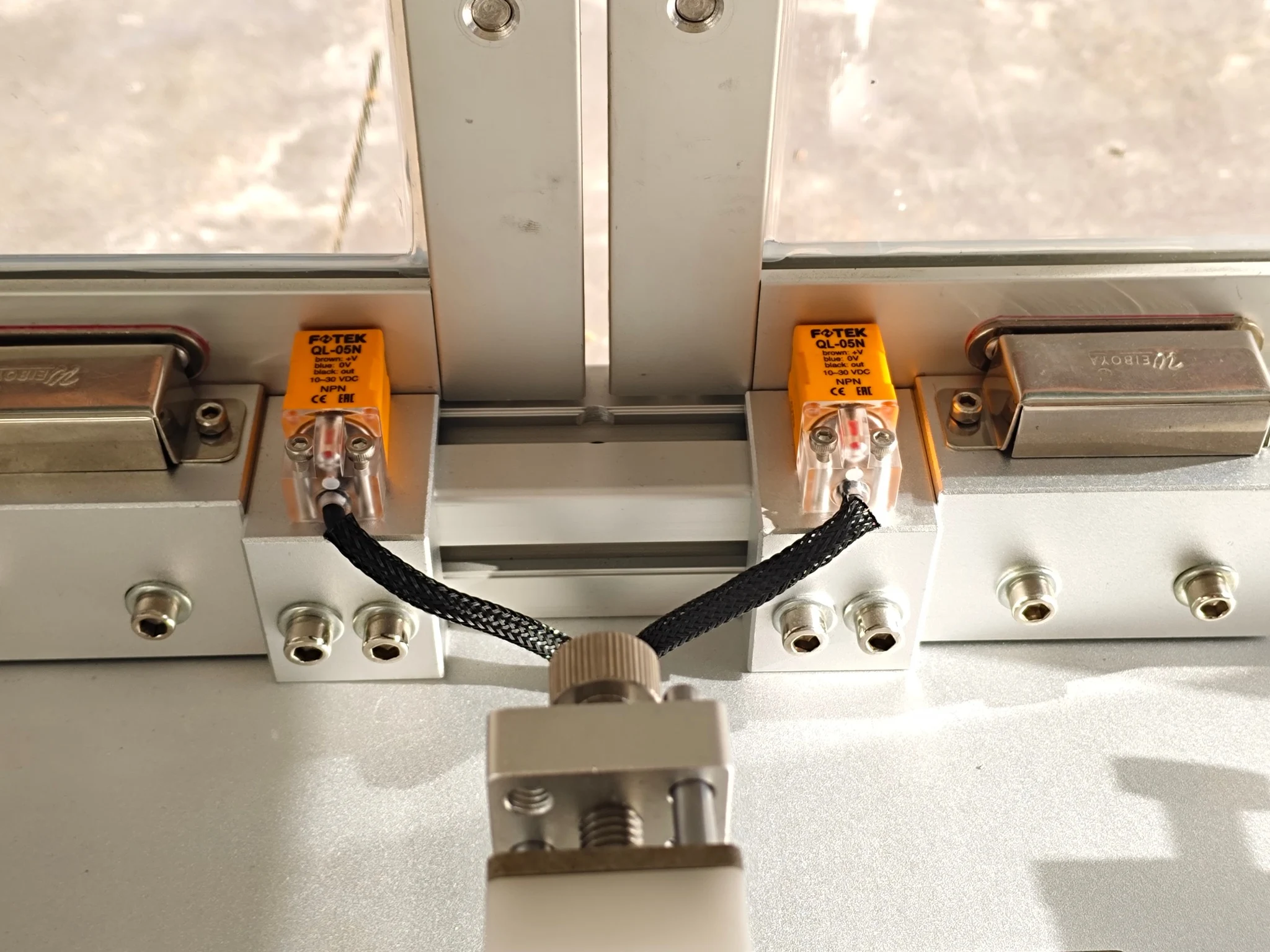
The photographed setup has local buttons labeled for left and right opening and folding. If your test requires different settings or counts for each side or sample position, include that requirement so ITM-LAB can confirm the control configuration.