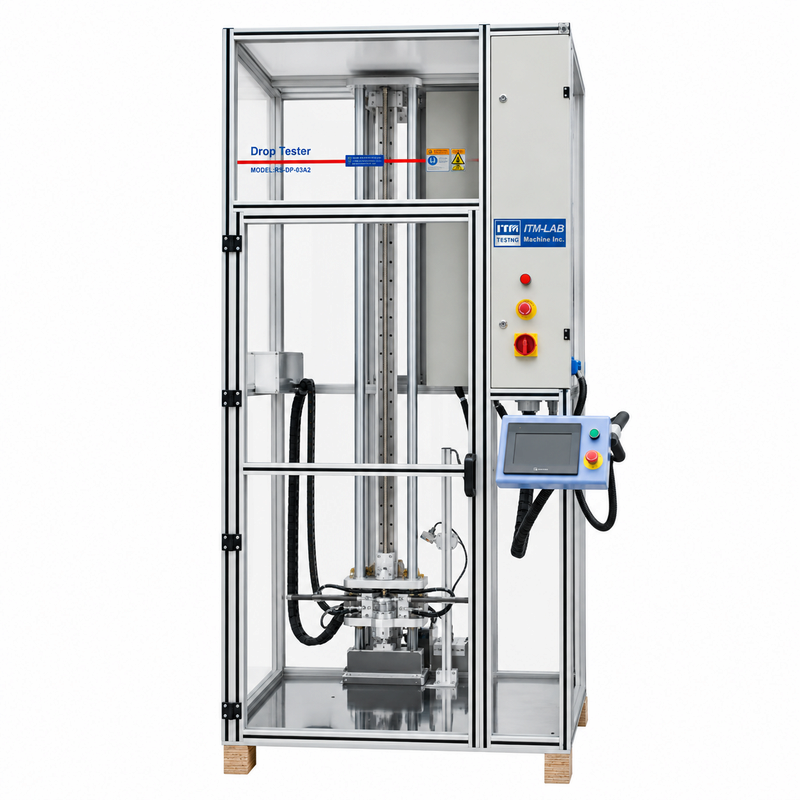
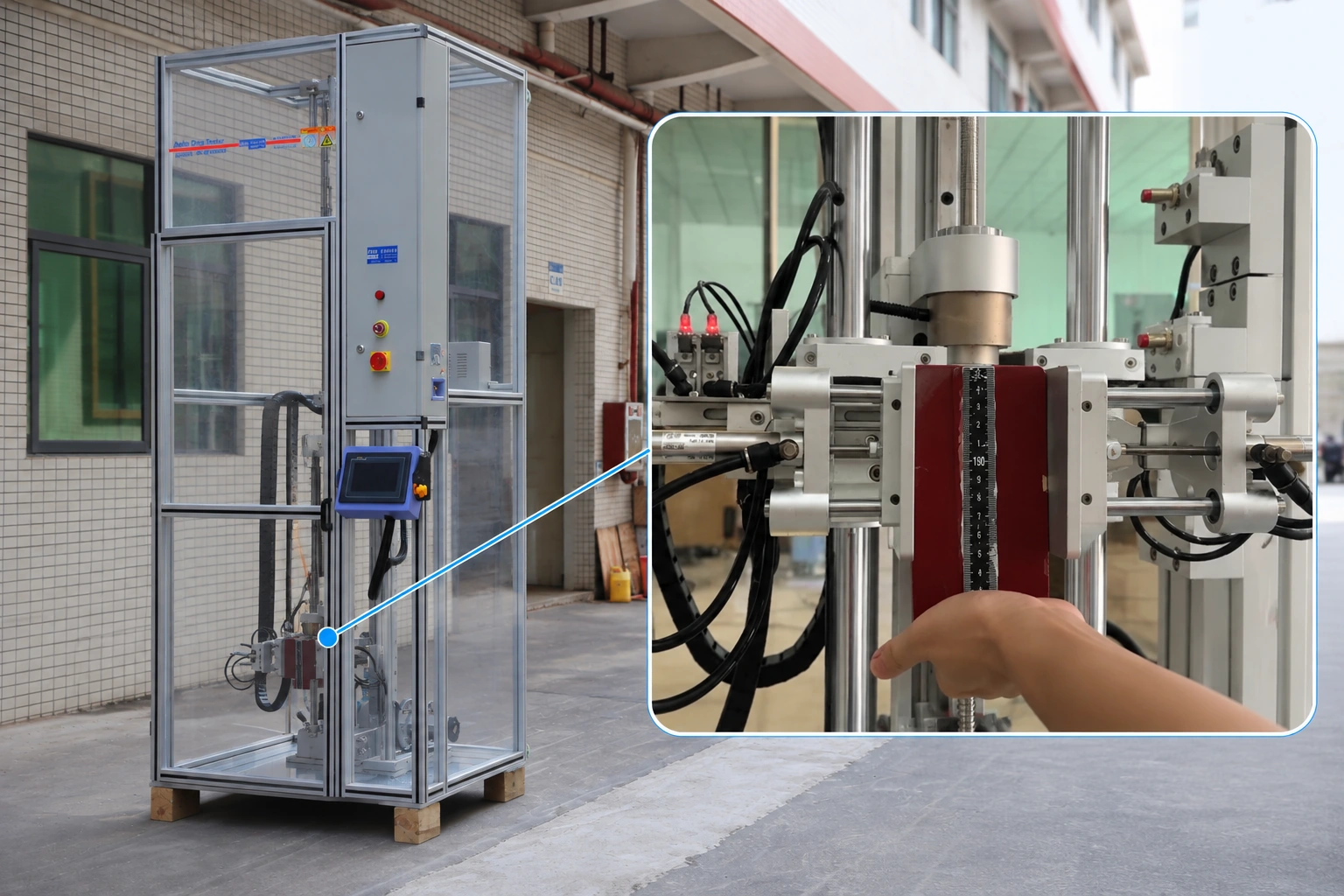
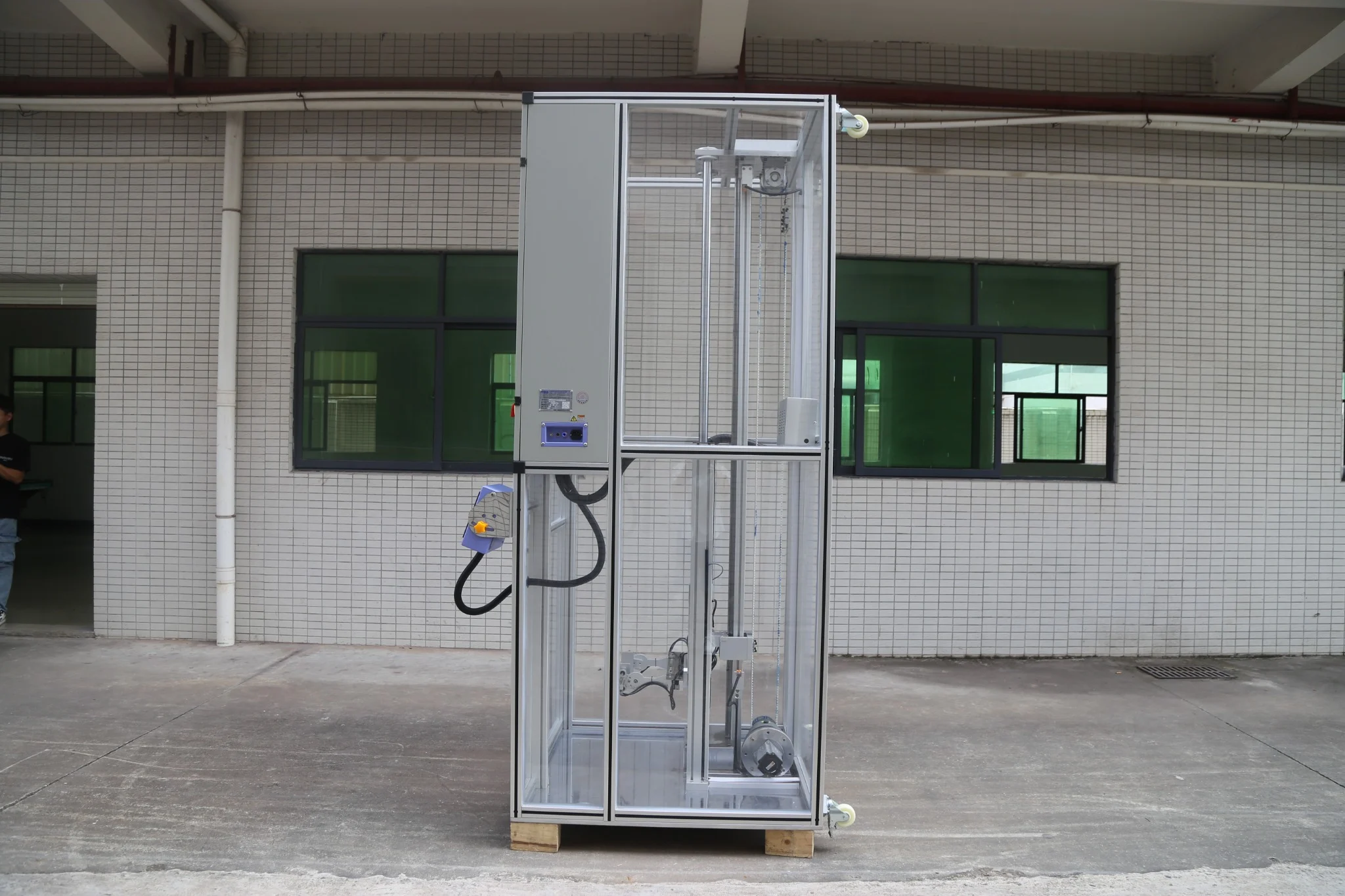
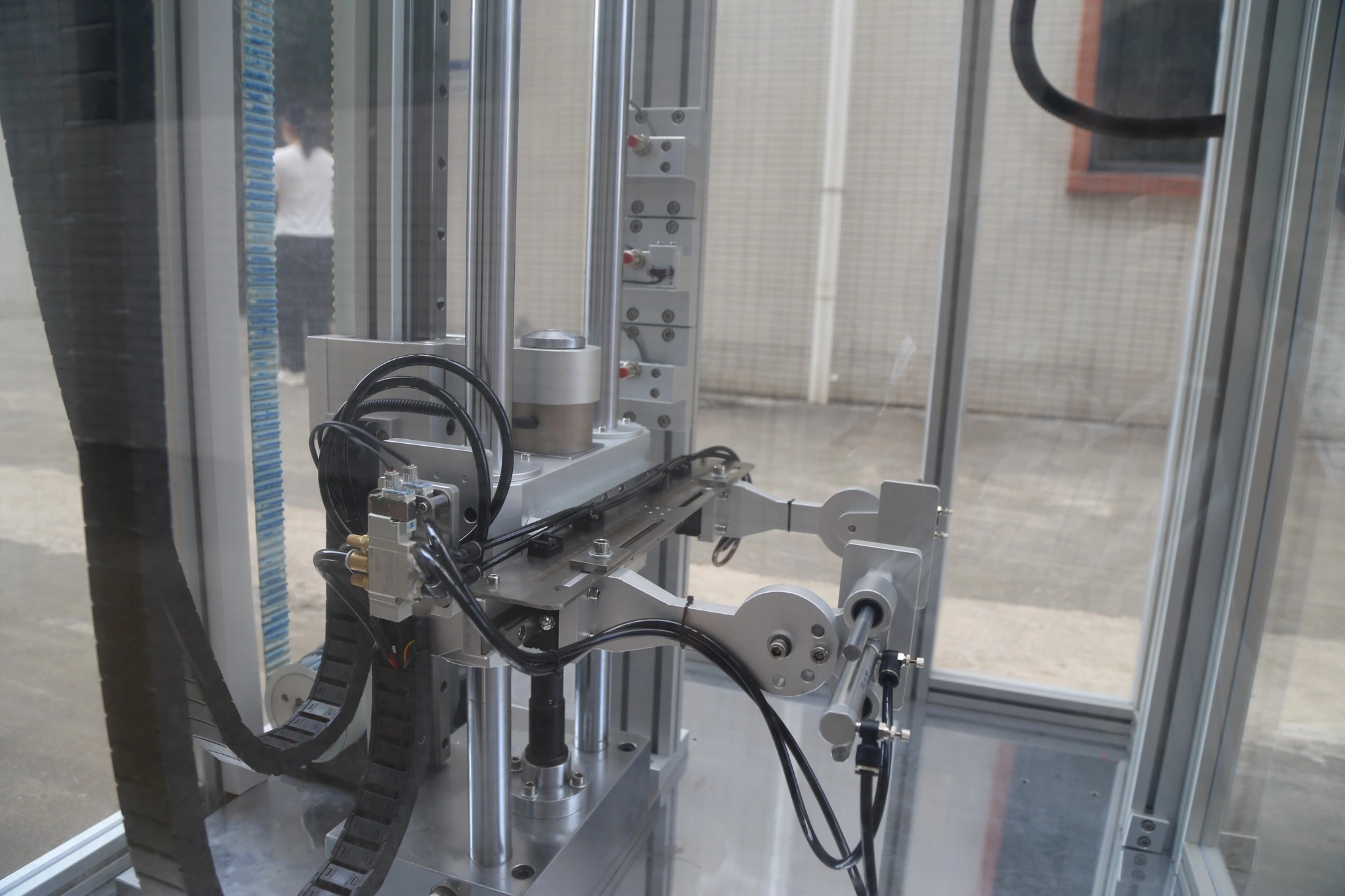
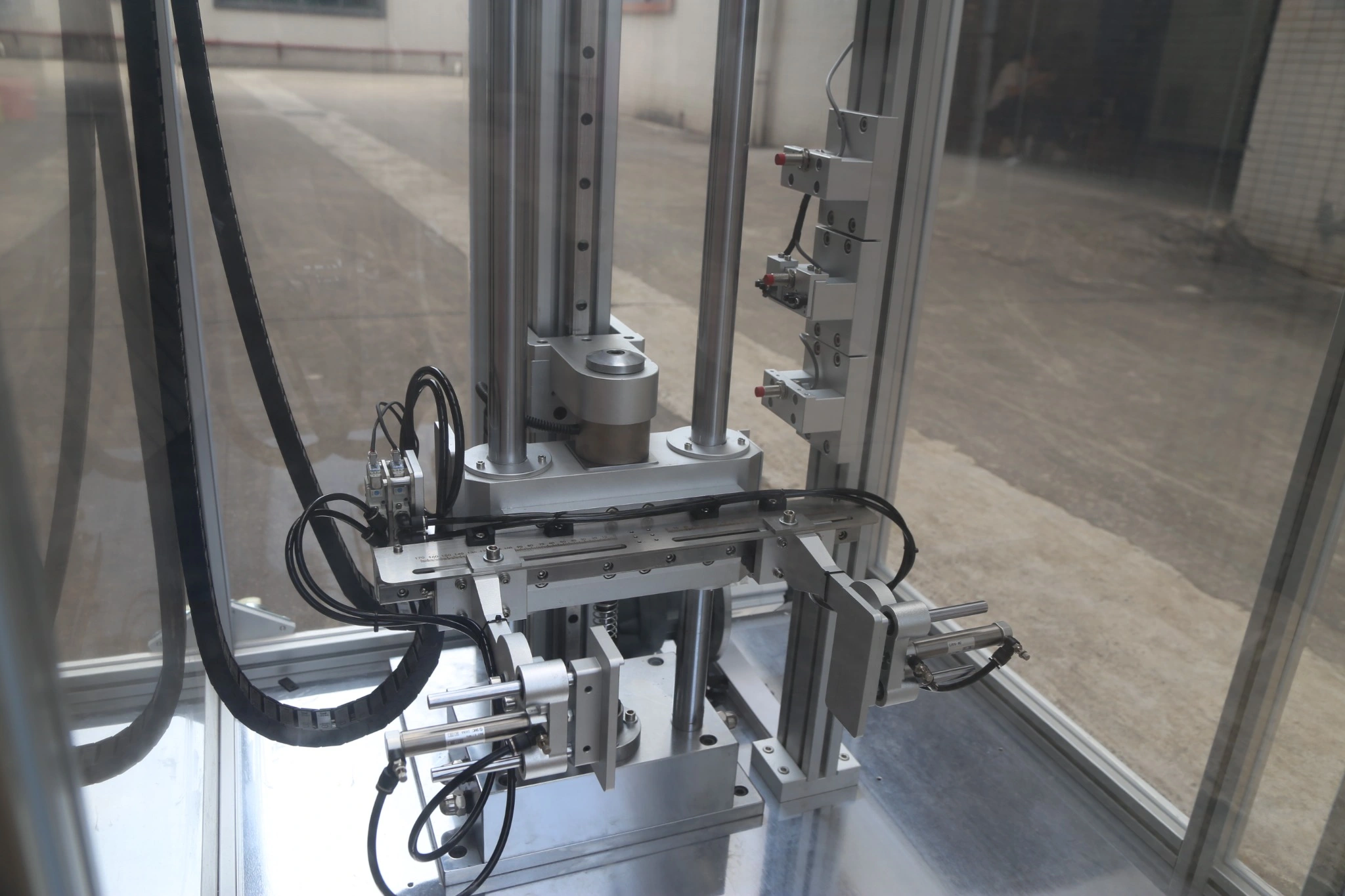
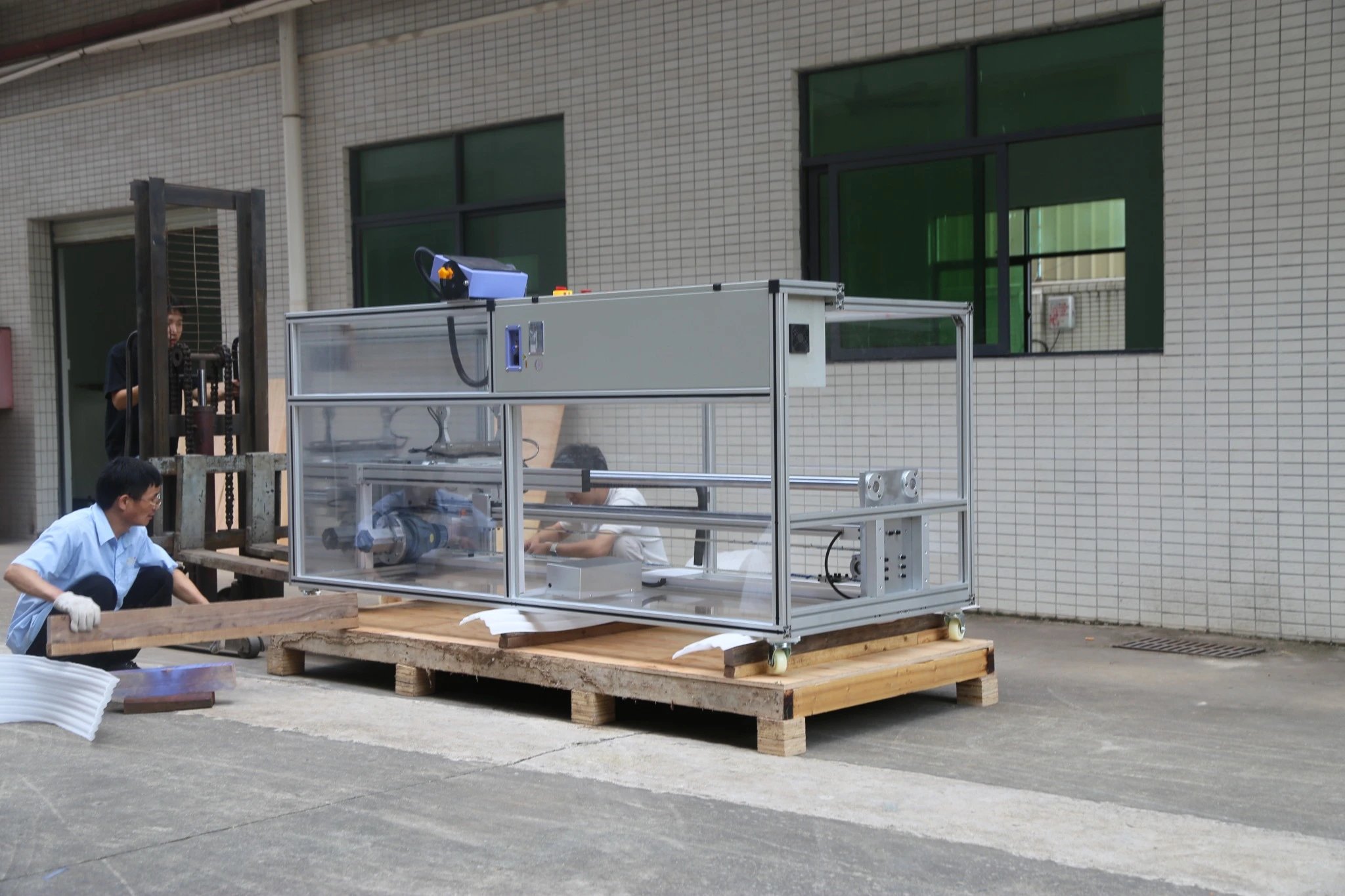
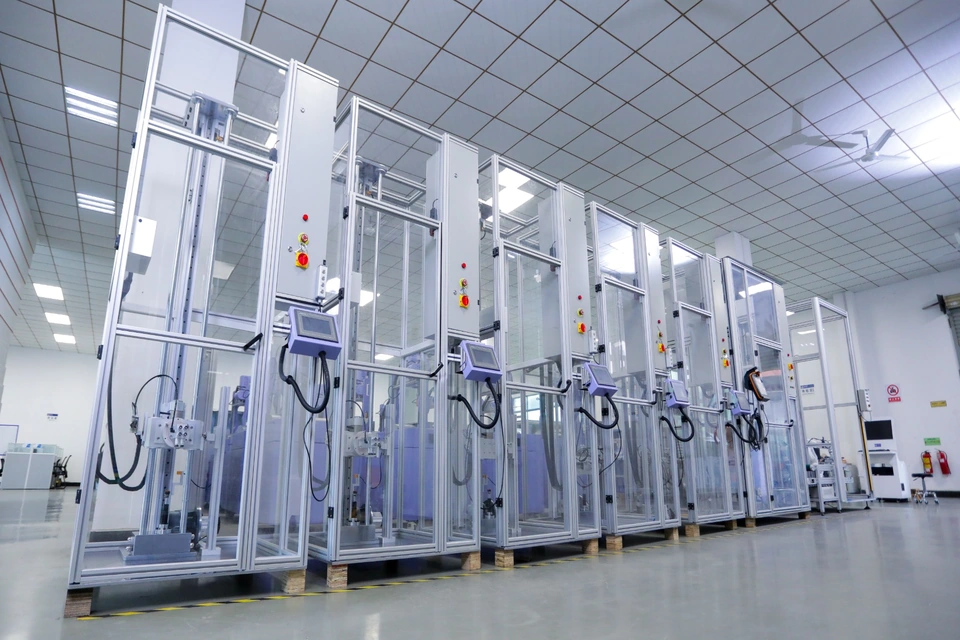
The Automatic Drop Test Machine RS-DP-03A2 is designed to evaluate the impact on product performance when a customer accidentally drops the product during actual use. It is suitable for directional drop tests on portable consumer electronic products such as mobile phones, tablets, chargers, e-books, electronic dictionaries, batteries, touch screens, headphones, etc.
Share:
Controlled Drop Testing for Smartphones & Portable Electronics
The ITM-LAB RS-DP-03A2 Automatic Drop Test Machine is designed for controlled directional drop testing of smartphones, tablets, wearable devices, and other small electronic products.
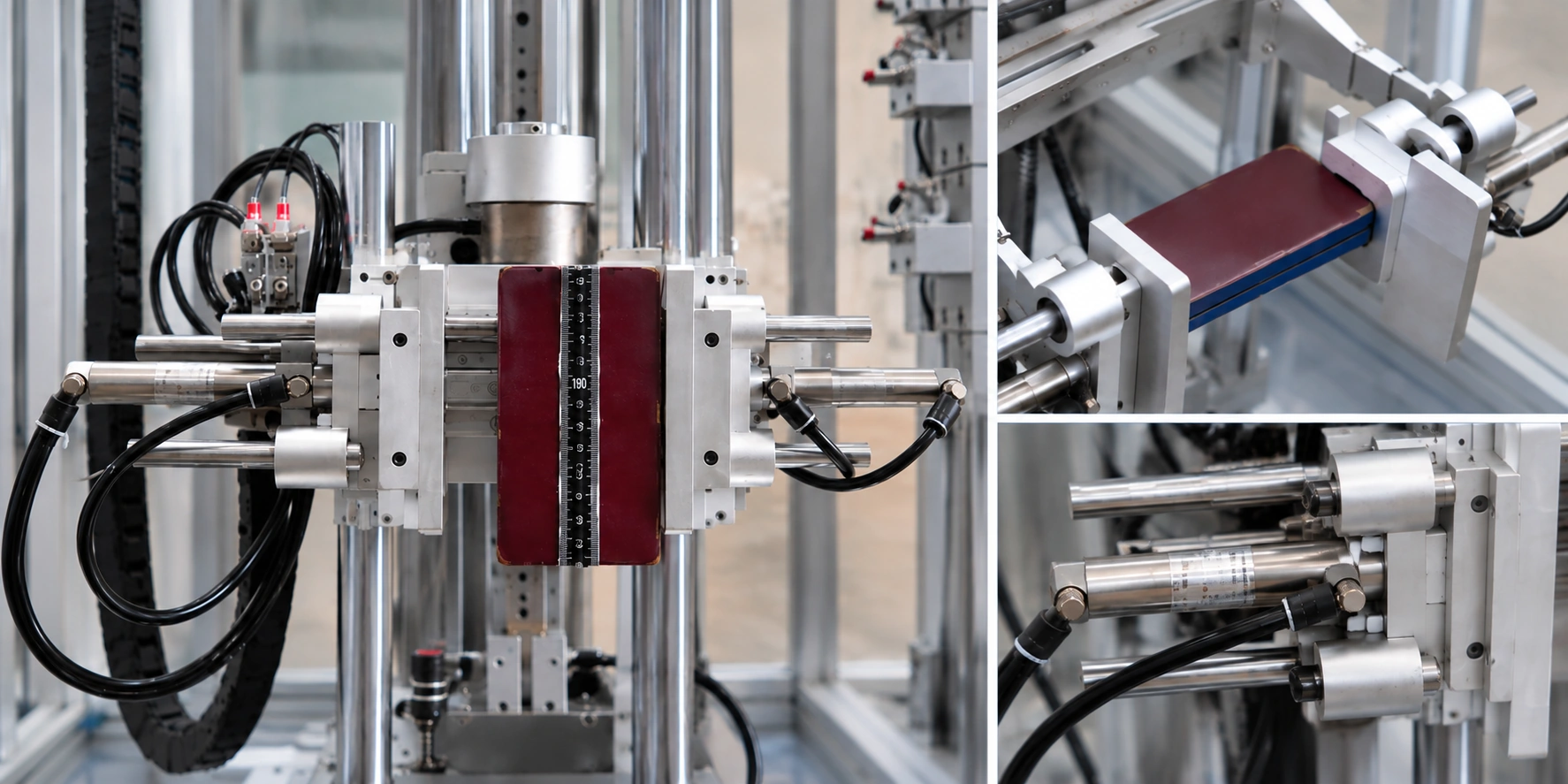
Using vacuum adsorption or clamping fixtures, the machine positions specimens at defined angles before automatically lifting and releasing them onto the selected impact surface. It helps R&D and quality laboratories evaluate product impact resistance, structural integrity, and post-drop functionality under repeatable test conditions.
Drop Height
Max. Sample Weight
Positioning
Height Error
300–2000 mm
2 kg
0° / 45° / 90°
≤ ±0.5 mm
Key Features
Controlled Directional Positioning
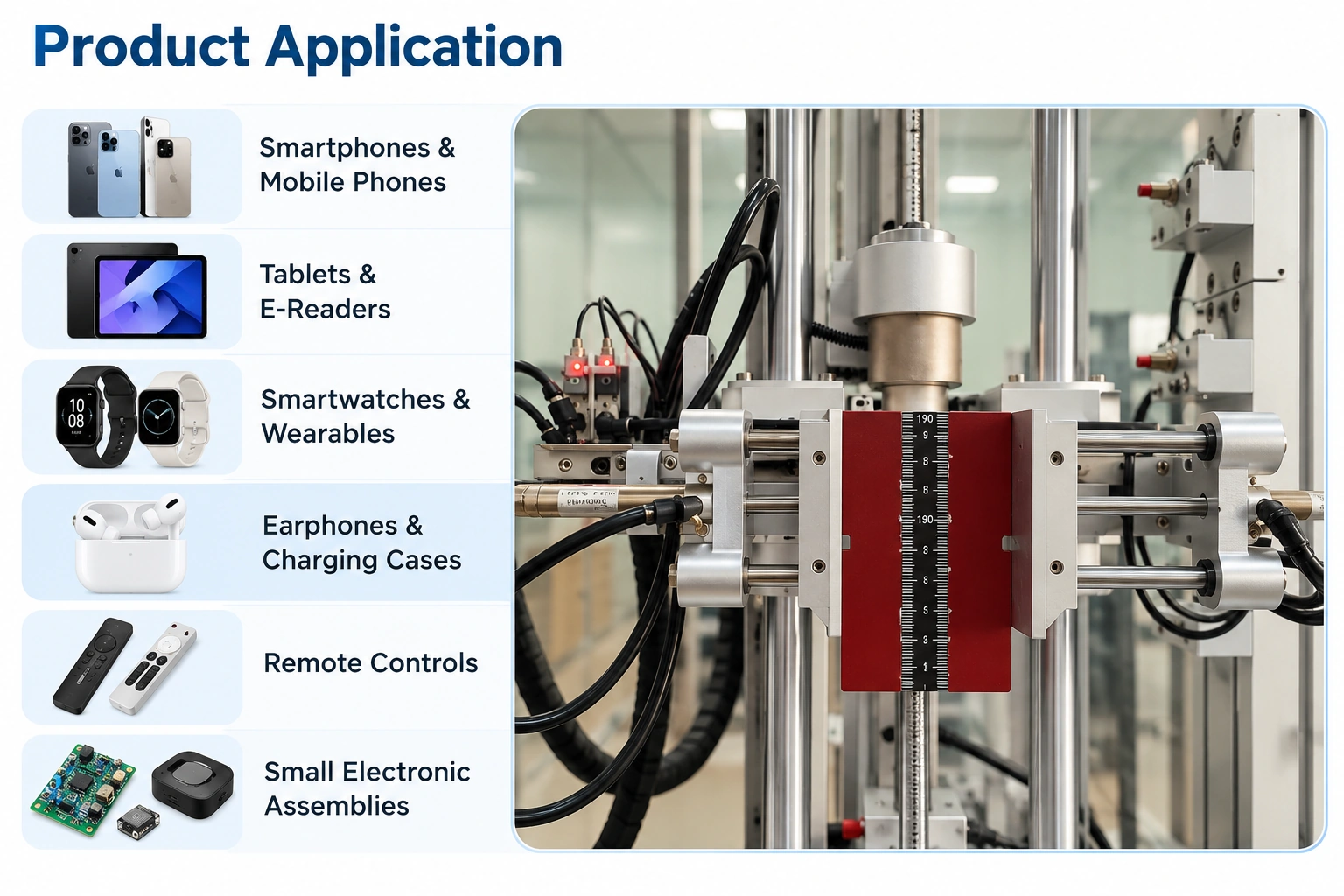
Vacuum adsorption or clamping fixtures hold the specimen at a defined position before release. The machine supports 0°, 45°, and 90° positioning for different directional drop requirements, including face, edge, and corner impact applications.
The appropriate fixture and release position depend on the specimen geometry and required impact orientation.
Adjustable 300–2000 mm Drop Height
Set and display the required drop height through the touchscreen interface, with a specified height error of ≤ ±0.5 mm.
Automatic Release & Return
The machine lifts the specimen to the preset height and releases it for free fall. After the drop, the lifting mechanism automatically returns to the preset adsorption height, reducing repeated manual adjustment.
Multiple Impact Surface Options
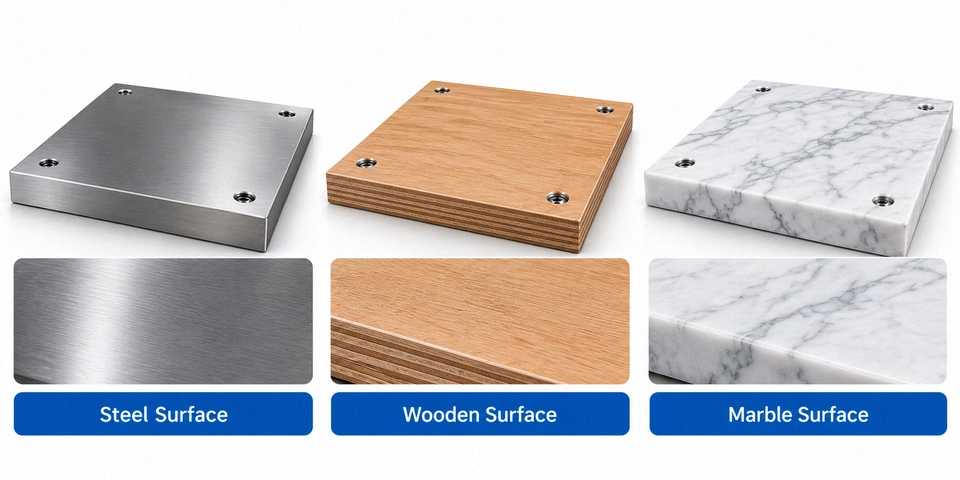
Steel plate, wooden board, and marble board options are available to accommodate different test procedures and customer requirements.
How Does the RS-DP-03A2 Work?
The RS-DP-03A2 controls the specimen's initial position, release height, and drop sequence to help laboratories reproduce defined test conditions.
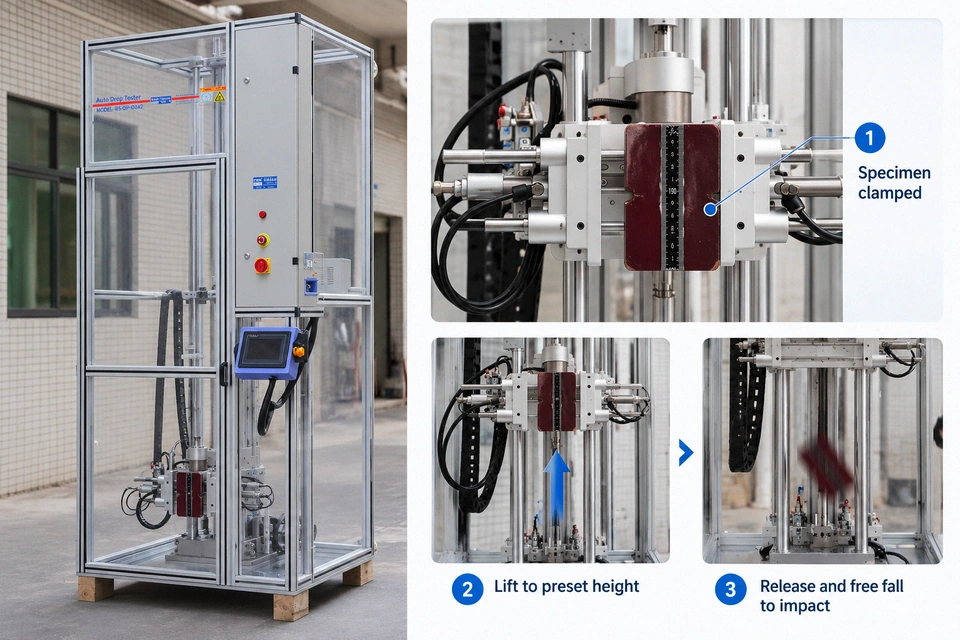
First, the specimen is secured using the appropriate vacuum or clamping fixture. The operator then sets the required orientation and drop height through the touchscreen.
Once the test starts, the machine automatically lifts the specimen to the preset height and releases it onto the selected impact surface. The lifting mechanism then returns to the preset adsorption height, ready for the next test.
Test Sequence
Fix Specimen → Set Orientation → Set Drop Height → Automatic Lift → Release & Impact → Automatic Return
Compared with manual dropping, this controlled process reduces operator-dependent variation in the initial test conditions, making it easier to compare results across multiple specimens.
Technical Specifications
Parameter
Specification
Model
RS-DP-03A2
Sample Fixation Mode
Vacuum Adsorption / Clamping
Specimen Positioning
0° / 45° / 90°
Drop Height
300–2000 mm
Height Error
≤ ±0.5 mm
Maximum Sample Weight
2 kg
Drop Height Setting
Touchscreen Setting and Display
Impact Surface
Steel Plate / Wooden Board / Marble Board
Air Supply
≥ 0.5 MPa
External Dimensions (W × D × H)
1050 × 1150 × 2350 mm
Machine Weight
Approx. 330 kg
Power Supply
AC 220V, 5A
Specifications are based on the standard product configuration. Final equipment specifications and utility requirements should be confirmed before ordering.
Impact Surface Selection
The RS-DP-03A2 can be configured with steel, wooden, or marble impact surfaces.
The appropriate surface should be selected according to the applicable test procedure rather than personal preference, as different impact surfaces can affect the resulting product damage.
Selection Note: Maximum specimen weight alone does not determine equipment suitability. Specimen dimensions, holding position, release clearance, and required impact orientation should also be confirmed.
Drop Testing Applications
The RS-DP-03A2 is primarily designed for controlled drop testing of small electronic products during product development, reliability evaluation, and quality inspection.
Typical Test Products
Product
Typical Evaluation
Smartphones & Mobile Phones
Screen, housing, frame, and functional integrity
Tablets & E-Readers
Enclosure damage and internal component displacement
Smartwatches & Wearables
Display, housing, and assembly integrity
Earphones & Charging Cases
Enclosure and connection reliability
Remote Controls
Housing, buttons, and internal component retention
Small Electronic Assemblies
Structural damage and post-drop functionality
Following a drop test, engineers can inspect the specimen for housing cracks, screen damage, frame deformation, loose connectors, component displacement, or functional failures.
The inspection method and pass/fail criteria should follow the relevant product specification or customer test procedure.
Applicable Test Methods
The RS-DP-03A2 can support controlled free-fall and directional drop testing under applicable product specifications and laboratory procedures.
Manufacturer Internal QA and Design Validation Procedures
The applicable procedure should define the drop height, specimen orientation, impact surface, number of drops, and acceptance criteria.
Compatibility with a particular standard depends on the specimen, test method, and final equipment configuration.
Why ITM-LAB?
ITM-LAB supplies testing equipment for electronics manufacturers, R&D laboratories, and quality-control teams.
For the RS-DP-03A2, we provide application-based support covering specimen holding fixtures, impact surface selection, equipment configuration, and customer-specific test requirements.
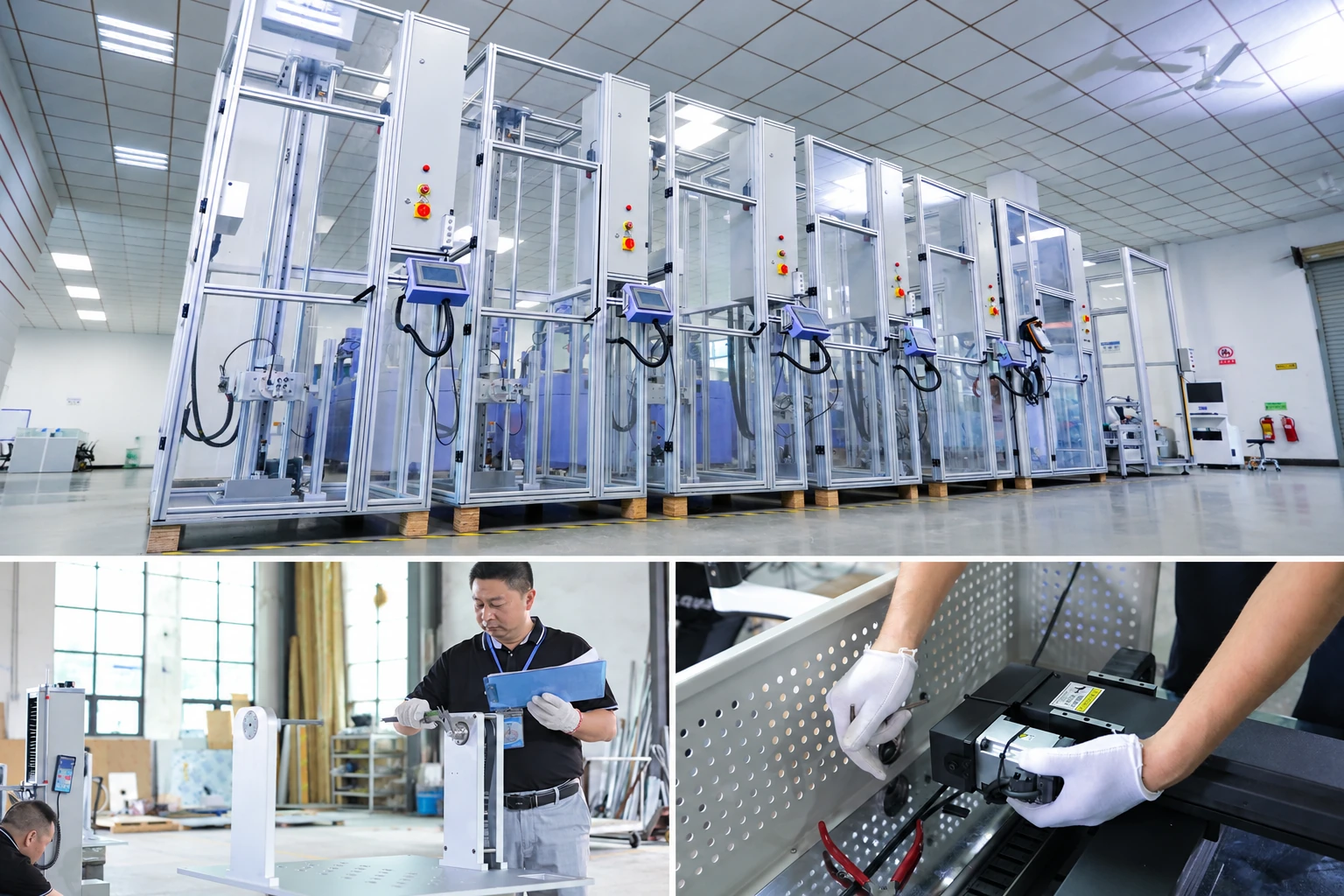
Pre-shipment equipment inspection, operating guidance, technical documentation, and after-sales support are available.
Configure Your RS-DP-03A2 Drop Tester
Define the Test First. Select the Machine Configuration Second.
To receive a suitable technical proposal and quotation, please send us the following information:
Product type, dimensions, and weight
Required drop height
Face, edge, or corner impact requirements
Specimen holding or fixture requirements
Required impact surface
Number of drops and applicable test procedure
ITM-LAB can help evaluate the appropriate RS-DP-03A2 configuration for your application.
It is primarily designed for smartphones, tablets, wearable devices, remote controls, and other small electronic products weighing up to 2 kg. Actual suitability also depends on specimen dimensions and fixture requirements.
Can the machine perform face, edge, and corner drop tests?
The RS-DP-03A2 supports 0°, 45°, and 90° specimen positioning using vacuum adsorption or clamping fixtures. The required face, edge, or corner impact condition should be confirmed according to the specimen geometry and test procedure.
How do I choose the correct holding fixture?
Fixture selection depends on the specimen's dimensions, weight, shape, available holding surfaces, and required impact orientation. ITM-LAB can review these details before confirming the configuration.
Which impact surfaces are available?
Steel plate, wooden board, and marble board options are available. The appropriate surface should be selected according to the applicable product or customer test specification.
Can the machine be customized for our testing requirements?
Fixture and equipment configuration requirements can be reviewed according to your product and test procedure. Please provide the specimen dimensions, weight, drop height, impact orientation, and required impact surface for technical evaluation.