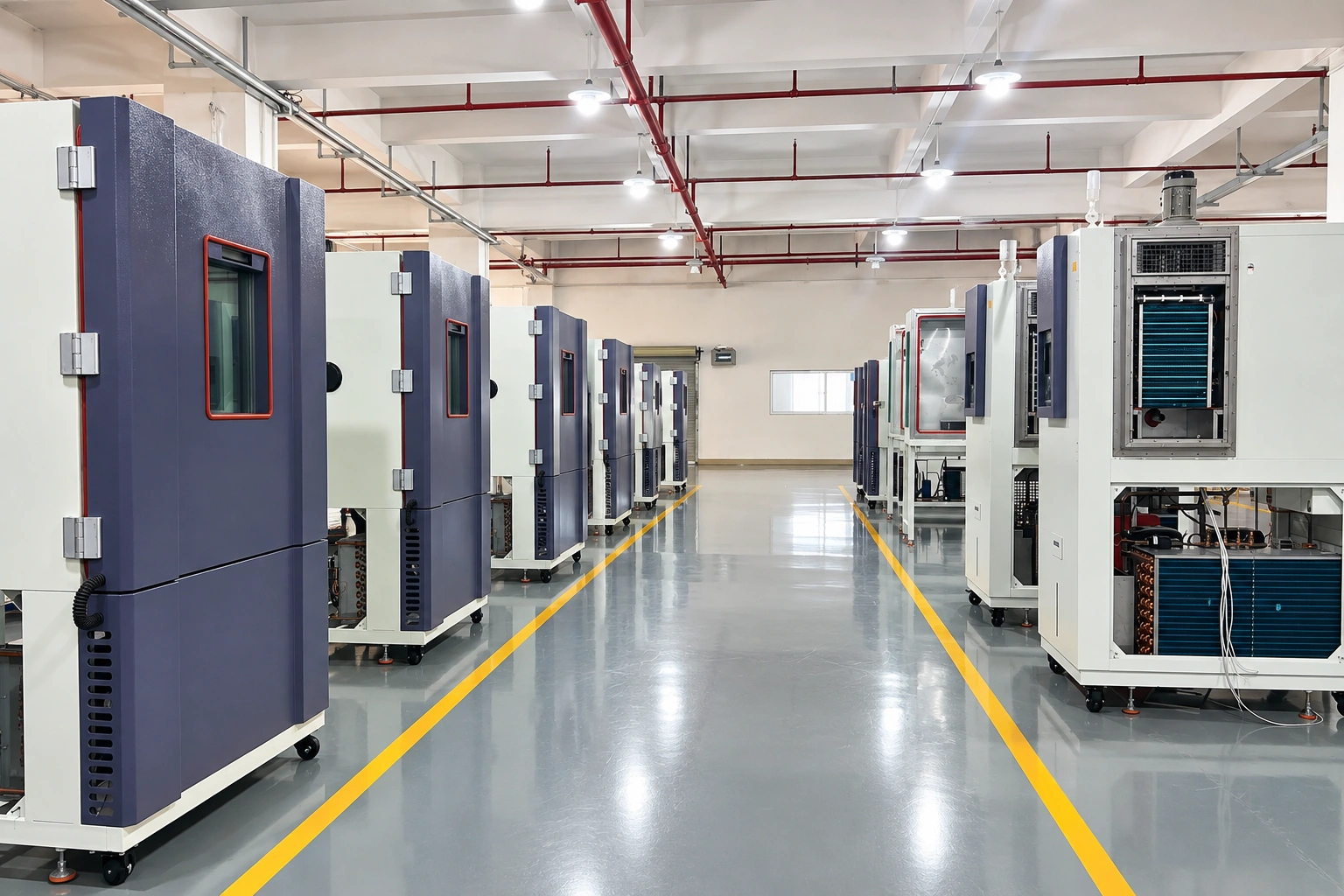
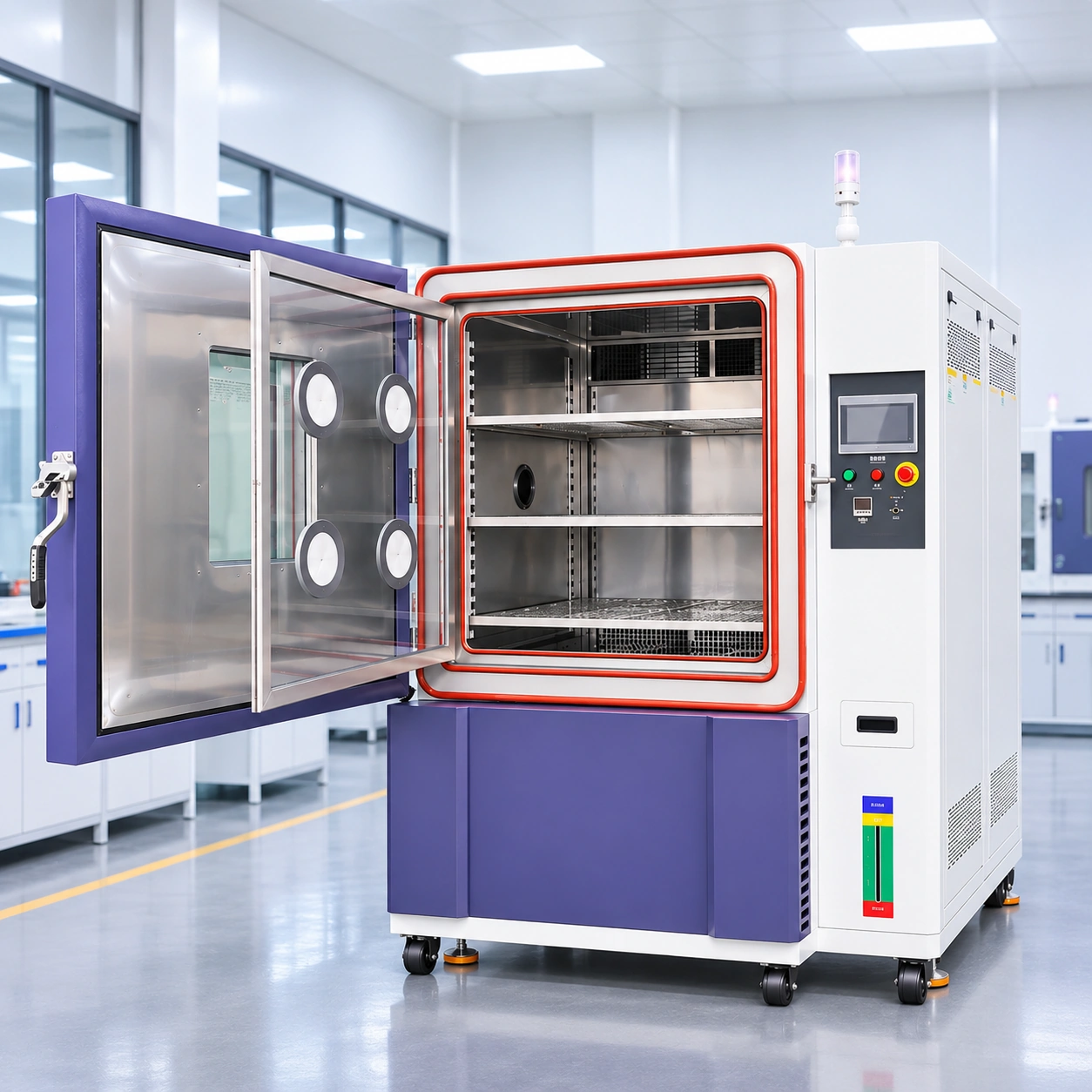
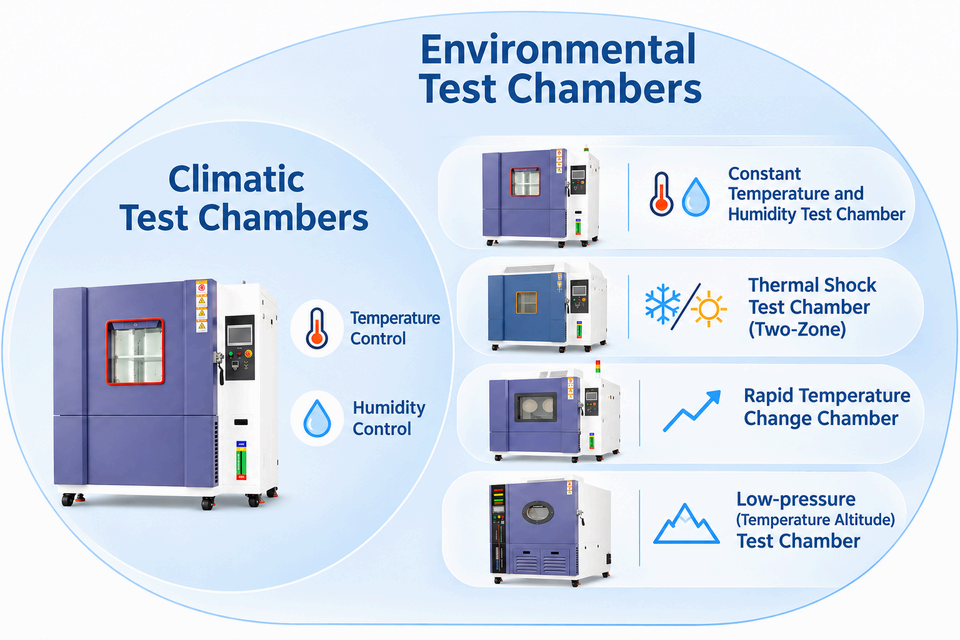
A climatic test chamber is generally used to simulate controlled climate conditions, such as temperature and humidity. An environmental test chamber is a broader term that may also include thermal shock, rapid temperature change, and low-pressure testing equipment.
The terms often overlap. A temperature and humidity chamber may be marketed under either name, but neither term guarantees a specific testing capability.
For engineers and purchasing teams, the distinction matters when comparing equipment quotations. The correct chamber should be selected according to the required test conditions and verified technical specifications—not simply its product name.
Are Climatic and Environmental Test Chambers the Same?
In many industrial applications, the terms climatic test chamber and environmental test chamber describe overlapping equipment categories.
A climatic test chamber typically refers to a chamber designed to reproduce climate-related conditions. Depending on the configuration, these may include high temperature, low temperature, controlled humidity, and programmed climate cycles.
An environmental test chamber is a broader term that can refer to different types of equipment used to evaluate product performance under controlled environmental stresses.
These may include:
-
Temperature and humidity chambers
-
High and low temperature chambers
-
Thermal shock chambers
-
Rapid temperature change chambers
-
Temperature altitude chambers
However, this distinction is based on common industry usage rather than a universally fixed naming standard.
A climatic chamber is often a type of environmental test chamber, but not every environmental test chamber is designed for climatic testing.
For example, a supplier may describe a programmable temperature and humidity chamber as a climatic chamber, while another supplier markets equipment with comparable functions as an environmental chamber.
Both names may be appropriate. What matters is whether the equipment can reproduce the environmental conditions required by the test procedure.
Why Do Manufacturers Use Different Names?
Manufacturers may use different terminology according to regional markets, product classifications, and intended applications.
Common names include climatic test chamber, climate test chamber, environmental test chamber, and temperature humidity test chamber.
These terms are useful for identifying equipment categories, but they should not replace a technical specification.
When comparing equipment from different suppliers, buyers should verify the actual operating capabilities rather than assume that differently named products perform different tests.
Climatic vs Environmental Test Chamber: Key Differences
The most useful distinction is not the product name itself, but the types of environmental conditions the equipment is designed to reproduce.
| Comparison | Climatic Test Chamber | Environmental Test Chamber |
|---|---|---|
| Typical meaning | Equipment for controlled climate conditions | Broader environmental testing equipment category |
| Temperature testing | Common | Available in temperature-capable models |
| Humidity control | Common in temperature-humidity configurations, but not guaranteed | Available only in humidity-equipped models |
| Thermal shock | Not implied by the name | Requires a suitable thermal shock system |
| Rapid temperature change | Depends on chamber design | Requires verified heating and cooling performance |
| Low-pressure testing | Not implied by the name | Requires a dedicated low-pressure configuration |
| Main selection criterion | Required climatic conditions | Required environmental stresses and test method |
Engineering takeaway: Two chambers with different names may offer equivalent testing functions. Conversely, two chambers with similar names may have different operating limits, control performance, and available functions.
Always compare the specifications required by your test method.
Same Temperature Range, Different Chamber Capabilities
Consider a buyer requesting a chamber for product reliability testing.
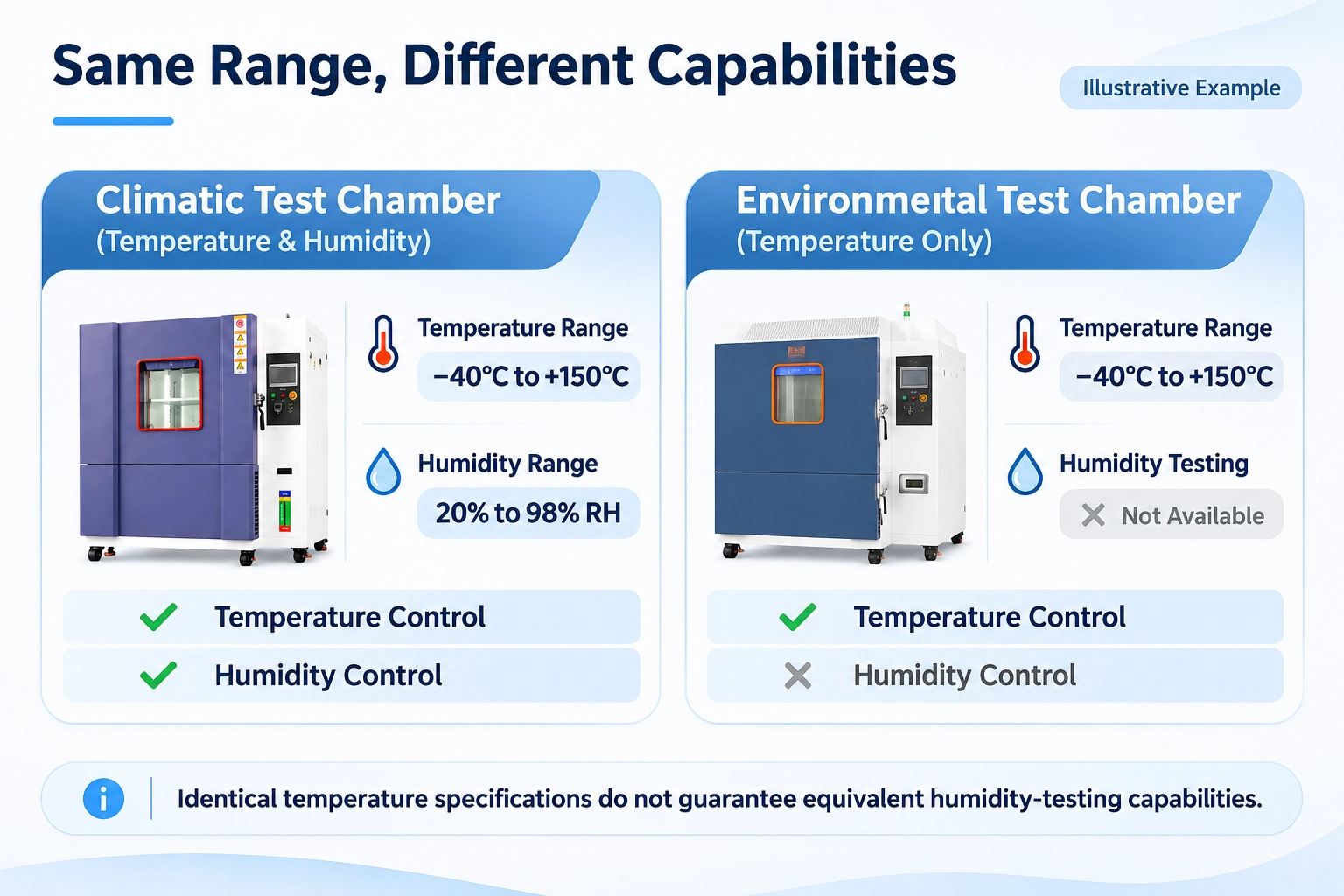
Two suppliers submit quotations with the same advertised temperature range: −40°C to +150°C.
One quotation describes the equipment as a Climatic Test Chamber. The other calls it an Environmental Test Chamber.
At first glance, both appear suitable.
However, the specifications reveal an important difference.
Illustrative Quotation Comparison
The following is a hypothetical purchasing example, not actual supplier quotation data.
| Specification | Quotation A | Quotation B |
|---|---|---|
| Product name | Climatic Test Chamber | Environmental Test Chamber |
| Temperature range | −40°C to +150°C | −40°C to +150°C |
| Humidity control | Included | Not included |
| Humidity operating envelope | Requires confirmation | Not applicable |
| Specimen heat load | Requires confirmation | Requires confirmation |
| Suitable for controlled humidity testing | Subject to operating-range verification | No |
Both machines may be suitable for certain temperature tests.
However, if the required procedure includes controlled humidity exposure, Quotation B cannot meet that requirement without an appropriate humidity-control capability.
Quotation A may be suitable, but its supported temperature-humidity combinations must still be verified.
The same advertised temperature range does not mean two chambers can perform the same tests.
This distinction becomes particularly important when a purchasing specification includes both temperature and relative humidity requirements.
For example, a chamber may advertise a temperature range of −40°C to +150°C and a humidity range of 20–98% RH.
These figures do not mean that every humidity setpoint is achievable at every temperature.
Humidity control is subject to a defined operating envelope, and the actual combination of temperature and humidity must be checked against the manufacturer's technical data.
How to Compare Chamber Specifications Before Buying
When purchasing a climatic or environmental test chamber, the first step is to define the required test conditions.
The equipment name should be considered secondary.
The following checks help determine whether a proposed chamber is technically suitable.
Confirm the Required Test Method
Identify the applicable standard, customer specification, or internal testing procedure.
For example, IEC 60068-2-1 addresses cold testing, IEC 60068-2-2 addresses dry heat, and IEC 60068-2-78 addresses damp heat under steady-state conditions.
These methods impose different testing requirements. A chamber suitable for one procedure should not automatically be assumed suitable for another.
The applicable edition, test severity, specimen conditions, and required procedure should be confirmed.
Verify the Actual Operating Range
Check more than the minimum and maximum temperature values.
Depending on the application, relevant information may include:
-
Required temperature setpoints and tolerances
-
Humidity setpoints and supported operating envelope
-
Temperature fluctuation, deviation, and uniformity
-
Heating and cooling performance under stated conditions
-
Specimen heat load and chamber working volume
Performance specifications should be evaluated together with their stated measurement and operating conditions.
Identify Any Specialized Testing Functions
Some procedures require capabilities beyond conventional temperature or humidity control.
For example, thermal shock testing may require a chamber designed for rapid exposure between different temperature environments.
Temperature altitude testing requires controlled low-pressure capability, potentially combined with temperature exposure.
These functions cannot be assumed from the general term environmental test chamber.
Define How Performance Will Be Verified
Before purchasing, confirm how the supplier will demonstrate the required chamber performance.
Depending on the project, this may involve technical documentation, inspection records, agreed acceptance tests, or a factory acceptance test (FAT).
The acceptance criteria should reflect the actual equipment configuration and the conditions required by the application.
Buyer tip: If two suppliers use different equipment names, request a side-by-side comparison against the same test specification. This provides a more reliable basis for evaluating quotations than product terminology alone.
Which ITM-LAB Chamber Fits Your Test?
ITM-LAB manufactures different environmental test chamber series for specific testing requirements.
Rather than selecting equipment according to its name, buyers can begin with the environmental conditions they need to reproduce.
| Required Test Condition | ITM-LAB Equipment to Consider |
|---|---|
| High- and low-temperature exposure | GDW High & Low Temperature Chamber |
| Controlled temperature and humidity | GDJS Temperature & Humidity Chamber |
| Thermal shock exposure | CTS Thermal Shock Chamber |
| Specified heating and cooling rates | KTB Rapid Temperature Change Chamber |
| Temperature combined with low pressure | GDJZ Temperature Altitude Chamber |
The table provides an initial equipment selection reference. Final suitability depends on the required test method, specimen characteristics, available operating range, and selected configuration.
For example, when evaluating a temperature and humidity chamber, the required temperature-humidity combination must fall within its verified operating envelope.
For rapid temperature change applications, the specified chamber temperature change rate should not be confused with the actual temperature response of the test specimen.
For temperature altitude applications, both the pressure capability and the supported combined temperature-pressure conditions should be confirmed.
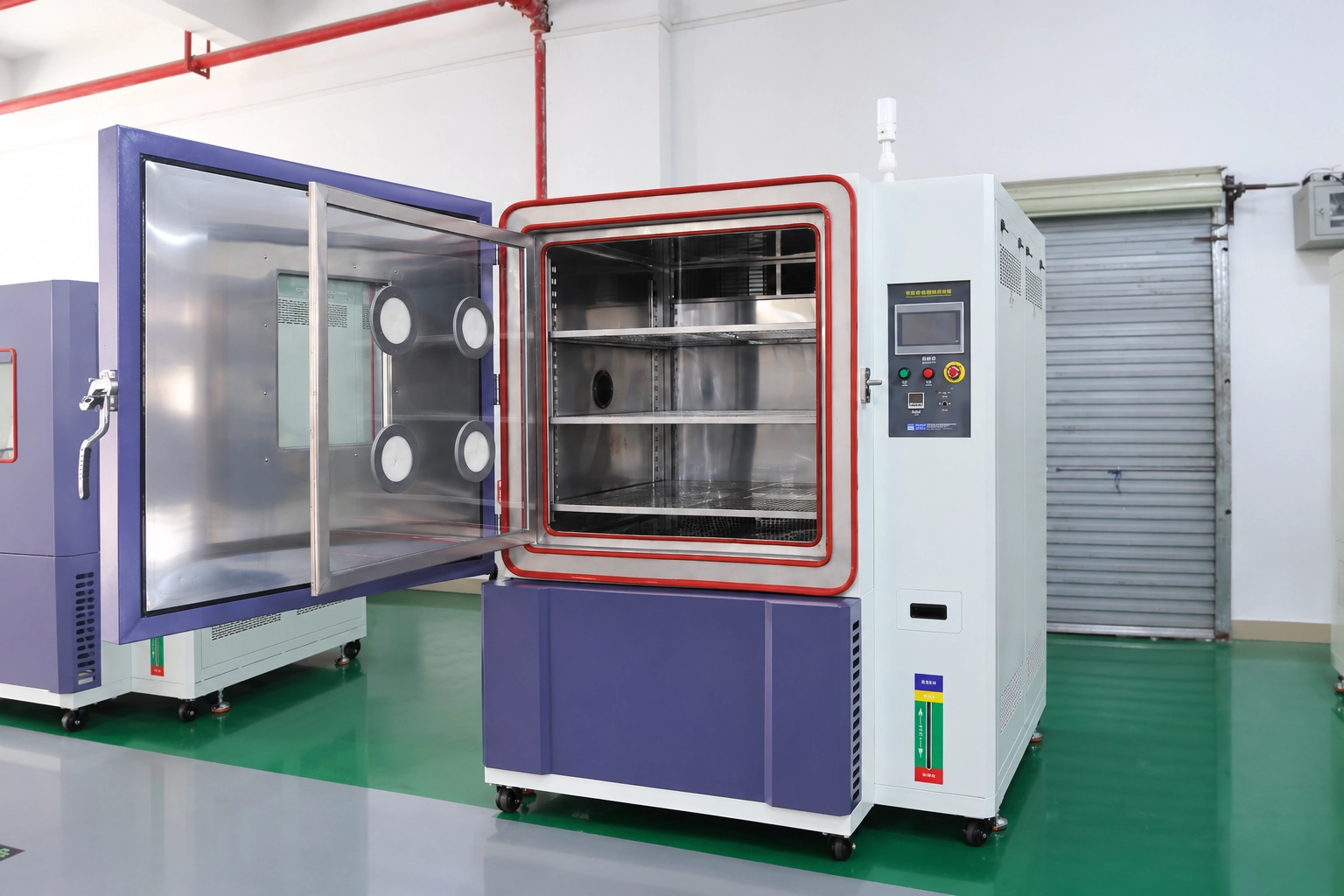
Explore the full range of ITM-LAB Environmental Test Chambers to identify equipment suitable for your testing application.
Frequently Asked Questions
Is a climatic test chamber the same as a temperature and humidity chamber?
Often, but not necessarily. Many climatic test chambers provide controlled temperature and humidity testing, while some configurations provide temperature control only. The actual capabilities must be verified against the manufacturer's specifications.
Can an environmental test chamber perform humidity testing?
Yes, if it includes a suitable humidity-control system. However, not all environmental test chambers have this function. A temperature-only chamber or a specialized thermal shock chamber should not be assumed to support controlled humidity testing.
Is a climatic chamber suitable for IEC 60068 testing?
It depends on the specific IEC 60068 test method and the chamber's verified capabilities. Different procedures require different environmental conditions, tolerances, and test arrangements. The applicable method and equipment configuration must be checked together.
Should I choose a climatic chamber or an environmental chamber?
Start with the required test conditions rather than the equipment name. Specify the test method, temperature and humidity requirements, specimen dimensions, heat load, and any specialized functions. Then compare chambers against those requirements.
Request a Suitable Climatic or Environmental Test Chamber Configuration
Need a test chamber for your reliability testing project?
ITM-LAB provides standard and customized environmental test chambers for consumer electronics, automotive components, battery-related applications, and industrial materials.
If you are comparing climatic and environmental test chambers, our team can help review the technical requirements and identify a suitable equipment configuration.
To receive a configuration recommendation and quotation, please share:
-
Test method: Applicable IEC, MIL-STD, customer, or internal test procedure
-
Environmental conditions: Required temperature, humidity, pressure, or temperature change profile
-
Specimen information: DUT dimensions, approximate weight, and quantity per test
-
Heat load: Electrical power dissipation or other relevant heat sources, if applicable
-
Additional requirements: Test ports, data recording, fixtures, or specialized functions
These details help determine the required chamber type, capacity, operating performance, and configuration.
Explore Environmental Test Chambers
Contact ITM-LAB to discuss your testing requirements and request a quotation.
Conclusion
Climatic test chambers and environmental test chambers often describe overlapping equipment categories, but their names do not guarantee identical testing capabilities.
A climatic chamber generally focuses on controlled climate conditions, while the broader environmental test chamber category can include equipment for temperature, humidity, thermal shock, rapid temperature change, and low-pressure testing.
For a reliable purchasing decision, compare the actual test requirements, operating limits, specimen conditions, and verification criteria.
Define the test first. Select the chamber second.